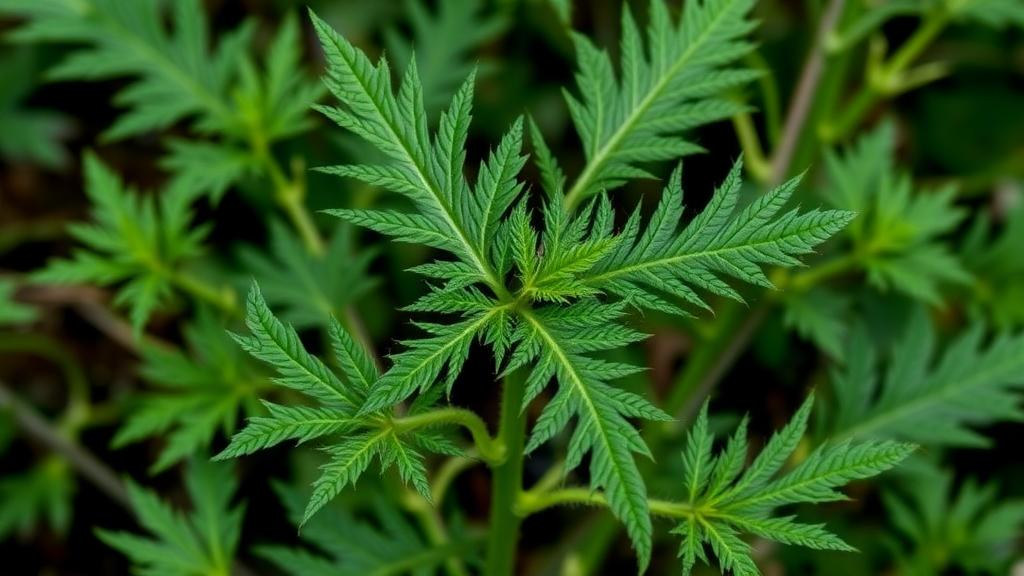
Global food systems are under mounting strain from nutritional insecurity, environmental degradation, climate change, and increasing pressure on natural resources. Against that backdrop, a systematic review published in Discover Food argues that one familiar and often overlooked plant, the stinging nettle (Urtica dioica), deserves a more prominent place in efforts to diversify and sustain the world’s food supply. The review, published as an open-access article on 16 October 2026, synthesizes existing evidence on the plant’s biology, agronomy, nutrition, food applications, processing technologies, and role in value-chain development.
The authors, led by Yosef Worku Yigezu, position the work as an integration of previously scattered research threads. Earlier reviews, they note, have tended to focus on isolated aspects of nettle, such as its chemistry or its agronomy. This review instead brings nutrition, food innovation, value-chain development, and sustainability together within a single food-systems perspective, reflecting a broader renewal of scientific interest in underutilized plant species that could support food-system diversification.
On nutrition, the literature surveyed indicates that nettle is a nutrient-dense species. It is reported to be rich in proteins, dietary fiber, essential minerals, vitamins, and a diverse array of phytochemicals. Many of these phytochemicals display antioxidant and other functional properties, which the review identifies as the basis for the plant’s potential beyond basic nutrition.
Those functional properties translate into a range of proposed food applications. According to the review, nettle has shown potential in food fortification, natural preservation, functional ingredient development, and innovative processing applications. In other words, the plant is framed not only as a food source in its own right but as an ingredient that could improve the nutritional and functional profile of processed products.
The review also extends the argument beyond the human food plate. It reports that nettle can support integrated food-feed systems, in which the same crop serves both human nutrition and livestock feeding. It further highlights the plant’s role in value-added product development and circular bioeconomy approaches, in which resources are kept in productive use for as long as possible.
On the environmental side, the evidence assembled in the review suggests that nettle cultivation can contribute to agroecological sustainability through improved resource-use efficiency, soil improvement, biodiversity support, climate adaptation, and phytoremediation, the use of plants to remove contaminants from soil or water. These are presented as contributions the species can make within broader agricultural systems rather than as standalone solutions.
None of this, the authors stress, means the plant is ready for large-scale deployment. The review identifies several challenges that remain insufficiently addressed, including production standardization, nutrient bioavailability, quality assurance, consumer acceptance, and large-scale commercialization. Each of these gaps represents a barrier between the promising laboratory and field-level findings summarized in the literature and the reliable, standardized supply chains that commercial food products would require.
The review’s overall conclusion is carefully hedged: the available evidence suggests that nettle is a promising but underutilized resource capable of contributing to more diverse, resilient, and sustainable food systems. That framing matters, because the article is a synthesis of existing reports rather than a new experimental study, and its claims are correspondingly about what the literature indicates rather than about newly demonstrated outcomes.
Looking forward, the authors call for future research that adopts an integrated approach spanning agronomy, nutrition, technology, environmental impact, and market orientation. Such work, they argue, would be needed to support wider adoption and commercialization of the species. For now, the review’s contribution is to consolidate the case for stinging nettle as a candidate crop for food-system diversification, while making clear that the path from promising evidence to practical impact still runs through unresolved questions of production, quality, and consumer demand.
Subject of Research: A systematic review of stinging nettle (Urtica dioica) as a multifunctional resource for nutrition, food innovation, and sustainable food systems
Article Title: Urtica dioica as an emerging resource for sustainable food systems through nutrition, food innovation, and value-chain development
Article References: Yigezu, Y. W., Sidell, Z. S., Abebe, N. D., & Asmare, B. W. (2026). Urtica dioica as an emerging resource for sustainable food systems through nutrition, food innovation, and value-chain development. Discover Food. https://doi.org/10.1007/s44187-026-01289-x
Image Credits: AI Generated
DOI: 10.1007/s44187-026-01289-x
Keywords: stinging nettle, Urtica dioica, sustainable food systems, systematic review, food fortification, functional ingredients, nutrition, circular bioeconomy, agroecology, value chains, underutilized species, food security
News Source: Alan Morgan. (October 29, 2026). Stinging Nettle Emerges as a Promising but Underutilized Resource for Sustainable Food Systems. Scienmag.