• HOME
  • NEWS
  • EXPLORE
    • CAREER
      • Companies
      • Jobs
    • EVENTS
    • iGEM
      • News
      • Team
    • PHOTOS
    • VIDEO
    • WIKI
  • BLOG
  • COMMUNITY
    • FACEBOOK
    • INSTAGRAM
    • TWITTER
Friday, October 30, 2026
BIOENGINEER.ORG
No Result
View All Result
  • Login
  • HOME
  • NEWS
  • EXPLORE
    • CAREER
      • Companies
      • Jobs
        • Lecturer
        • PhD Studentship
        • Postdoc
        • Research Assistant
    • EVENTS
    • iGEM
      • News
      • Team
    • PHOTOS
    • VIDEO
    • WIKI
  • BLOG
  • COMMUNITY
    • FACEBOOK
    • INSTAGRAM
    • TWITTER
No Result
View All Result
Bioengineer.org
No Result
View All Result
Home NEWS Science News Technology

Dual-Key Chaotic Encryption Targets Critical Regions of Medical CT Images

by
October 29, 2026
in Technology
Reading Time: 2 mins read
0
Dual-Key Chaotic Encryption Targets Critical Regions of Medical CT Images

Dual-Key Chaotic Encryption Targets Critical Regions of Medical CT Images

Share on FacebookShare on TwitterShare on LinkedinShare on RedditShare on Telegram

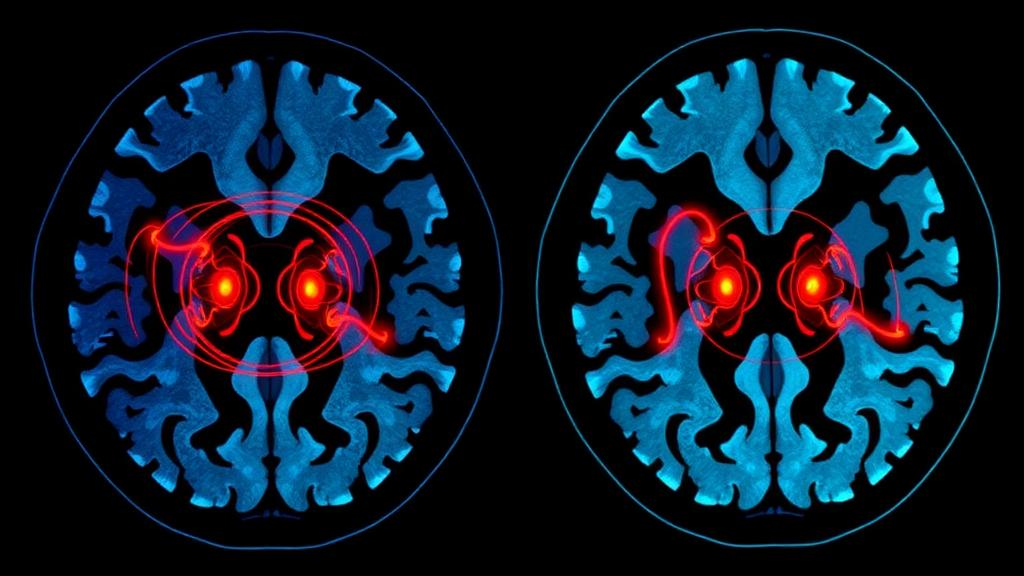
Researchers have developed a selective encryption scheme that protects the diagnostically critical regions of medical CT images while keeping computational costs low enough for real-time use. The study, published in Discover Applied Sciences, addresses a growing challenge as telemedicine platforms and cloud-based healthcare systems move large volumes of sensitive imaging data across networks.

Medical CT images stored in the DICOM format pose a particular problem for conventional security approaches. They contain massive data quantities, considerable spatial redundancy, and highly sensitive diagnostic information. Encrypting the entire image with traditional full-image methods is computationally costly, which makes them poorly suited to real-time clinical workflows where speed matters as much as security.

The proposed technique takes a region-of-interest approach. Instead of scrambling the whole image, it encrypts the foreground and background regions separately, using two different secret keys for each. This dual-key design means that protecting the areas most relevant to diagnosis does not require processing every pixel with the same intensity of cryptographic operations.

At the core of the method is a key-dependent dynamic substitution box generated from a hybrid chaotic system that combines logistic and tent maps.

Security is reinforced through multiple diffusion stages. The encryption process integrates DCT-based diffusion, pixel-wise XOR chaining, global chaotic permutation, and bit-level whitening. Layering these mechanisms is intended to ensure that even minor changes to a key or to input pixels propagate widely through the encrypted output.

The team evaluated the scheme on CT images from the SIIM dataset. The experimental results show that the algorithm effectively suppresses pixel correlations and produces uniform histograms, both indicators that encrypted images reveal little about their originals. The method also achieves near-ideal Shannon entropy of approximately 7.99, close to the theoretical maximum for random-looking data.

Further statistical evaluation supports the diffusion performance. High NPCR and UACI values confirm strong sensitivity to small changes in both the secret keys and the input pixels, while NIST-inspired statistical tests indicate that the encrypted outputs exhibit randomness characteristics close to ideal random sequences.

The authors conclude that the framework provides robust security and is suitable for real-time medical image protection. By concentrating cryptographic effort on critical diagnostic regions while maintaining strong statistical security properties, the scheme offers a potential balance between the privacy demands of networked healthcare and the performance requirements of clinical imaging systems.

Subject of Research: Selective dual-key encryption of medical CT image regions using hybrid chaotic systems

Article Title: Selective dual-key encryption for real-time protection of medical CT images using hybrid chaotic systems

Article References: Arab Gangan, H., Moattar, M. H., & Rohani, M. (2026). Selective dual-key encryption for real-time protection of medical CT images using hybrid chaotic systems. Discover Applied Sciences. https://doi.org/10.1007/s42452-026-09793-6

Image Credits: AI Generated

DOI: 10.1007/s42452-026-09793-6

Keywords: medical imaging, CT images, encryption, chaotic systems, DICOM, telemedicine, healthcare security, cryptography, region of interest, Shannon entropy, data protection, real-time processing

News Source: Ophelia Keating. (October 29, 2026). Dual-Key Chaotic Encryption Targets Critical Regions of Medical CT Images. Scienmag.


Tags: chaotic systemscryptographyCT imagesdata protectionDICOMencryptionhealthcare securityMedical Imagingreal-time processingregion of interestShannon entropyTelemedicine
Share12Tweet7Share2ShareShareShare1

Related Posts

Self-rotating ions turn nanochannels into supercharged molecule highways for faster, more precise separations

Self-rotating ions turn nanochannels into supercharged molecule highways for faster, more precise separations

October 30, 2026
Robot Hand Mimics Human Fingers to Pick Chili Peppers Without Damage

Robot Hand Mimics Human Fingers to Pick Chili Peppers Without Damage

October 30, 2026

Marine bacterium from the Yellow Sea yields its first complete genome

October 30, 2026

Simulated radar echoes map hidden coal-rock boundaries underground

October 30, 2026

POPULAR NEWS

  • Hippocampal Interneuron Subtypes Show Distinct Tonic Inhibition Plasticity

    Hippocampal Interneuron Subtypes Show Distinct Tonic Inhibition Plasticity

    29 shares
    Share 12 Tweet 7
  • Indigenous-led birth research project exposes colonial barriers inside academia

    29 shares
    Share 12 Tweet 7
  • Diet and sleep examined together may reveal hidden risks for chronic disease

    29 shares
    Share 12 Tweet 7
  • Low-Cost Simulation Package Helps Rural Tanzanian Midwives Retain Emergency Skills

    29 shares
    Share 12 Tweet 7

About

We bring you the latest biotechnology news from best research centers and universities around the world. Check our website.

Follow us

Recent News

Integrated job support program keeps people with schizophrenia employed longer, three-year trial finds

Mangrove restoration creates jobs, but hybrid finance decides whether they last

Imaging Replaces Biopsy in U.S. Cardiac Amyloidosis Diagnosis

Subscribe to Blog via Email

Enter your email address to subscribe to this blog and receive notifications of new posts by email.

Join 86 other subscribers
  • Contact Us

Bioengineer.org © Copyright 2023 All Rights Reserved.

Welcome Back!

Login to your account below

Forgotten Password?

Retrieve your password

Please enter your username or email address to reset your password.

Log In
No Result
View All Result
  • Homepages
    • Home Page 1
    • Home Page 2
  • News
  • National
  • Business
  • Health
  • Lifestyle
  • Science

Bioengineer.org © Copyright 2023 All Rights Reserved.