


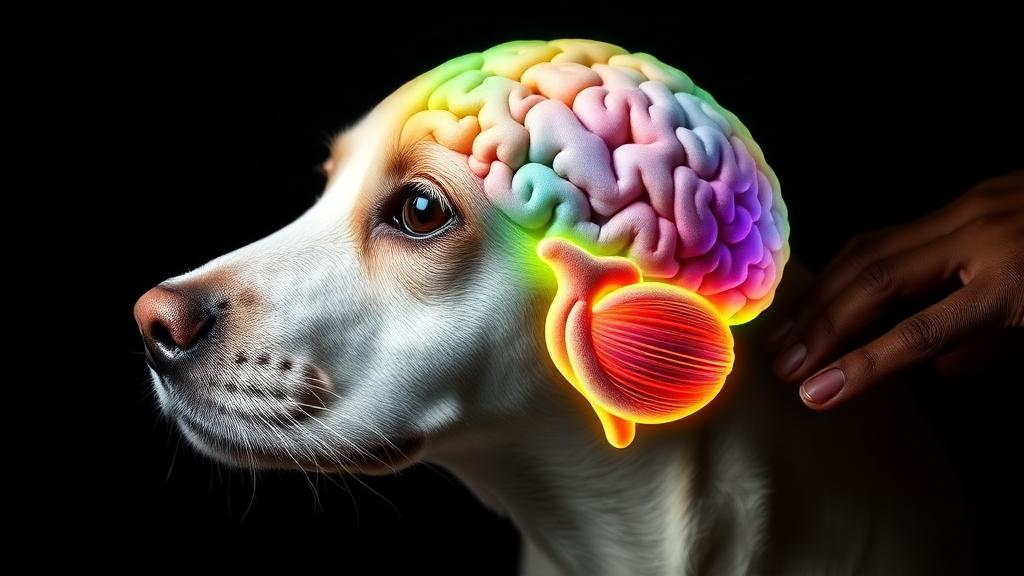
A brain cancer that strikes dogs and humans alike has become the focus of a study that turns one of the most distinctive features of purebred dogs — their breed structure — into a powerful tool for dissecting tumour biology. The research, published by Arnold and colleagues and highlighted in an editorial in the journal Companion Animal Health and Genetics, examines high grade oligodendroglioma, the most common primary brain tumour in dogs. The disease shares many similarities with glioblastoma in humans, including the sobering reality that in both species these tumours are difficult to treat and are associated with poor outcomes and short survival times.
What makes the new work particularly striking is the puzzle it set out to solve. Susceptibility to high grade oligodendroglioma is not distributed evenly across the canine world: French Bulldogs, Boxers and Boston Terriers all face an increased risk of developing the tumour compared with other breeds. On its own, that pattern would not raise many eyebrows. The three breeds are closely related to one another and all fall within the same genetic clade, so a shared predisposition is exactly what their common ancestry would predict. The surprise lies elsewhere — in how the disease behaves once it appears.
The clinical course of high grade oligodendroglioma differs between these closely related breeds, and the differences are especially evident in the outcomes of dogs enrolled in immunotherapy-based clinical trials. French Bulldogs survive for a considerably shorter period than the other two breeds, with a median survival time of 132 days compared with 221 days for Boxers and Boston Terriers. That gap, roughly ninety days between breeds that share much of their genetic heritage, demanded an explanation, and it is the thread the researchers pulled.
The authors hypothesised that the disparity in survival could be attributable, at least in part, to differences in gene expression between French Bulldogs and the other breeds. To test the idea, they undertook an analysis of the transcriptomes of French Bulldogs, Boxers and Boston Terriers, all with a robust diagnosis of high grade oligodendroglioma. By sequencing RNA extracted from tumour tissue, they could compare, gene by gene, which instructions were being read at high or low levels in the cancers of each breed.
The comparison yielded a clear molecular signature. The researchers identified 31 coding genes that were differentially expressed between French Bulldogs on the one hand and Boxers and Boston Terriers on the other. Of these, 14 genes were significantly overexpressed in the French Bulldogs’ tumours, while 17 were underexpressed relative to the other two breeds. Many of the differentially expressed genes are, in the editorial’s words, reassuringly provocative candidates for the disease, and the data demonstrated activated enrichment of cell cycle progression, oncogene and immune pathways — categories that map neatly onto the processes a cancer must hijack to grow and onto the defences a tumour deploys against immunotherapy.
The authors themselves are careful about how far the findings can be pushed. More work needs to be done, including within-breed comparisons of normal versus tumour expression, to investigate whether any of the observed differences could be a result of normal, breed-specific gene expression rather than tumour biology. Because each breed is, in effect, a genetically homogeneous isolated population, it is possible that some of the expression differences simply reflect the baseline biology of the breed rather than something specific to the cancer. Even so, the editorial argues that the results are undoubtedly exciting, because they offer a window onto a means of investigating genetic factors that might underpin efficacy and response to immunotherapies as those treatments become increasingly used in both humans and companion animals.
The logic of using dogs for this kind of question rests on a biological quirk unique among mammalian species. More than 400 distinct dog breeds are recognised globally, and the variation between them — in height, weight, appearance, behaviour and disease susceptibility — is unmatched elsewhere in the mammalian world. That variation was achieved by intense selection, high levels of inbreeding, extensive use of a limited number of sires and closed stud books, with the result that different breeds are essentially genetically homogeneous isolated populations. In humans, teasing apart the genetic factors that influence treatment outcomes would require considerable resources and extremely large numbers of samples, because our species is genetically heterogeneous. The dog, by contrast, packages that diversity into discrete, well-defined populations.
Dogs and humans also suffer from many of the same diseases, including cancer, diabetes, epilepsy and neurological conditions, so studying the genetics of canine disease has the potential to benefit human medicine enormously. Many dogs in developed countries receive veterinary care on a par with that available to their human companions, and this high level of care and surveillance, coupled with relatively large litter sizes and accelerated lifespans, all contribute to the ability to tease apart the genetics of some diseases far more easily in dogs than in people. It is one reason the dog was among the very first mammalian species to have its entire genome sequenced, in 2005, just four years after the first draft of the human genome was published.
Speaking at the time the first draft of the canine genome was published, Eric Lander, then director of the Broad Institute and senior author on the paper, said: “Of the more than 5,500 mammals living today, dogs are arguably the most remarkable. The incredible physical and behavioural diversity of dogs — from Chihuahuas to Great Danes — is encoded in their genomes. It can uniquely help us understand embryonic development, neurobiology, human disease and the basis of evolution.” In the years since, the dog has fulfilled that potential, enabling the identification of multiple novel gene-disease associations.
The new study, the editorial concludes, shines a spotlight on the possibility of studying similarities and differences between dog breeds to identify genes that play important roles in cancer — in tumour growth and suppression, for example — an improved understanding that has the potential to lead eventually to more effective cancer therapies. The dog’s track record in another field, inherited ocular disease, shows how far such comparative work can go. Variants have been identified in both species that cause shared ocular disorders, including forms of retinal degeneration, glaucoma, cataracts and other lens abnormalities. Retinitis pigmentosa is estimated to affect approximately 100,000 people in the United States and 2 million people worldwide, while its canine equivalent, progressive retinal atrophy, affects over 100 breeds. The Briard, whose disease is caused by a mutation in the RPE65 gene, became the first naturally occurring canine model of an inherited retinal disease to aid the translation of therapies from laboratory to clinic, ultimately enabling the restoration of sight in dogs and subsequently in humans. The dog’s eye is also better suited to trialling gene therapies than the rodent eye, because it possesses an area centralis with a high photoreceptor density analogous to the human macula, which laboratory rodents lack, and it is much closer in size to the human eye. For the editorial’s author, the strength of the dog as a spontaneous large animal model for decoding human health has been proposed for many years; what is needed now, the argument runs, is for major funding organisations to invest the funds required to develop this unique model properly.
Subject of Research: Differences in gene expression of high grade oligodendroglioma between dog breeds and their relevance to immunotherapy response
Article Title: Dogs help tease apart important differences in gene expression of brain tumours
Article References: Mellersh, C. (2025). Dogs help tease apart important differences in gene expression of brain tumours. Companion Animal Health and Genetics, 12(1), Article 5. https://doi.org/10.1186/s40575-025-00144-z
Image Credits: AI Generated
DOI: 10.1186/s40575-025-00144-z
Keywords: dogs, brain tumours, oligodendroglioma, glioblastoma, gene expression, transcriptomics, immunotherapy, French Bulldog, Boxer, Boston Terrier, comparative oncology, canine genetics
News Source: Juliet Wilcox. (October 29, 2026). Gene Expression Differences in Canine Brain Tumours Revealed by Breed Comparisons. Scienmag.



