


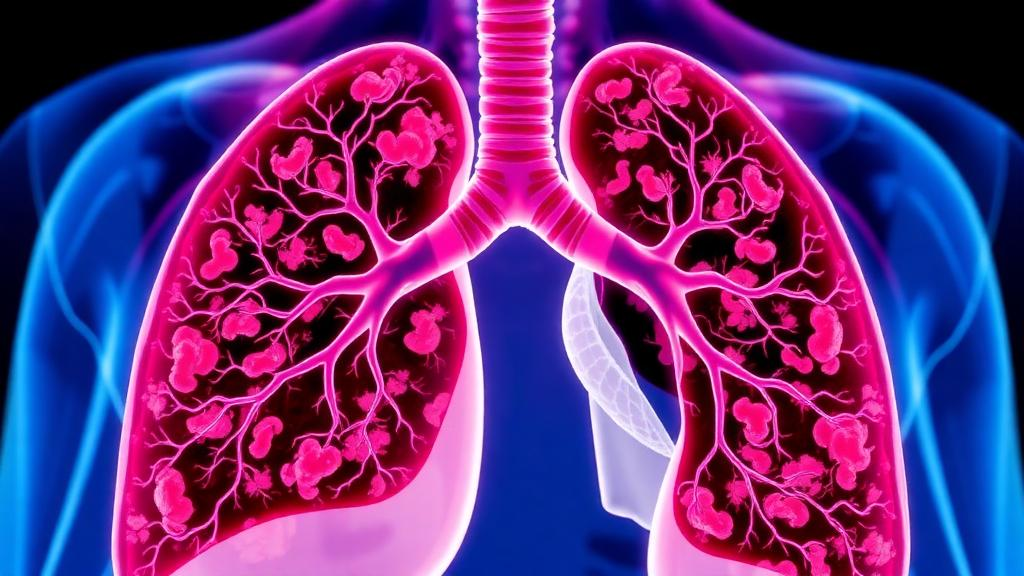
A derivative of a fungal natural product may strengthen a common lung cancer treatment combination, according to a preclinical study published in Cellular Oncology. The compound, named DM28, is derived from MHO7 (6-epi-ophiobolin G), a molecule produced by a mangrove-derived fungus. In a Lewis lung carcinoma mouse model, the researchers report that DM28 suppressed tumor growth on its own and, when combined with radiotherapy and anti-PD-1 immunotherapy, increased the infiltration of activated CD8-positive T cells into tumor tissue. The study is an accepted, peer-reviewed article shared early as an open-access version of record in progress, and its findings are limited to preclinical models rather than human patients.
The motivation behind the work lies in a recognized gap in current care. Immunoradiotherapy substantially improves outcomes for patients with non-small cell lung cancer (NSCLC), but the response rate remains only 40 to 60 percent, leaving many patients without benefit. The research team, led by authors including Jingyi He and Conghua Xie, set out to systematically test whether DM28, a derivative with potentially more sustained activity than its parent compound, could improve the effectiveness of this combination approach and to identify the mechanism responsible.
The researchers found that DM28 modulates ferroptosis through the protein SLC3A2, promoting its proteasomal degradation, and also inhibits the SLC7A11/GPX4 axis, a pathway that normally protects cells against oxidative damage. With these safeguards weakened, tumor cells in the model became more vulnerable, and DM28 treatment suppressed NSCLC tumor growth while showing a favorable safety profile in the mice.
DM28 also made NSCLC cells more sensitive to radiation, an effect accompanied by increased ferroptosis. This mattered for the immune component of the therapy because ferroptotic cell death released damage-associated molecular patterns, or DAMPs, including calreticulin and high mobility group box 1. These molecules act as alarm signals that can activate anti-tumor immune responses. Consistent with this chain of events, the researchers observed increased infiltration of activated CD8-positive T cells in NSCLC tissues treated with DM28 alongside immunoradiotherapy, suggesting the compound helps convert tumor cell death into a stronger immune attack.
To support these conclusions, the team combined several methods: transcriptomic analysis to profile gene expression changes, limited proteolysis-mass spectrometry to examine protein-level interactions, and molecular docking and dynamics simulations to model how DM28 engages its targets. They also assessed ferroptosis markers, DAMPs, and immune cell infiltration. The authors conclude that DM28 potentiates immunoradiotherapy efficacy in NSCLC by inducing SLC3A2-dependent ferroptosis, thereby enhancing tumor immunogenicity, and they describe the results as a preclinical rationale for developing DM28 in combination strategies. Because the work relied on a mouse model and mechanistic laboratory techniques, with no clinical trial involved, translating these findings into benefits for NSCLC patients will require further validation.
Subject of Research: Preclinical evaluation of the fungal-derived compound DM28 as an enhancer of immunoradiotherapy through SLC3A2-associated ferroptosis in non-small cell lung cancer
Article Title: Ophiobolin derivative DM28 enhances immunoradiotherapy response via regulating SLC3A2-associated ferroptosis in non-small cell lung cancer
Article References: He, J., Jiang, J., Liang, J., He, F., Wang, C., Ding, S., Ji, Q., Guo, X., Zeng, Z., Gong, Y., Hong, K., & Xie, C. (2026). Ophiobolin derivative DM28 enhances immunoradiotherapy response via regulating SLC3A2-associated ferroptosis in non-small cell lung cancer. Cellular Oncology. https://doi.org/10.1007/s13402-026-01299-y
Image Credits: AI Generated
DOI: 10.1007/s13402-026-01299-y
Keywords: non-small cell lung cancer, DM28, ophiobolin, ferroptosis, SLC3A2, immunoradiotherapy, radiotherapy, anti-PD-1 immunotherapy, CD8 T cells, damage-associated molecular patterns, preclinical mouse model, Cellular Oncology
News Source: Nathaniel Bowman. (October 29, 2026). Fungal-Derived Compound DM28 Boosts Immunoradiotherapy in Lung Cancer Model. Scienmag.



