• HOME
  • NEWS
  • EXPLORE
    • CAREER
      • Companies
      • Jobs
    • EVENTS
    • iGEM
      • News
      • Team
    • PHOTOS
    • VIDEO
    • WIKI
  • BLOG
  • COMMUNITY
    • FACEBOOK
    • INSTAGRAM
    • TWITTER
Friday, October 30, 2026
BIOENGINEER.ORG
No Result
View All Result
  • Login
  • HOME
  • NEWS
  • EXPLORE
    • CAREER
      • Companies
      • Jobs
        • Lecturer
        • PhD Studentship
        • Postdoc
        • Research Assistant
    • EVENTS
    • iGEM
      • News
      • Team
    • PHOTOS
    • VIDEO
    • WIKI
  • BLOG
  • COMMUNITY
    • FACEBOOK
    • INSTAGRAM
    • TWITTER
No Result
View All Result
Bioengineer.org
No Result
View All Result
Home NEWS Science News Health

Rare eye syndrome masking as acute glaucoma linked to Sjögren’s disease in case report

by
October 29, 2026
in Health
Reading Time: 2 mins read
0
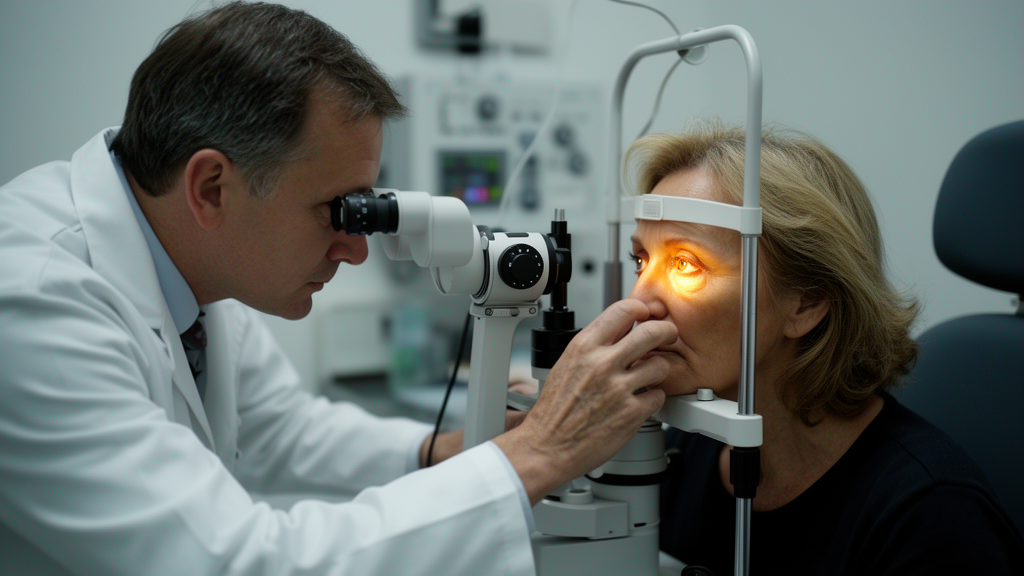
Rare eye syndrome masking as acute glaucoma linked to Sjögren's disease in case report

Rare eye syndrome masking as acute glaucoma linked to Sjögren's disease in case report

Share on FacebookShare on TwitterShare on LinkedinShare on RedditShare on Telegram

But as the work-up unfolded, the picture turned out to be far more unusual: examination revealed ciliary-body, choroidal, and retinal detachment, a pattern that pointed to non-nanophthalmic uveal effusion syndrome. The case, published as a case report in BMC Ophthalmology, is notable because the syndrome appeared in a patient who also had pre-existing primary open-angle glaucoma, and because it arrived in the dramatic disguise of a glaucoma emergency.

When the same effusive pattern appears in a normally sized eye, clinicians must hunt for other triggers such as trauma, surgery, medications, or intraocular inflammation.

Confirming the diagnosis here was itself a clinical challenge, because the patient’s congenital deaf-muteness meant he could not self-report the classic sicca symptoms that usually raise suspicion. Instead, the diagnosis rested on objective testing: laboratory results showed positive serum anti-SSA antibody, rheumatoid factor, and antinuclear antibody, together with abnormal Schirmer test results, which measure tear production. Together, these findings supported a diagnosis of primary Sjögren’s syndrome.

The report’s central message is a diagnostic warning. The authors argue that non-nanophthalmic uveal effusion syndrome should be included in the differential diagnosis for bilateral acute secondary angle-closure glaucoma with ciliochoroidal effusion — that is, when elevated intraocular pressure with a closed drainage angle occurs alongside effusions of the ciliary body and choroid. When uveal effusion syndrome arises without nanophthalmos, trauma, surgical insult, medication-related triggers, or obvious intraocular inflammation, they recommend that clinicians screen for underlying systemic autoimmune conditions such as primary Sjögren’s syndrome, even in patients who cannot communicate classic dryness symptoms.

The authors are careful about what this single case can and cannot show. As they state, this single-case observation cannot establish a definitive causal linkage between primary Sjögren’s syndrome and uveal effusion syndrome; it highlights a potential clinical association that other clinicians may want to keep in mind. What the case does demonstrate is a practical point about clinical reasoning: when a familiar emergency such as acute angle-closure glaucoma comes with atypical features — bilateral involvement, ciliochoroidal effusion, and no obvious mechanical or inflammatory trigger — the differential diagnosis should widen beyond the eye itself.

For patients who, like this one, cannot describe dry eyes or dry mouth, the authors suggest that objective autoimmune screening — antibody testing and tear-production measures — may be the only reliable route to the underlying diagnosis.

Subject of Research: A case report of non-nanophthalmic uveal effusion syndrome presenting as acute secondary angle-closure glaucoma in a patient with primary Sjögren's syndrome.

Article Title: Uveal effusion syndrome with Sjögren’s syndrome initially presenting as acute glaucoma with angle closure: case report

Article References: Du, Y., Wang, Y., Liu, Z., Gao, Y., & Du, X. (2026). Uveal effusion syndrome with Sjögren’s syndrome initially presenting as acute glaucoma with angle closure: case report. BMC Ophthalmology. https://doi.org/10.1186/s12886-026-05435-y

Image Credits: AI Generated

DOI: 10.1186/s12886-026-05435-y

Keywords: uveal effusion syndrome, Sjögren's syndrome, angle-closure glaucoma, ciliochoroidal effusion, case report, ophthalmology, autoimmune disease, intraocular pressure, choroidal detachment, BMC Ophthalmology, Uveal, effusion

News Source: Ophelia Keating. (October 29, 2026). Rare eye syndrome masking as acute glaucoma linked to Sjögren’s disease in case report. Scienmag.


Tags: angle-closure glaucomaautoimmune diseaseBMC Ophthalmologycase reportchoroidal detachmentciliochoroidal effusioneffusionintraocular pressureOphthalmologySjögren's syndromeUvealuveal effusion syndrome
Share12Tweet7Share2ShareShareShare1

Related Posts

Lower ketamine dose with intranasal midazolam shows no clear benefit in sedated children

Lower ketamine dose with intranasal midazolam shows no clear benefit in sedated children

October 30, 2026
Integrated job support program keeps people with schizophrenia employed longer, three-year trial finds

Integrated job support program keeps people with schizophrenia employed longer, three-year trial finds

October 30, 2026

Imaging Replaces Biopsy in U.S. Cardiac Amyloidosis Diagnosis

October 30, 2026

Stroke sarcopenia risk models show promise but lack validation

October 30, 2026

POPULAR NEWS

  • Hippocampal Interneuron Subtypes Show Distinct Tonic Inhibition Plasticity

    Hippocampal Interneuron Subtypes Show Distinct Tonic Inhibition Plasticity

    29 shares
    Share 12 Tweet 7
  • Indigenous-led birth research project exposes colonial barriers inside academia

    29 shares
    Share 12 Tweet 7
  • Diet and sleep examined together may reveal hidden risks for chronic disease

    29 shares
    Share 12 Tweet 7
  • Low-Cost Simulation Package Helps Rural Tanzanian Midwives Retain Emergency Skills

    29 shares
    Share 12 Tweet 7

About

We bring you the latest biotechnology news from best research centers and universities around the world. Check our website.

Follow us

Recent News

Dual-Drug Liposomes With YIGSR Peptide Target Breast Tumor Cells in Mice

Lower ketamine dose with intranasal midazolam shows no clear benefit in sedated children

Cancer Cells Steal Mitochondria From Immune Cells to Survive and Evade Therapy

Subscribe to Blog via Email

Enter your email address to subscribe to this blog and receive notifications of new posts by email.

Join 86 other subscribers
  • Contact Us

Bioengineer.org © Copyright 2023 All Rights Reserved.

Welcome Back!

Login to your account below

Forgotten Password?

Retrieve your password

Please enter your username or email address to reset your password.

Log In
No Result
View All Result
  • Homepages
    • Home Page 1
    • Home Page 2
  • News
  • National
  • Business
  • Health
  • Lifestyle
  • Science

Bioengineer.org © Copyright 2023 All Rights Reserved.