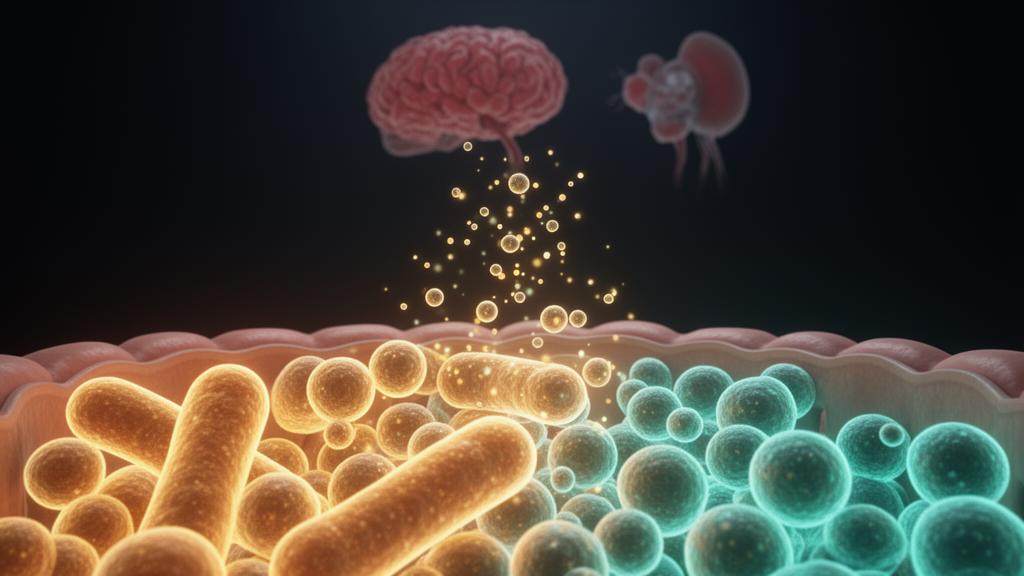
The microbes inhabiting the human gut do far more than help digest dinner. According to a review published in Discover Molecules, the molecules they produce act as chemical messengers that travel through the body, switching host signaling pathways on and off in ways that influence whether tumors grow or shrink and whether metabolism runs smoothly or spirals into disease.
Short-chain fatty acids, or SCFAs, are among the best-characterized of these messengers. Compounds such as butyrate, acetate, and propionate arise when colonic bacteria ferment dietary fiber and starches. Butyrate serves as a preferred fuel for colonocytes, capable of supplying up to ten percent of daily energy requirements under normal conditions. But these molecules are more than fuel. They bind G protein-coupled receptors including GPR41, GPR43, and GPR109A, thereby regulating immune signaling, and they inhibit histone deacetylase activity, directly linking microbial metabolism to the epigenetic control of gene expression. Through these mechanisms, SCFAs suppress pro-inflammatory cytokines such as TNF-α and IL-6, strengthen the epithelial barrier, and promote the secretion of gut hormones like GLP-1, which improves insulin sensitivity.
Secondary bile acids occupy a more ambiguous position in this chemical landscape. Produced when intestinal microbes modify the primary bile acids made by the liver, they activate the membrane receptor TGR5 and the nuclear farnesoid X receptor, pathways that govern glucose and lipid metabolism and innate immune responses. The review emphasizes their dual nature: some secondary bile acids exert anti-inflammatory signaling, while others, at higher concentrations, show pro-carcinogenic effects, particularly in the colon. Elevated levels of deoxycholic acid, for example, are linked to the progression of colorectal cancer, and experimental work shows that this bile acid can activate PKC and ERK signaling, underscoring its capacity to promote carcinogenesis. Whether bile acid signaling protects or harms appears to depend on concentration and metabolic context.
Tryptophan metabolism adds another layer of host-microbial communication. Gut bacteria catabolize this essential amino acid into indole derivatives and other metabolites, including serotonin and kynurenine. Indole compounds act as endogenous ligands for the aryl hydrocarbon receptor, a transcription factor central to mucosal immune regulation. By engaging this receptor in epithelial and immune cells, indole derivatives promote secretion of the cytokine IL-22, support mucosal barrier integrity, and enhance antimicrobial peptide expression. Tryptophan-related metabolites also participate in the gut-brain axis and neurochemical signaling, and dysregulation of these pathways has been observed in metabolic disorders, inflammatory bowel disease, and neuropsychiatric conditions.
In cancer, the review argues, these metabolites operate through interconnected mechanisms rather than isolated effects. SCFAs shape the tumor microenvironment by modulating T regulatory cell differentiation and macrophage polarization through receptor activation and histone deacetylase inhibition. Butyrate can promote the cytotoxic function of CD8-positive T cells and, in some cancer models, suppress immunosuppressive myeloid populations, strengthening anti-tumor immunity—though the authors stress that these effects are context-dependent and vary with metabolite concentration, tumor type, and host immune status. In colorectal cancer specifically, butyrate-induced HDAC inhibition leads to apoptosis, cell cycle arrest, and reduced proliferation. The picture is not uniformly favorable: certain bacterial products, such as E. coli genotoxins, cause DNA damage that drives tumorigenesis in the colon and rectum, and microbial metabolites can also modulate oncogenic MAPK and PI3K-AKT signaling that influences cell proliferation and survival.
The same molecular players exert substantial influence over metabolic disease. In enteroendocrine L-cells, acetate and propionate activate the receptors FFAR2/GPR43 and FFAR3/GPR41, triggering calcium-dependent secretion of GLP-1 and PYY, hormones that enhance insulin secretion and improve post-prandial glycemic control. A recent systematic review and meta-analysis cited in the paper concluded that interventions increasing SCFAs significantly reduced fasting insulin and HOMA-IR and improved whole-body insulin sensitivity, even though effects on fasting glucose were variable. Observational work aligns with these findings, showing that type 2 diabetes and metabolic syndrome are frequently associated with decreased colonic SCFA synthesis and depletion of butyrate-producing taxa. Bile acids, meanwhile, regulate hepatic lipogenesis, triglyceride export, glucose synthesis, and cholesterol metabolism through FXR, while TGR5 activation promotes GLP-1 secretion and enhances thermogenesis in skeletal muscle and brown adipose tissue.
Polyamines—spermine, spermidine, and putrescine—form a third regulatory layer. Produced by both bacterial decarboxylation of amino acids and host cells, they support epithelial proliferation, immune modulation, and tissue repair. Elevated polyamine levels occur in rapidly proliferating tissues, including tumors, suggesting a link between dysregulated polyamine metabolism and cancer progression. In diet-induced obese mice, spermidine supplementation reduced body weight gain, attenuated hepatic steatosis, and improved insulin resistance, benefits attributed in part to enhanced autophagy and favorable shifts in gut microbiota. The review also notes that lipopolysaccharides, the prototypical microbe-associated molecular patterns from Gram-negative bacteria, engage TLR4 on immune cells to drive cytokine release, and chronic LPS exposure has been linked to systemic inflammation, insulin resistance, and cancer risk.
These mechanistic insights are feeding into therapeutic strategies, although the authors caution that most findings remain preclinical. In patients with melanoma receiving anti-PD-1 immunotherapy, distinct gut microbiome compositions were associated with prolonged progression-free survival and improved therapeutic response, and gut microbiota composition also influenced the efficacy of PD-1-based therapy in patients with epithelial tumors. The review stresses that these associations remain largely correlative and require validation in controlled clinical studies. Microbial derivatives of lithocholic acid have been shown to modulate adaptive immunity by enhancing T regulatory cell differentiation and inhibiting Th17 cell differentiation, suggesting another lever for manipulating the immune balance in cancer. Early studies further indicate that microbial SCFAs can enhance CD8-positive T cell effector responses and improve the efficacy of adoptive immunotherapy through epigenetic and metabolic reprogramming.
Beyond metabolite supplementation, the review surveys an expanding toolkit of microbiome-targeted interventions. Fecal microbiota transplantation, which transfers an entire gut microbial community from a healthy donor to a recipient, has shown efficacy against recurrent Clostridioides difficile infections and is being explored for metabolic syndrome, liver disease, and inflammatory bowel disease, though pathogen transmission and donor variability remain concerns. Postbiotics—preparations of inanimate microorganisms or their components that confer health benefits—offer improved safety and storage stability compared with live probiotics, and recent evidence suggests their extracellular vesicles can modulate intracellular signaling and host immunity. Synthetic biology takes the field further: engineered commensal bacteria can be programmed to secrete immunomodulatory cytokines such as IL-10, sense inflammatory markers, and release therapeutic compounds at specific sites, with encapsulation and inducible expression systems employed to limit risks such as horizontal gene transfer.
Significant obstacles stand between this promise and routine clinical practice. Gut microbial communities differ widely between individuals due to diet, lifestyle, host genetics, age, and environmental exposures, producing metabolite profiles that vary and often yield unpredictable therapeutic responses. Technical heterogeneity in sample collection and sequencing reduces comparability across studies, many microbial metabolites remain functionally uncharacterized, and validated biomarkers are scarce. Safety concerns persist as well, since some secondary bile acids have been linked to oxidative stress, DNA damage, and colorectal cancer, while interventions introducing live microbes carry risks of immune complications and antibiotic resistance transfer, particularly in immunocompromised patients. A translational gap between animal models and human trials, driven by differences in diet, host physiology, and microbiota composition, compounds these difficulties. The authors conclude that realizing the potential of microbiome-derived molecules will require structured, interdisciplinary research integrating systems biology, computational modeling, and microbiology, alongside multi-omics approaches and personalized profiling that could one day tailor therapies to an individual’s unique microbial chemistry.
Subject of Research: A review of how microbiome-derived metabolites regulate host signaling, immunity, and therapeutic responses in cancer and metabolic diseases.
Article Title: Microbiome-derived bioactive molecules regulate host signaling and therapeutic responses in cancer and metabolic diseases
Article References: Hussain, T. H. N., Hussain, T. H. N., Bhagat, J., & Nazir, A. (2026). Microbiome-derived bioactive molecules regulate host signaling and therapeutic responses in cancer and metabolic diseases. Discover Molecules, 3(1), Article 26. https://doi.org/10.1007/s44345-026-00070-y
Image Credits: AI Generated
DOI: 10.1007/s44345-026-00070-y
Keywords: microbiome, metabolites, short-chain fatty acids, bile acids, cancer, metabolic disease, immunotherapy, postbiotics, fecal microbiota transplantation, epigenetics, tryptophan metabolites, polyamines
News Source: Nathaniel Bowman. (October 29, 2026). Gut Microbes Send Chemical Signals That Shape Cancer and Metabolic Disease. Scienmag.