• HOME
  • NEWS
  • EXPLORE
    • CAREER
      • Companies
      • Jobs
    • EVENTS
    • iGEM
      • News
      • Team
    • PHOTOS
    • VIDEO
    • WIKI
  • BLOG
  • COMMUNITY
    • FACEBOOK
    • INSTAGRAM
    • TWITTER
Thursday, October 29, 2026
BIOENGINEER.ORG
No Result
View All Result
  • Login
  • HOME
  • NEWS
  • EXPLORE
    • CAREER
      • Companies
      • Jobs
        • Lecturer
        • PhD Studentship
        • Postdoc
        • Research Assistant
    • EVENTS
    • iGEM
      • News
      • Team
    • PHOTOS
    • VIDEO
    • WIKI
  • BLOG
  • COMMUNITY
    • FACEBOOK
    • INSTAGRAM
    • TWITTER
No Result
View All Result
Bioengineer.org
No Result
View All Result
Home NEWS Science News Health

Metabolites Emerge as Signaling Hubs Driving Diabetic Kidney Disease

by
October 29, 2026
in Health
Reading Time: 2 mins read
0
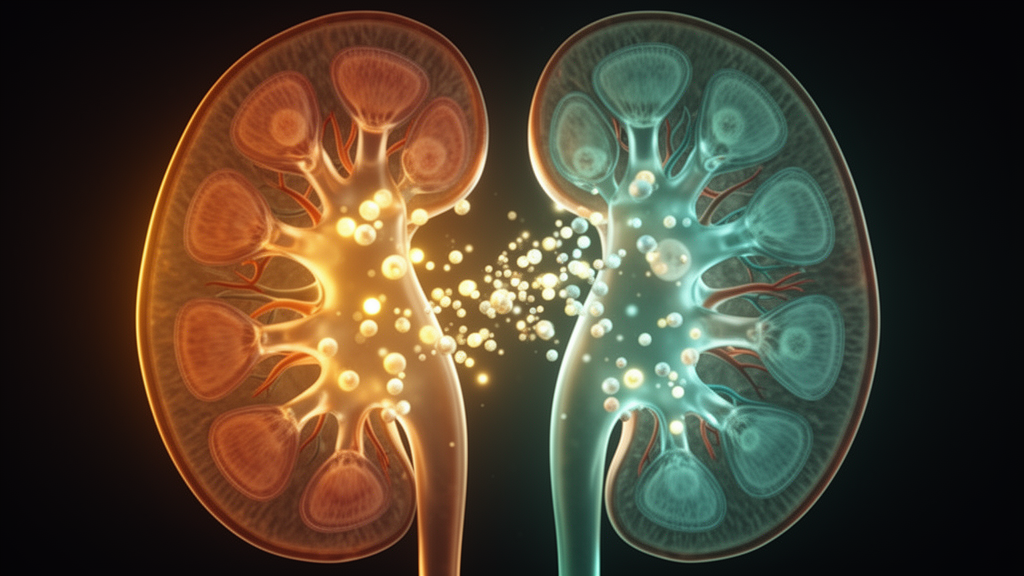
Metabolites Emerge as Signaling Hubs Driving Diabetic Kidney Disease

Metabolites Emerge as Signaling Hubs Driving Diabetic Kidney Disease

Share on FacebookShare on TwitterShare on LinkedinShare on RedditShare on Telegram

Diabetic kidney disease remains the leading cause of end-stage renal disease worldwide, yet current diagnosis still leans on albuminuria and estimated glomerular filtration rate, measures that often miss early lesions, while treatment options remain limited. A new review in Frontiers in Endocrinology argues that the missing piece may lie in metabolites themselves, which the authors describe not as passive byproducts of metabolism but as central signaling hubs that orchestrate the progression of kidney damage in diabetes.

According to the review, these metabolites act in several active roles: as ligands binding to receptors, as substrates for epigenetic modifications that alter gene regulation, and as cargoes carried by extracellular vesicles that shuttle signals between cells. Together, the authors contend, they form a complex metabolic signaling network linking systemic metabolic disturbances to local kidney injury. Framing the disease this way transforms diabetic kidney disease from a collection of isolated pathways into a systemic, network-level condition.

The review synthesizes current knowledge of metabolite-driven mechanisms, including the advanced glycation end-product receptor pathway known as AGEs–RAGE, lipotoxicity, amino acid reprogramming, and crosstalk mediated by extracellular vesicles. It also systematically categorizes metabolite biomarkers by clinical function, covering early detection, prediction of disease progression, and identification of pathogenic drivers, and discusses emerging therapeutic strategies aimed at specific metabolic nodes within the network.

Enabling this reframing are recent advances in multidimensional metabolomics technologies, including static profiling, spatial metabolomics, metabolic flux analysis, and multi-omics approaches, which the authors say allow the metabolic network of diabetic kidney disease to be dissected with unprecedented resolution.

Looking forward, the review proposes a hypothetical roadmap toward metabolic precision medicine. The framework hypothesizes stratifying patients into distinct metabolic phenotypes, such as high-TMAO, high-branched-chain amino acid, and high-AGEs subtypes, selecting treatments based on the underlying metabolic mechanisms, and assessing therapeutic responses through dynamic monitoring of circulating metabolites. The authors stress that this conceptual strategy remains unvalidated; if confirmed by future research, it could help overcome current diagnostic and therapeutic bottlenecks and improve outcomes for patients with diabetic kidney disease.

Subject of Research: The role of metabolites as signaling mediators in diabetic kidney disease progression, diagnosis and therapy

Article Title: Metabolites as key signaling mediators: rethinking diabetic kidney disease from a network perspective

Article References: Li, X., Wang, X., Fang, C., Yan, Z., Liu, L., Han, J., Zhao, L., & Wu, X. (2026). Metabolites as key signaling mediators: rethinking diabetic kidney disease from a network perspective. Frontiers in Endocrinology, 17, Article 1969901. https://doi.org/10.3389/fendo.2026.1969901

Image Credits: AI Generated

DOI: 10.3389/fendo.2026.1969901

Keywords: diabetic kidney disease, metabolites, metabolomics, AGEs–RAGE, lipotoxicity, amino acid reprogramming, extracellular vesicles, biomarkers, precision medicine, end-stage renal disease, signaling, mediators

News Source: Jerry Hayes. (October 29, 2026). Metabolites Emerge as Signaling Hubs Driving Diabetic Kidney Disease. Scienmag.

Tags: AGEs-RAGEamino acid reprogrammingbiomarkersDiabetic kidney diseaseend stage renal diseaseextracellular vesicleslipotoxicityMediatorsmetabolitesMetabolomicsPrecision Medicinesignaling
Share12Tweet7Share2ShareShareShare1

Related Posts

Review maps key signaling pathways driving oral squamous cell carcinoma and targeted therapies

Review maps key signaling pathways driving oral squamous cell carcinoma and targeted therapies

October 29, 2026
Most BRCA Carriers With Breast Cancer Undergo Ovary Removal Within Two Years

Most BRCA Carriers With Breast Cancer Undergo Ovary Removal Within Two Years

October 29, 2026

TTC39B emerges as a pan-cancer prognostic marker suppressing renal cancer cell growth

October 29, 2026

Single-cell atlas maps immune and metabolic shifts in testicular mixed tumors

October 29, 2026

POPULAR NEWS

  • Optical Hydrogen Sensor Built on Planar Lightwave Circuit Detects Leaks Without Electricity

    Optical Hydrogen Sensor Built on Planar Lightwave Circuit Detects Leaks Without Electricity

    29 shares
    Share 12 Tweet 7
  • L-Arginine Supplementation Boosts Amino Acid Digestibility in Heat-Stressed Pigs

    29 shares
    Share 12 Tweet 7
  • U-Net Variants Compared for Automated Lung Tumor Segmentation on CT Scans

    29 shares
    Share 12 Tweet 7
  • Flowing Water Weakens Layered Sandstone More Than Still Water, Study Finds

    29 shares
    Share 12 Tweet 7

About

We bring you the latest biotechnology news from best research centers and universities around the world. Check our website.

Follow us

Recent News

Review maps key signaling pathways driving oral squamous cell carcinoma and targeted therapies

Most BRCA Carriers With Breast Cancer Undergo Ovary Removal Within Two Years

TTC39B emerges as a pan-cancer prognostic marker suppressing renal cancer cell growth

Subscribe to Blog via Email

Enter your email address to subscribe to this blog and receive notifications of new posts by email.

Join 85 other subscribers
  • Contact Us

Bioengineer.org © Copyright 2023 All Rights Reserved.

Welcome Back!

Login to your account below

Forgotten Password?

Retrieve your password

Please enter your username or email address to reset your password.

Log In
No Result
View All Result
  • Homepages
    • Home Page 1
    • Home Page 2
  • News
  • National
  • Business
  • Health
  • Lifestyle
  • Science

Bioengineer.org © Copyright 2023 All Rights Reserved.