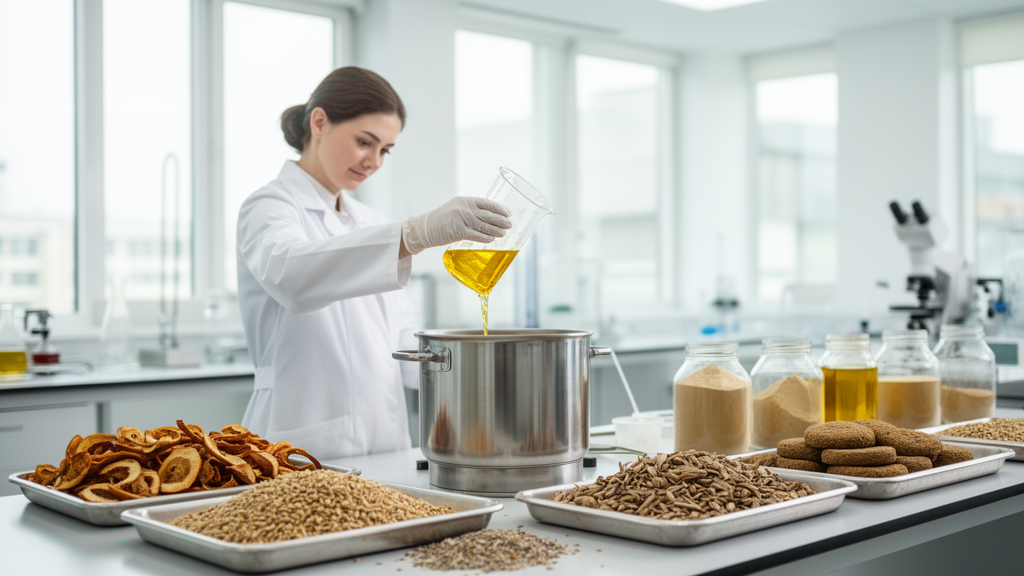
Food production and processing generate enormous quantities of by-products that are currently underutilized or discarded as waste, yet many of these residual streams are rich in nutrients, bioactive compounds and other constituents with nutritional, functional or technological value. A new editorial in Frontiers in Nutrition, published on 28 October 2026 by José Pinela of the Instituto Nacional de Investigação Agrária e Veterinária and Sandrina A. Heleno of the Universidade Politécnica de Bragança, argues that the development of sustainable food systems increasingly depends on identifying new applications for these biomaterials. The editorial introduces a Research Topic in the journal that gathers studies on transforming food by-products into functional ingredients, and it delivers a clear message: chemical characterization alone is not enough to validate a by-product as a food ingredient.
According to the editorial, upcycling these resources into food-grade ingredients requires more than simply characterizing their chemical composition or demonstrating bioactive properties in vitro. Their valorization requires appropriate processing to unlock technological and functional potential, as well as evidence of safety, techno-economic feasibility and consumer acceptance. The contributions gathered in the Research Topic reflect this multidisciplinary approach, encompassing the processing and characterization of plant- and animal-derived biomass for the development of bio-based ingredients, the evaluation of their functional properties and biological effects, and their incorporation into food products. The editorial emphasizes that the challenge is not simply to find new applications for food by-products and processing side streams, but to sustainably transform them into safe, effective and acceptable food ingredients.
The diversity of underutilized resources covered by the Research Topic is striking. Nut-processing by-products, including shells, skins and other residual fractions, were investigated by Zhou and colleagues as possible sources of polysaccharides, phenolic compounds and other functional constituents. Beyond their antioxidant, antimicrobial and anti-inflammatory properties and potential applications in food products, the study highlighted challenges that limit the upcycling of these by-products, including compositional variability, limited extraction efficiency and insufficient data on bioavailability, metabolite transformation and long-term safety of derived extracts. These gaps illustrate why promising laboratory results do not automatically translate into validated ingredients.
Animal-derived side streams also feature prominently in the collection. Yasen and colleagues discussed the valorization potential of camel hump fat, an underused livestock by-product rich in saturated fatty acids at 63.4 percent and monounsaturated fatty acids at 34.7 percent, highlighting opportunities in the food, cosmetic and biomaterial industries alongside the need for additional studies on safety and functionality assessment. Yuan and colleagues explored the skin of farm-raised giant salamanders as a source of eumelanin and evaluated its metabolism and hemostatic effects in vivo. Following administration of the extracted eumelanin to male Wistar rats, antifibrinolytic metabolites were identified in the intestinal metabolome, together with changes in several amino acids. Eumelanin also reduced hemorrhage volume and hemostasis time without altering coagulation parameters beyond physiological ranges, supporting the valorization of this animal by-product.
Processing emerged as a decisive factor across many of the studies summarized in the editorial. Jun and colleagues investigated black rice bran, a rice-milling by-product, after fermentation with the shiitake mushroom fungus Lentinula edodes. The water-soluble fraction obtained from the fermented product reduced fat accumulation in the nematode Caenorhabditis elegans and attenuated age-related declines in motility and intestinal barrier integrity, supporting the potential of fermented black rice bran as a functional food ingredient. In a different approach, Aldayel showed that helium-neon laser irradiation can modulate curcuminoid accumulation in turmeric (Curcuma longa) rhizomes and enhance antioxidant and antimicrobial activities, illustrating how this non-thermal, chemical-free approach may be used to modify the functional properties of plant-derived ingredients.
The importance of processing was also evident in the study of brewer’s spent grain by Minestrini and colleagues. LC-MS/MS analysis showed that oven-drying significantly affected the profiles of sugars, amino acids and phenolic compounds, whereas the extraction solvent was particularly influential for lipids and hordatines. The highest antioxidant capacity was observed in extracts prepared from unprocessed, fresh material, particularly using 40 percent ethanol, suggesting that drying and stabilization steps may also affect desired quality attributes. In a parallel demonstration of extraction method effects, Xu and colleagues compared steam distillation and supercritical fluid extraction for the recovery of essential oil from zhoupigan (Citrus reticulata cv. Manau Gan) peels. The obtained oils presented distinct volatile and aroma profiles and differences in in vitro antioxidant and antibacterial activities, with supercritical fluid extraction showing better performance.
Aquaculture by-products received detailed attention as well. Yan and colleagues demonstrated the importance of processing for the valorization of carp scales, whose rigid structure and low nutrient bioavailability limit their direct use. Sand stir-frying at 150 degrees Celsius for 2.5 minutes improved their nutritional profile by increasing protein content and generating novel low-molecular-weight peptides. These biochemical changes translated into greater anti-inflammatory and organ-protective efficacy in a mouse model of lipopolysaccharide-induced sepsis compared with raw scales. Meanwhile, Wauquier and colleagues investigated a keratin hydrolysate derived from poultry feathers using serum collected from healthy volunteers after ingestion of the hydrolysate. The post-ingestion serum promoted glycosaminoglycan and hyaluronan production and early migration in primary human dermal fibroblasts, while markers of oxidative stress, senescence and apoptosis were reduced. Despite these promising findings for the valorization of aquaculture and poultry industry by-products, the editorial notes that further studies are needed to elucidate the underlying mechanisms and determine whether these effects translate into clinically relevant benefits in humans.
Direct applications of by-products in food products were also demonstrated. Melo Ferreira and colleagues incorporated pasteurized olive pomace paste into high-pressure-processed olive pâtés. The enriched formulations contained higher levels of dietary fiber and vitamin E and showed higher antioxidant capacity than a commercial olive pâté. Additionally, while hydroxytyrosol was not detected in the commercial product, significant amounts were quantified in the fortified pâtés, which also had good consumer acceptance, particularly the formulation containing 20 percent olive pomace paste. Cifte and colleagues, on the other hand, converted black tea waste fiber into instant tea powders using hot extraction at 100 degrees Celsius for 6 minutes and cold extraction at 25 degrees Celsius for 2 hours. Hot extraction yielded higher levels of catechins, condensed phenolics and theanine and showed antiproliferative effects on prostate cancer cells and strong cytotoxicity against U87MG glioblastoma cells. Cold extraction resulted in higher levels of gallic acid and caffeine and exhibited stronger inhibitory effects on MCF7 breast cancer cells. Together, these two studies highlighted the need to consider consumer acceptance, bioavailability and biological effects during the valorization process.
Medicinal-food homologous plants were reviewed by Chen and colleagues for their potential in the prevention and management of hepatic fibrosis, with mechanisms involving oxidative stress and inflammation, hepatic stellate cell activation and the gut-liver axis. The authors also pointed out translational gaps, including the frequent use of poorly characterized extracts and limited pharmacokinetic, toxicological and clinical evidence. This caution mirrors the editorial’s broader conclusion that promising in vitro results must, where relevant, be supported by evidence of bioaccessibility and bioavailability, safety, and relevance to human health and nutrition.
In conclusion, the editorial states that the studies in this Research Topic demonstrate that successful valorization of food by-products requires more than chemical characterization. Processing must be tailored to the physicochemical properties of each by-product and its intended application, as different approaches can either enhance or compromise desirable attributes. Similarly, chemical composition alone does not guarantee functionality. Sustainability must also be demonstrated, not assumed, especially when valorization pathways involve resource-intensive extraction or processing steps, making scalability, environmental impact and economic feasibility important considerations. In the transition from by-product to validated bio-based food ingredient, the editorial concludes, sustainability and nutrition must be considered together.
Subject of Research: Editorial overview of research on transforming food by-products into functional food ingredients
Article Title: Editorial: Transforming food by-products into functional ingredients for sustainable nutrition
Article References: Pinela, J., & Heleno, S. A. (2026). Editorial: Transforming food by-products into functional ingredients for sustainable nutrition. Frontiers in Nutrition, 13, Article 2016793. https://doi.org/10.3389/fnut.2026.2016793
Image Credits: AI Generated
DOI: 10.3389/fnut.2026.2016793
Keywords: food by-products, functional ingredients, sustainable nutrition, upcycling, food processing, bioactive compounds, extraction methods, bioavailability, food safety, consumer acceptance, by-product valorization, functional foods
News Source: Daisy Hatcher. (October 29, 2026). What it really takes to turn food by-products into functional ingredients. Scienmag.