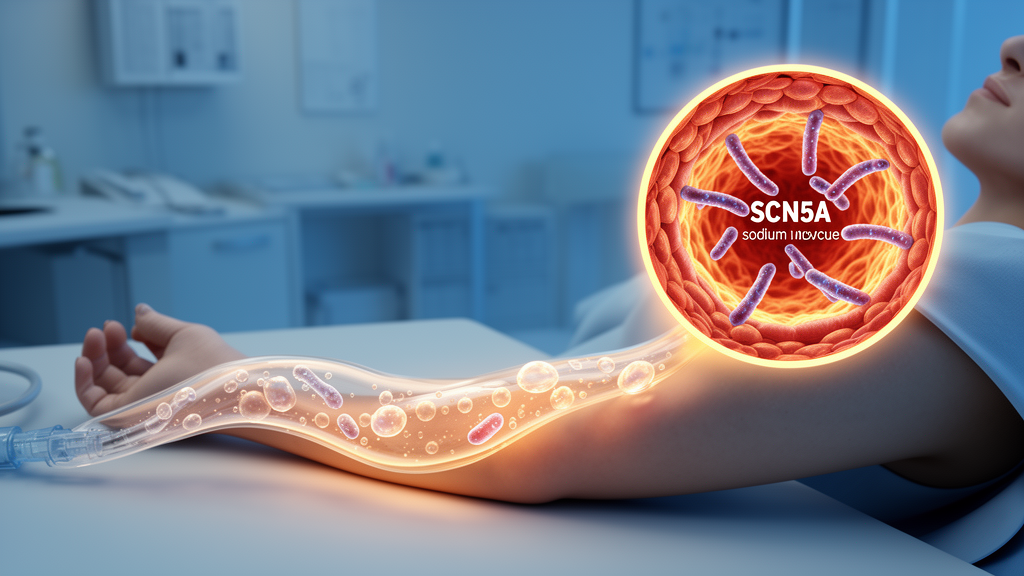
A 64-year-old woman with multiple myeloma and a rare inherited heart rhythm disorder has undergone autologous stem cell transplantation without any arrhythmic events, according to a case report published in Annals of Hematology. The patient carried a germline SCN5A mutation associated with an overlap phenotype of Long QT and Brugada syndromes, a combination that has been considered a potential absolute contraindication to transplantation. The report, published as a peer-reviewed case report under open access on 23 October 2026, describes how a structured, protocol-driven risk mitigation strategy allowed the procedure to proceed safely.
The patient first received daratumumab-based induction therapy, achieving a very good partial response. Stem cell mobilization was then performed using granulocyte colony-stimulating factor alone, and the transplant was carried out with high-dose melphalan conditioning. The multidisciplinary team evaluated the case before proceeding, weighing the cardiac risks of the channelopathy against the therapeutic need for transplantation in a transplant-eligible myeloma patient.
The risk mitigation strategy involved several coordinated measures. Continuous electrocardiographic monitoring was maintained throughout the procedure. Strict electrolyte management was applied, since electrolyte disturbances can provoke dangerous rhythm disturbances in patients with inherited channelopathies. The team also made careful selections of non-QT-prolonging drugs, avoiding medications that could exacerbate the patient’s underlying susceptibility to arrhythmia.
According to the report, no arrhythmic events occurred during the transplant course. Treatment-related toxicities were successfully managed, and hematologic recovery was achieved as expected. The authors note that the case demonstrates that autologous stem cell transplantation is feasible and can be performed safely in multiple myeloma patients with SCN5A-related channelopathies when a multidisciplinary, individualized risk mitigation approach is used.
The report challenges the concept of an absolute contraindication to transplantation in patients with inherited arrhythmic disorders. The authors suggest that continuous electrocardiographic monitoring, strict electrolyte management, careful drug selection, stem cell product washing, and careful management of procedure- and drug-related arrhythmic triggers could mitigate the risk of QT prolongation in transplanted patients with SCN5A-related channelopathy. They also propose that toxicity associated with high-dose melphalan conditioning could be mitigated using such a protocol-driven strategy.
As a single case report, the findings describe one patient’s experience and do not establish general treatment outcomes. The authors state that evidence to guide management of transplantation in patients with inherited arrhythmic disorders remains limited, which is why the case was documented in detail. The multidisciplinary evaluation and individualized planning described in the report may inform future clinical decision-making for similar patients, but broader study would be needed to confirm the safety of this approach across larger populations.
Subject of Research: Autologous stem cell transplantation in a multiple myeloma patient with an SCN5A-related Long QT and Brugada overlap channelopathy
Article Title: Autologous stem cell transplantation in multiple myeloma with SCN5A overlap channelopathy: a structured arrhythmic risk-mitigation strategy
Article References: De Novellis, D., Settembre, L., Rispoli, A., Guariglia, R., Giudice, V., & Serio, B. (2026). Autologous stem cell transplantation in multiple myeloma with SCN5A overlap channelopathy: a structured arrhythmic risk-mitigation strategy. Annals of Hematology. https://doi.org/10.1007/s00277-026-07317-1
Image Credits: AI Generated
DOI: 10.1007/s00277-026-07317-1
Keywords: multiple myeloma, autologous stem cell transplantation, SCN5A, Long QT syndrome, Brugada syndrome, channelopathy, high-dose melphalan, arrhythmia risk, case report, electrocardiographic monitoring, daratumumab, hematology
News Source: Drew Townsend. (October 29, 2026). Stem cell transplant completed safely in myeloma patient with SCN5A channelopathy. Scienmag.