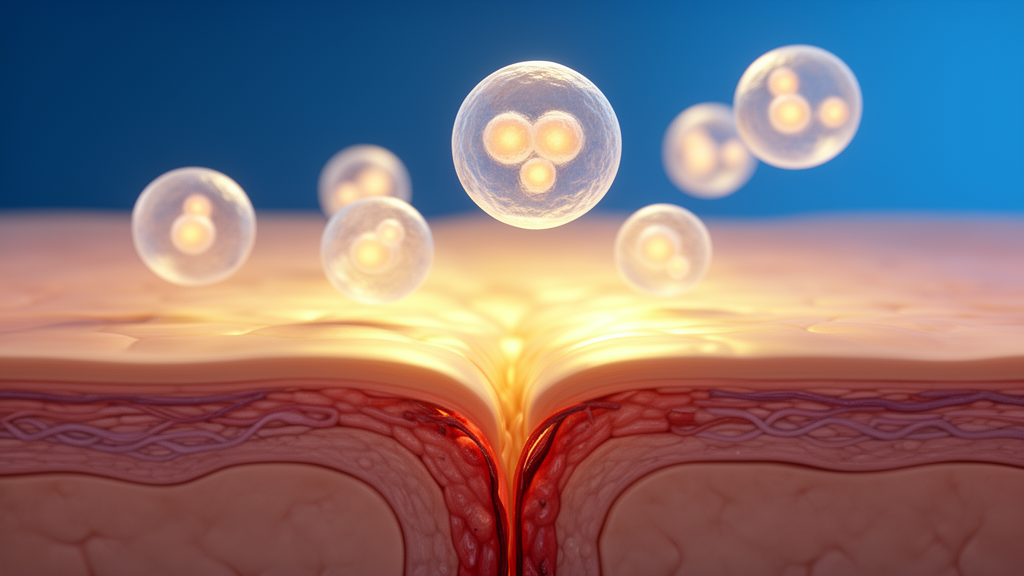
Mesenchymal stem cells, the multipotent repair cells that can be isolated from nearly every tissue in the human body, are emerging as one of the most versatile tools in regenerative medicine, and a new narrative review now draws together the evidence for their use in two of the most demanding applications: healing chronic wounds and reversing the visible decline of aging skin. The review, published in the journal Discover Immunity, argues that these cells act less like replacement parts and more like biological pharmacies, releasing growth factors, cytokines, and vesicles that coax damaged tissue back into repair mode. It also makes a pointed case that neonatal sources, particularly the placenta, may offer the most scalable and potent version of the therapy.
Mesenchymal stem cells, or MSCs, are non-hematopoietic, multipotent cells that adhere to plastic in culture, proliferate for long periods outside the body, and can differentiate into osteoblasts, adipocytes, and chondrocytes in vitro. The International Society for Cell and Gene Therapy sets minimal criteria for identifying them: more than 95 percent must carry the surface markers CD105, CD73, CD44, and CD90, fewer than 2 percent may express CD45, CD34, CD14 or CD11b, CD79α or CD19, and HLA-DR. Beyond these identity cards, the cells secrete factors that are anti-inflammatory, antiapoptotic, and antifibrotic, and they participate in angiogenesis, chemoattraction, and tissue repair, which is precisely the portfolio needed when skin is broken or worn down by age.
The review details why the source of the cells matters. Bone marrow MSCs make up only 0.001 to 0.01 percent of the cell population there, with ten milliliters of aspirate yielding roughly seven hundred thousand cells. Adipose tissue is far richer, containing as much as one percent MSCs, so a single gram can provide about five thousand cells, roughly five hundred times more than the same volume of bone marrow. Neonatal sources outperform both: Wharton’s jelly contains one to five times ten thousand MSCs per centimeter of umbilical cord, and placental tissues can yield between three hundred forty thousand and one million cells per gram, enough, given their expansion capacity, to generate as many as seven thousand therapeutic doses. Cryopreservation of placental tissue does not impair the proliferation, phenotype, or differentiation ability of the MSCs recovered from it, meaning the placenta, otherwise discarded as medical waste, could serve as an off-the-shelf source for allogeneic therapy.
Much of the therapeutic power of MSCs lies in their immunosuppressive reach. They secrete transforming growth factor-beta, interferon-gamma, IL-10, indoleamine 2,3-dioxygenase, hepatocyte growth factor, prostaglandin E2, and galectin-1, molecules that suppress the activation, proliferation, and function of T cells and natural killer cells. They keep dendritic cells immature by inhibiting MHC class II expression and blocking CD40, CD80, CD86, and CD1-α, and they push monocytes and macrophages toward an IL-10-producing, anti-inflammatory M2 phenotype. Extracellular vesicles carry proteins and microRNAs that reinforce this shift, and macrophages can even phagocytose MSCs and become activated M2 cells in the process. Mitochondrial transfer, mainly through microvesicles or tunneling nanotubes, adds another layer: when oxidative phosphorylation in macrophages was blocked or MSC mitochondria were made dysfunctional, the phenotypic conversion no longer occurred, indicating that the donated mitochondria power the change.
Safety data underpin the clinical enthusiasm. A meta-analysis of fifty-five clinical trials encompassing two thousand six hundred ninety-six patients found MSC therapy to be safe, with good tolerance and no studies suspended for serious adverse effects. Twelve MSC products are now approved for marketing worldwide, most of them in South Korea, though only one therapy, using allogeneic bone marrow-derived MSCs, has been approved in the United States. The cells are not without limitations: when injected systemically they can become trapped in the microvasculature of the lungs, their long-term in vivo effectiveness remains uncertain because most studies measure short-term effects, and their immunomodulatory potency may fade as they differentiate or undergo expansion. In one clinical study of bone marrow MSCs for acute graft-versus-host disease, one-year survival was 75 percent in patients who received early-passage cells but only 21 percent in those given later-passage cells, a striking illustration of how potency erodes with expansion.
For wound healing, the clinical signals are concrete. In patients with non-healing chronic lower extremity ulcers, autologous bone marrow MSCs implanted alongside standard wound dressing produced a more than seven-fold improvement in pain-free walking distance and a more than three-fold reduction in ulcer size at twelve weeks compared with standard care alone. A phase 1 study of placenta-derived adherent cells, branded PDA-002, delivered intramuscularly at two doses to fifteen patients with peripheral arterial disease and chronic diabetic foot ulcers found the treatment well tolerated with no dose-limiting toxicity, and seven patients achieved ulcer healing, five complete and two partial, within three months. The subsequent phase 2 multicenter randomized double-blind placebo-controlled trial enrolled one hundred fifty-nine chronic wound patients; through twenty-four months of follow-up there were no treatment-related serious adverse events, and complete wound closure within three months plus four weeks of maintenance occurred in 38.5 percent of patients with ulcers and peripheral arterial disease who received PDA-002 versus 22.5 percent on placebo. Treated patients also showed lower ulcer severity, enhanced vascular status, and less infection.
Cell-free versions of the therapy are advancing in parallel. MSC-derived exosomes, lipid bilayer vesicles thirty to two hundred nanometers across, carry cargo that mimics the parent cells’ function. In a rat burn model, local injection of cord blood MSC-derived exosomes around wound sites accelerated re-epithelialization, increased collagen type 1, and sped closure, while skin cells exposed to heat stress in vitro proliferated more and resisted apoptosis. Placenta-derived MSC exosomes in a full-thickness rat wound model regenerated cutaneous appendages such as hair follicles and sebaceous glands, shifted the collagen balance away from type I toward type III, produced a basket-weave collagen pattern, and improved blood vessel regeneration, outperforming exosomes from adipose-derived MSCs. Exosomes from adipose MSCs reduced fibroblast proliferation and collagen synthesis during scar formation in burn wounds, and exosomes from cord blood conditioned media adsorbed into human skin tissue, integrated into dermal fibroblasts, and promoted cell migration along with collagen I and elastin synthesis.
Biomaterials are being recruited to solve the durability problem, since free MSCs suffer rapid clearance, poor engraftment, and declining paracrine activity. Gingival MSCs seeded into a three-dimensional printed polycaprolactone dressing improved wound closure and reduced scar formation in a rat excisional model. A chitosan and decellularized dermal matrix system acted as a reactive oxygen species scavenger, protecting the cells from oxidative stress while enhancing their retention, blood vessel growth, and healing speed. In a clinical study, autologous bone marrow MSCs delivered in a fibrin polymer spray to patients with acute surgical wounds or chronic lower extremity wounds over a year old adhered immediately, kept the cells viable and migrating, and produced complete healing by twenty weeks with new elastin fibers and no adverse events. A recent double-blind randomized phase II trial showed that a topical gel embedding placenta-derived MSCs significantly accelerated repair of radiation-induced skin damage, alleviated pain, and prevented wound progression. Smart biomaterials that respond to light, temperature, pH, moisture, pressure, or electrical signals promise even finer control, for example releasing cargo only in the acidic environment of a wound.
The rejuvenation evidence spans the laboratory and the clinic. In hairless mice, subcutaneous injections of adipose MSCs increased collagen synthesis, dermal thickness, collagen density, fibroblast number, and angiogenesis, and in UVB-induced wrinkle models subsequent MSC injections significantly improved wrinkles. Conditioned media from umbilical cord MSCs reversed senescence in human dermal fibroblasts, inhibited reactive oxygen species, and promoted cell migration through an autophagy-mediated anti-senescent mechanism, and in D-galactose-induced aging models nude mice given the cells showed dose-dependent decreases in wrinkles and smoother skin texture. Clinically, autologous adipose MSCs injected into the facial skin of patients with solar elastosis regenerated the extracellular matrix, forming new oxytalan and elaunin fibers in the subepidermis and replacing pathologic elastin deposits with a normal elastin matrix, a full structural regeneration of sun-aged skin. Topical cord blood MSC conditioned media strengthened the skin barrier in atopic dermatitis patients within four weeks, and in a study of eighteen young volunteers, injected conditioned media from adipose or placenta-derived MSCs produced significantly lower melanin index, improved gloss and skin water content, and less water loss than a hyaluronic acid control. The review concludes that placenta-derived MSCs, with their easy non-invasive collection, high yields, superior immunoregulatory function, and established safety profile across more than two hundred thirty participants in multiple trials, represent the most promising platform, provided future studies standardize manufacturing, potency testing, and comparative evaluation against other MSC sources.
Subject of Research: Mesenchymal stem cell therapy for skin wound repair and rejuvenation
Article Title: Mesenchymal stem cell therapy for skin repair and rejuvenation
Article References: Raitman, I., Kang, L., Gosiewska, A., Koppisetti, S., & Hariri, R. J. (2026). Mesenchymal stem cell therapy for skin repair and rejuvenation. Discover Immunity, 3(1), Article 11. https://doi.org/10.1007/s44368-026-00031-0
Image Credits: AI Generated
DOI: 10.1007/s44368-026-00031-0
Keywords: mesenchymal stem cells, skin repair, wound healing, skin rejuvenation, placenta-derived MSCs, extracellular vesicles, exosomes, biomaterials, immunomodulation, clinical trials, regenerative medicine, skin aging
News Source: Beatrice Stafford. (October 29, 2026). Stem Cells from Placenta Show Promise for Healing Wounds and Aging Skin. Scienmag.