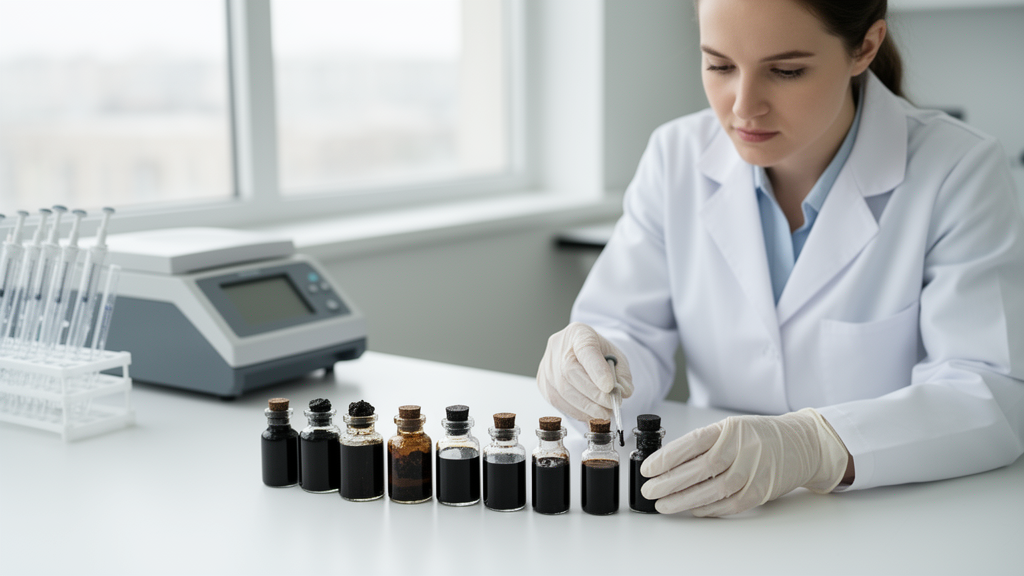
Shilajit, a rock exudate rich in humic substances that has been used for centuries in traditional medicine for fatigue, physical performance and general vitality, has now been systematically characterized across its major global sources. In a study published in npj Science of Food, researchers analyzed ten shilajit samples collected from five mountain regions: the Himalayas, Andes, Altai, Caucasus and Carpathians.
The team applied four complementary analytical approaches. Differential scanning calorimetry (DSC) probed thermal behavior, inductively coupled plasma mass spectrometry (ICP-MS) mapped the elemental composition, liquid chromatography–tandem mass spectrometry (LC-MS/MS) quantified urolithin A, and broth microdilution testing measured antimicrobial activity against five bacterial and five fungal species.
The thermal analysis revealed two distinct groups among the samples. Seven showed only melting transitions between 100 and 159 degrees Celsius, while the remaining three exhibited low-temperature crystallization and sub-zero melting, a split that points to fundamental differences in composition depending on where the exudate originates.
Elemental profiling identified potassium as the dominant macroelement, reaching up to approximately 95,600 parts per million. Essential trace elements including selenium, zinc and iron were also detected. Notably, toxic elements were present at levels well within FDA and WHO tolerable intake thresholds: arsenic ranged from 0.14 to 1.34 ppm, cadmium from 0.01 to 0.10 ppm, and lead from 0.35 to 3.01 ppm. The authors describe these levels as comparable to background concentrations reported in common foods such as dark chocolate.
The most striking variation appeared in urolithin A content, which proved strongly dependent on the extraction solvent. In methanol, measured concentrations ranged from just 0.07 to 1.63 ppm, whereas a methanol/ethyl acetate mixture yielded 3.46 to 58.46 ppm, a difference of nearly two orders of magnitude for the same samples. This solvent dependence has direct implications for how future studies quantify and compare the compound across products.
Antimicrobial activity was selective rather than broad. Minimum inhibitory concentrations ranged from 3.12 to 25 mg/mL, and activity was limited to the bacteria Bacillus subtilis and Staphylococcus aureus and only two fungal strains, Mucor mucedo and Geotrichum candidum. No activity was observed against Escherichia coli or Proteus mirabilis, underscoring that the effect is species-dependent rather than a general antimicrobial property.
Taken together, the findings support the substantial compositional diversity of shilajit across provenances and highlight urolithin A as its most promising bioactive component. The authors note that further standardization and origin-based sourcing studies are needed before bioavailability work and any potential use as a functional food ingredient can proceed. The study is an open-access article published on 23 October 2026, currently shared as an accepted manuscript version that remains subject to final editorial updates.
Subject of Research: Characterization of shilajit from five mountain regions by thermal analysis, elemental profiling, urolithin A quantification and antimicrobial testing
Article Title: Comprehensive characterization of shilajit from varied provenance: elemental profile, urolithin A content, and antimicrobial activity
Article References: Rizun, N., Goia, D., Stefanović, S., Janković, S., Matić, J., Kosanić, M., Rackov, S., & Janković, N. (2026). Comprehensive characterization of shilajit from varied provenance: elemental profile, urolithin A content, and antimicrobial activity. npj Science of Food. https://doi.org/10.1038/s41538-026-01197-5
Image Credits: AI Generated
DOI: 10.1038/s41538-026-01197-5
Keywords: shilajit, urolithin A, ICP-MS, DSC, LC-MS/MS, antimicrobial activity, heavy metals, Himalayas, functional food, humic substances, npj Science of Food, Comprehensive
News Source: Alan Morgan. (October 29, 2026). Shilajit from Five Mountain Ranges Shows Wide Elemental and Antimicrobial Variation. Scienmag.