

• HOME
  • NEWS
  • EXPLORE
    • CAREER
      • Companies
      • Jobs
    • EVENTS
    • iGEM
      • News
      • Team
    • PHOTOS
    • VIDEO
    • WIKI
  • BLOG
  • COMMUNITY
    • FACEBOOK
    • INSTAGRAM
    • TWITTER
Friday, October 30, 2026
BIOENGINEER.ORG
No Result
View All Result
  • Login
  • HOME
  • NEWS
  • EXPLORE
    • CAREER
      • Companies
      • Jobs
        • Lecturer
        • PhD Studentship
        • Postdoc
        • Research Assistant
    • EVENTS
    • iGEM
      • News
      • Team
    • PHOTOS
    • VIDEO
    • WIKI
  • BLOG
  • COMMUNITY
    • FACEBOOK
    • INSTAGRAM
    • TWITTER
No Result
View All Result
Bioengineer.org
No Result
View All Result
Home NEWS Science News Agriculture

Waste-derived fertilisers carry biological risks that depend on treatment, study finds

by
October 29, 2026
in Agriculture
Reading Time: 2 mins read
0
Waste-derived fertilisers carry biological risks that depend on treatment, study finds

Waste-derived fertilisers carry biological risks that depend on treatment, study finds

Share on FacebookShare on TwitterShare on LinkedinShare on RedditShare on Telegram

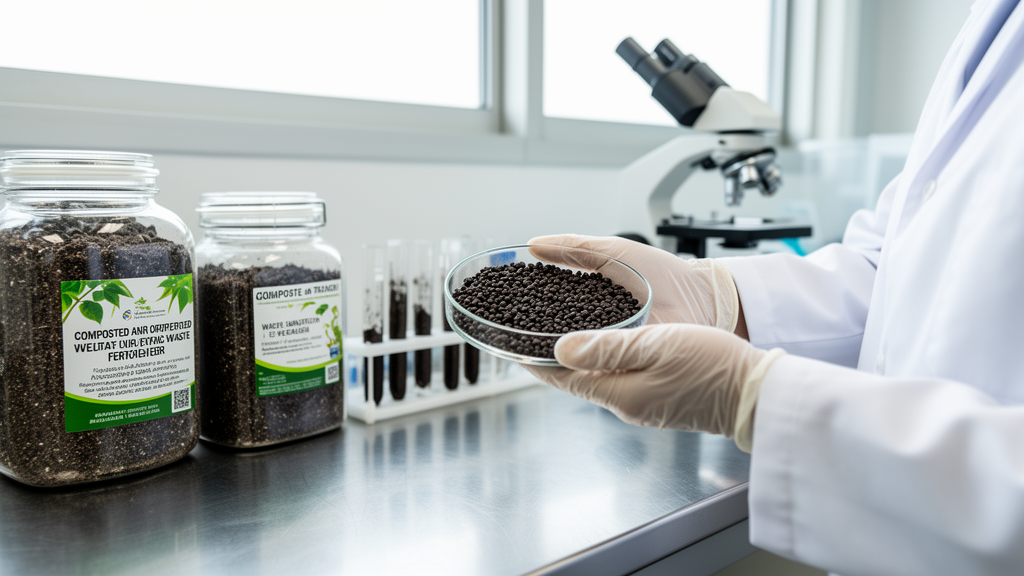
Sustainable fertilisers made from waste streams — manure, compost, digestate, biosolids, struvite and biochar — are promoted as a way to reduce reliance on finite resources and environmental burdens while maintaining agronomic function. But a new review argues that their sustainability depends on treatment performance, contaminant control and life-cycle context, and it puts biological risk at the centre of the assessment.

The review, published in Discover Food on 28 October 2026, is based on a targeted narrative synthesis of literature from 2015 to 2025. From that synthesis the authors built a biological risk framework and tested it through three case scenarios. The first scenario transcribes organism-specific annual probabilities from a published farm-to-fork lettuce model; the other two are qualitative stress tests rather than numerical estimates.

For raw manure applied to lettuce, the published model reported annual infection probabilities of 7.03 × 10⁻⁴ for Cryptosporidium, 2.27 × 10⁻⁴ for pathogenic Escherichia coli, 5.43 × 10⁻⁵ for Listeria and 1.79 × 10⁻¹ for Mycobacterium avium, the latter using an animal-derived dose-response function. When the fertiliser was pasteurised digestate, the corresponding modelled probabilities fell to 1.42 × 10⁻¹⁰ or below — a difference of many orders of magnitude that underlines how strongly treatment determines risk.

The framework is deliberately cautious about what it cannot quantify. No numerical probability is assigned to a carrot scenario, because missing route-specific exposure data prevent application of the published Ascaris dose-response model. Likewise, no absolute probability is estimated for antimicrobial resistance, since validated dose-response functions for environmental acquisition of antimicrobial resistance genes are unavailable.

What the review does support is the value of validated controls. Treatment, curing, monitoring and multi-barrier approaches can reduce biological hazards, but the authors stress that performance must be verified for each specific matrix, process and use — a finding that cannot be generalised from one fertiliser type or pathogen to another.

Key research gaps remain. The authors identify viruses, helminths, transfer of antimicrobial resistance genes, long-term field outcomes, and the environmental burdens of energy- or reagent-intensive treatments as areas where evidence is still insufficient. Until those gaps are filled, the review suggests, claims about the safety of waste-derived fertilisers should be tied to verified treatment performance rather than assumed from the fertiliser category alone.

Subject of Research: Biological risks of waste-derived fertilisers such as manure, compost, digestate, biosolids, struvite and biochar

Article Title: Waste-derived fertilisers under a biological risk lens

Article References: Chojnacka, K. (2026). Waste-derived fertilisers under a biological risk lens. Discover Food. https://doi.org/10.1007/s44187-026-01321-0

Image Credits: AI Generated

DOI: 10.1007/s44187-026-01321-0

Keywords: waste-derived fertilisers, manure, digestate, biosolids, struvite, biochar, pathogens, antimicrobial resistance, food safety, risk assessment, compost, lettuce

News Source: Alan Morgan. (October 29, 2026). Waste-derived fertilisers carry biological risks that depend on treatment, study finds. Scienmag.


Tags: Antimicrobial Resistancebiocharbiosolidscompostdigestatefood safetylettucemanurepathogensrisk assessmentstruvitewaste-derived fertilisers
Share12Tweet7Share2ShareShareShare1

Related Posts

Freeze-Dried Chips Made from Discarded Prawns Win the Taste Test

Freeze-Dried Chips Made from Discarded Prawns Win the Taste Test

October 30, 2026
European farmers split on agroforestry as policy support proves decisive

European farmers split on agroforestry as policy support proves decisive

October 30, 2026

Microalgae Triple Team Beats Bean Damping-Off and Boosts Yields in Egyptian Field Trials

October 30, 2026

Robot Hand Mimics Human Fingers to Pick Chili Peppers Without Damage

October 30, 2026

POPULAR NEWS

  • Microbial Sources and Stress Shape the Hidden Endophytes of an Invasive Plant

    Microbial Sources and Stress Shape the Hidden Endophytes of an Invasive Plant

    29 shares
    Share 12 Tweet 7
  • Firebreaks Leave Lasting Scars in Grasslands While Wildfire Heals Fast

    29 shares
    Share 12 Tweet 7
  • ZNF207 shields glutamine transporter ASCT2 from degradation to fuel liver cancer growth

    29 shares
    Share 12 Tweet 7
  • Systematic review maps sustainability tensions in offshore wind development

    29 shares
    Share 12 Tweet 7

About

We bring you the latest biotechnology news from best research centers and universities around the world. Check our website.

Follow us

Recent News

Microbial Sources and Stress Shape the Hidden Endophytes of an Invasive Plant

Firebreaks Leave Lasting Scars in Grasslands While Wildfire Heals Fast

ZNF207 shields glutamine transporter ASCT2 from degradation to fuel liver cancer growth

Subscribe to Blog via Email

Enter your email address to subscribe to this blog and receive notifications of new posts by email.

Join 86 other subscribers
  • Contact Us

Bioengineer.org © Copyright 2023 All Rights Reserved.

Welcome Back!

Login to your account below

Forgotten Password?

Retrieve your password

Please enter your username or email address to reset your password.

Log In
No Result
View All Result
  • Homepages
    • Home Page 1
    • Home Page 2
  • News
  • National
  • Business
  • Health
  • Lifestyle
  • Science

Bioengineer.org © Copyright 2023 All Rights Reserved.
