


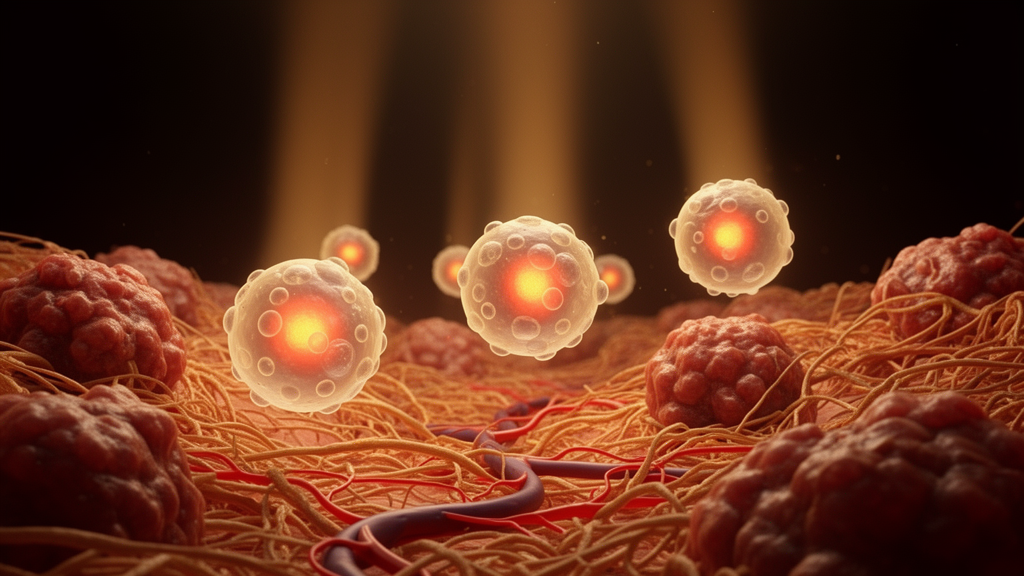
A comprehensive review published in Frontiers in Bioengineering and Biotechnology argues that the safety of near-infrared (NIR) responsive theranostic platforms cannot be judged in isolation from the diseased tissues they are designed to treat. The review, written by Vivek S. S. Chougule, Sweta Acharya, Adarsh Sharma, Arya Ojha and Ankit Jain of the Industrial Research Laboratory at Birla Institute of Technology and Science Pilani, synthesizes scattered findings on how tumor, inflammatory and infectious microenvironments alter the degradation, activation, bioactivity and toxicity of NIR-responsive dyes and dye-conjugated nanomaterials. The authors describe the work as a review article, meaning it evaluates and organizes existing published research rather than presenting new laboratory experiments of its own.
NIR-responsive theranostic platforms combine diagnosis and therapy within a single nanoscale system, exploiting the ability of NIR radiation to penetrate deep into tissue, scatter weakly and avoid the background autofluorescence that complicates conventional optical imaging. The near-infrared range is divided into two biological windows: NIR-I, spanning roughly 700 to 950 nanometers, and NIR-II, spanning roughly 1000 to 1700 nanometers. NIR-I technology is popular because laser systems and approved fluorophores such as indocyanine green (ICG) are readily available, while NIR-II is preferred for its deeper penetration, lower photon scattering and reduced background fluorescence. These platforms enable photothermal therapy, in which absorbed light is converted into heat, and photodynamic therapy, in which photosensitizers generate reactive oxygen species (ROS), alongside fluorescence and photoacoustic imaging that allow real-time tracking of therapeutic response.
The material classes used to build these platforms differ sharply in their toxicological profiles. Organic fluorophores, including cyanine dyes, squaraine dyes, diketopyrrolopyrroles, BODIPY derivatives and conjugated polymers, show desirable biodegradation characteristics and controllable optical properties, though they suffer from photobleaching. Inorganic nanomaterials such as gold nanostructures, copper sulfide nanoparticles, transition-metal dichalcogenides, quantum dots, rare-earth nanoparticles and carbon nanomaterials deliver high photothermal conversion efficiency and imaging performance, but they raise concerns about long-term tissue retention, biodegradation and metal toxicity. Hybrid platforms combining organic and inorganic components aim to enhance stability and therapeutic outcomes while reducing adverse effects, yet their complexity raises its own questions about toxicity, stability and biological interactions.
At the molecular level, the review emphasizes that structure and toxicity are tightly linked. Modifying the π-conjugation length, heterocyclic rings, electron donors and acceptors, or terminal groups of dyes such as cyanines, ICG, BODIPY, squaraines and porphyrins controls absorption and emission in both biological windows, but structural changes intended to improve optical performance can reduce safety. The authors cite recent studies showing that minor chemical changes affect ROS production, cellular absorption and light toxicity, and that halogen substitution in cyanines influences ROS, toxicity, absorption and phototoxicity. Only some cyanines showed significant light-dependent cytotoxicity in earlier work, underscoring how strongly molecular structure shapes biological response. Extending π-conjugation shifts absorption toward NIR-II, but highly conjugated polymethines risk aggregation, quenching, photodegradation and altered biomolecular interactions, and nanoformulation does not replace toxicity assessment of the dye, its metabolites and breakdown products.
Composition and surface chemistry at the nanoscale matter just as much. The review highlights gold nanorods as a cautionary example: despite an inert gold core, their synthesis typically uses the surfactant CTAB, and studies show that the toxicity of CTAB-capped gold nanorods arises primarily from the surfactant layer rather than the metal, with CTAB-coated rods inducing mitochondrial damage, ROS, apoptosis and autophagy regardless of aspect ratio, while polymer coatings such as polystyrene sulfonate reduce these effects. Copper sulfide nanoplates show dose-dependent toxicity in endothelial and macrophage cells, and intravenous injection leads primarily to accumulation in the liver, spleen and lungs. For upconversion nanoparticles, the host lattice, dopants, ligands and coatings influence stability, protein interactions, cellular uptake and toxicity, driving ROS production, membrane disruption, oxidative stress, DNA damage, mitochondrial problems and inflammation. Size effects are not linear: seven-nanometer gold nanorods showed a lower residual body burden than 14-nanometer rods after 30 days, yet smaller particles can also be more reactive because of their larger surface area and intracellular access.
The central novelty of the review lies in its treatment of the disease microenvironment as a safety modifier. Pathological tissues typically display low extracellular pH, hypoxia, elevated reactive oxygen species, increased vascular permeability, altered enzyme expression and inflammatory responses, and these cues can selectively activate NIR-responsive nanomaterials while simultaneously changing their fate. In ROS-rich environments, oxidation-sensitive bonds such as thioketals cleave to trigger drug release and carrier disassembly. One reported liposomal system achieved a 93.5 percent cell inhibition rate in vitro and a 94.9 percent tumor growth inhibition rate in vivo, using ICG-mediated ROS production under 808-nanometer irradiation to regenerate doxorubicin from a ROS-responsive prodrug. A lignin-based nanosystem with thioketal-linked doxorubicin induced ROS formation in 4T1 breast cancer cells but had minimal effect on L929 fibroblasts, and a biodegradable NIR-II fluorescent polymer used photogenerated ROS to cleave its own thioketal linkages, decomposing the carrier and alleviating risks associated with cationic systems.
Acidosis and hypoxia act on these platforms in complementary ways. Slightly acidic tumor and inflammatory environments can alter nanoparticle surface charge, stability, degradation, aggregation, cellular uptake and drug release; one pH-responsive material showed a photothermal conversion efficiency about 4.67 times higher at pH 6.5 than at pH 7.4, and an NIR-II PTDG nanoplatform with acid-labile ester linkages achieved complete tumor inhibition when combined anti-vascular and photothermal therapy was applied, with particles remaining inside tumors for over two weeks. Hypoxia presents a double-edged challenge because photodynamic therapy depends on oxygen, yet some platforms deliberately exploit low oxygen: ICG-loaded hypoxia-sensitive polyprodrug micelles used NIR-triggered ICG-mediated oxygen depletion as the signal that releases hypoxia-sensitive camptothecin, while other systems supply oxygen through perfluorocarbons, ZnO2, platinum-based materials, catalase or cerium catalysis. The review cautions that oxygen overproduction followed by ICG-induced ROS formation may increase oxidative stress in neighboring healthy tissue, and that metal-containing oxygen generators may exacerbate metal-ion release, organ accumulation, inflammation and long-term excretion.
Microbial environments add another layer of complexity. Biofilms contain gradients of pH, oxygen and extracellular polymeric substances that influence nanoparticle penetration, and bacterial stress responses can limit photothermal effects. One berberine hydrochloride and ICG nanoparticle system achieved 36 percent photothermal efficiency and released 67.73 percent of its berberine under NIR irradiation, while an Au@mSiO2-Arg/ICG system eliminated 99.98 percent of biofilms under 808-nanometer irradiation at 0.8 watts per square centimeter, with nitric oxide suppressing heat-shock protein 70 and extracellular polymeric substances so that bacteria could be killed at lower temperatures, reducing tissue damage. The review also stresses that ROS and photothermal effects can damage nearby healthy tissue, including keratinocytes, fibroblasts and mucosa, and may adversely affect beneficial microbiomes.
On biological fate, the review distinguishes dye clearance from carrier clearance, noting that NIR fluorescence clearance does not reflect total nanomaterial clearance because of deaggregation, degradation, photobleaching or ICG metabolism even when the carrier remains in tissues. J-aggregated ICG nanoparticles were gradually dissolved into monomeric ICG in tumors, with tumor-specific fluorescence peaking around 48 hours after administration, while J-aggregated ICG that localized in reticuloendothelial system organs behaved differently. Organ-level quantification has shown considerable accumulation of ICG nanocarriers in the liver, with distribution in the spleen, lungs, kidneys and intestine. The protein corona further shapes biodistribution, immune recognition and macrophage uptake, and one study of 7-nanometer PEGylated carbon nanodots with an ICG coating reported an IC50 above 500 micrograms per milliliter across several cancer-cell models with no significant hepatic or renal toxicity during the observation period.
Phototoxicity and immunotoxicity receive dedicated attention, with the authors distinguishing dark toxicity from photoinduced toxicity and physiological immune activation from pathological inflammation. ROS can cause mitochondrial and DNA damage, heating can denature proteins and cause necrosis, and photoactivation can trigger immunogenic cell death marked by calreticulin, ATP and HMGB1 release, which some studies have converted into systemic antitumor immune responses. Excessive ROS production and overactivation of macrophages and dendritic cells, however, can drive cytokine production including IL-1β, IL-6 and TNF-α and initiate unnecessary systemic inflammation. On regulation, the review notes that current frameworks from the FDA, ISO, OECD and ICH were not designed for NIR-specific parameters such as wavelength, irradiance, thermal dose, oxygen dependence and photodegradation, and it points to AuroShell, a silica-gold nanoparticle that has undergone clinical testing for NIR photothermal therapy but remains far from common practice, as evidence of the remaining translational barriers. The authors conclude that future research should prioritize predictive structure-toxicity models, long-term safety assessment, disease-specific activation strategies, advanced biological models such as 3D spheroids and organoids, standardized irradiation protocols and reproducible manufacturing before NIR-responsive theranostics can move reliably from preclinical promise to clinical use.
Subject of Research: Toxicological challenges and disease microenvironment effects of near-infrared responsive theranostic nanomaterials
Article Title: Near-infrared responsive theranostic platforms: toxicological challenges, biological interactions, and clinical translation
Article References: Chougule, V. S. S., Acharya, S., Sharma, A., Ojha, A., & Jain, A. (2026). Near-infrared responsive theranostic platforms: toxicological challenges, biological interactions, and clinical translation. Frontiers in Bioengineering and Biotechnology, 14, Article 1998995. https://doi.org/10.3389/fbioe.2026.1998995
Image Credits: AI Generated
DOI: 10.3389/fbioe.2026.1998995
Keywords: near-infrared, theranostics, nanomedicine, photothermal therapy, photodynamic therapy, indocyanine green, tumor microenvironment, hypoxia, reactive oxygen species, acidosis, nanotoxicity, biodegradability
News Source: Charles Cole. (October 28, 2026). Disease Microenvironments May Reshape the Safety of Near-Infrared Theranostic Nanomaterials, Review Finds. Scienmag.



