

• HOME
  • NEWS
  • EXPLORE
    • CAREER
      • Companies
      • Jobs
    • EVENTS
    • iGEM
      • News
      • Team
    • PHOTOS
    • VIDEO
    • WIKI
  • BLOG
  • COMMUNITY
    • FACEBOOK
    • INSTAGRAM
    • TWITTER
Sunday, November 1, 2026
BIOENGINEER.ORG
No Result
View All Result
  • Login
  • HOME
  • NEWS
  • EXPLORE
    • CAREER
      • Companies
      • Jobs
        • Lecturer
        • PhD Studentship
        • Postdoc
        • Research Assistant
    • EVENTS
    • iGEM
      • News
      • Team
    • PHOTOS
    • VIDEO
    • WIKI
  • BLOG
  • COMMUNITY
    • FACEBOOK
    • INSTAGRAM
    • TWITTER
No Result
View All Result
Bioengineer.org
No Result
View All Result
Home NEWS Science News Biology

Neural Field Model Fitting Suggests Reduced Corticothalamic Integrity in Disorders of Consciousness

by
October 29, 2026
in Biology
Reading Time: 2 mins read
0
Neural Field Model Fitting Suggests Reduced Corticothalamic Integrity in Disorders of Consciousness

Neural Field Model Fitting Suggests Reduced Corticothalamic Integrity in Disorders of Consciousness

Share on FacebookShare on TwitterShare on LinkedinShare on RedditShare on Telegram

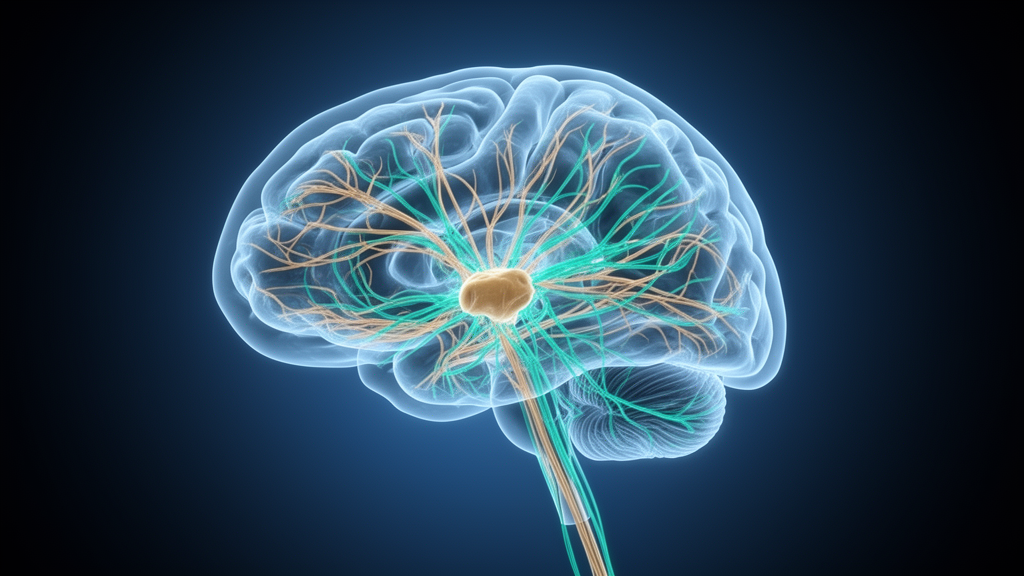
Researchers have fitted biophysically informed corticothalamic neural field models to high-density EEG recordings in order to probe thalamocortical function in disorders of consciousness, according to a multicentre study published in PLOS Computational Biology. The work, led by Lín Cóngyǔ and colleagues, analysed two large independent datasets comprising 203 patients with unresponsive wakefulness syndrome, also known as vegetative state, 270 patients in a minimally conscious state, and 74 healthy controls.

For each participant, the team fitted the model to empirical EEG data and then used the resulting parameters to simulate EEG time series on a per-subject basis. By comparing complexity metrics computed from the real and simulated recordings, the model reliably captured the spectral features of the brain activity across different states of consciousness.

The fitted parameters revealed reduced corticothalamic integrity in patients with disorders of consciousness, and this reduction was more pronounced in the unresponsive wakefulness group than in the minimally conscious group.

Importantly, the simulated EEG reproduced the complexity patterns seen in the empirical recordings.

Because the study was conducted in patient cohorts rather than as a clinical trial, the findings describe associations between model parameters and diagnostic categories rather than the efficacy of any treatment. The authors present the approach as a research tool for understanding neural mechanisms underlying disorders of consciousness, particularly in distinguishing limited awareness in the minimally conscious state from complete unawareness in unresponsive wakefulness syndrome.

Subject of Research: Computational modelling of thalamocortical function in disorders of consciousness using EEG

Article Title: Individualised electrophysiological neural field models for the assessment of thalamocortical function in disorders of consciousness: A multicentre study

Article References: Cóngyǔ, L., Tewarie, P., Alnagger, N. L. N., Mindlin, I., Van der Lande, G. J. M., Belloli, L., Laureys, S., Naccache, L., Rohaut, B., Thibaut, A., Annen, J., Gosseries, O., Núñez, P., & Sitt, J. D. (2026). Individualised electrophysiological neural field models for the assessment of thalamocortical function in disorders of consciousness: A multicentre study. PLOS Computational Biology, 22(10), e1014905. https://doi.org/10.1371/journal.pcbi.1014905

Image Credits: AI Generated

DOI: 10.1371/journal.pcbi.1014905

Keywords: disorders of consciousness, EEG, neural field model, thalamocortical, minimally conscious state, unresponsive wakefulness syndrome, permutation entropy, mesocircuit hypothesis, computational neuroscience, multicentre study, Individualised, electrophysiological

News Source: Cassandra Pierce. (October 28, 2026). Neural Field Model Fitting Suggests Reduced Corticothalamic Integrity in Disorders of Consciousness. Scienmag.


Tags: Computational neurosciencedisorders of consciousnessEEGelectrophysiologicalIndividualisedmesocircuit hypothesisminimally conscious statemulticentre studyneural field modelpermutation entropythalamocorticalunresponsive wakefulness syndrome
Share12Tweet7Share2ShareShareShare1

Related Posts

Microbial Sources and Stress Shape the Hidden Endophytes of an Invasive Plant

Microbial Sources and Stress Shape the Hidden Endophytes of an Invasive Plant

October 30, 2026
Firebreaks Leave Lasting Scars in Grasslands While Wildfire Heals Fast

Firebreaks Leave Lasting Scars in Grasslands While Wildfire Heals Fast

October 30, 2026

Hidden Peptides in Non-Coding RNAs Reshape Cardiovascular Biology

October 30, 2026

Phage K Holin’s C-Terminal Region Shapes Antibacterial Activity, Study Finds

October 30, 2026

POPULAR NEWS

  • Microbial Sources and Stress Shape the Hidden Endophytes of an Invasive Plant

    Microbial Sources and Stress Shape the Hidden Endophytes of an Invasive Plant

    29 shares
    Share 12 Tweet 7
  • Firebreaks Leave Lasting Scars in Grasslands While Wildfire Heals Fast

    29 shares
    Share 12 Tweet 7
  • ZNF207 shields glutamine transporter ASCT2 from degradation to fuel liver cancer growth

    29 shares
    Share 12 Tweet 7
  • Systematic review maps sustainability tensions in offshore wind development

    29 shares
    Share 12 Tweet 7

About

We bring you the latest biotechnology news from best research centers and universities around the world. Check our website.

Follow us

Recent News

Microbial Sources and Stress Shape the Hidden Endophytes of an Invasive Plant

Firebreaks Leave Lasting Scars in Grasslands While Wildfire Heals Fast

ZNF207 shields glutamine transporter ASCT2 from degradation to fuel liver cancer growth

Subscribe to Blog via Email

Enter your email address to subscribe to this blog and receive notifications of new posts by email.

Join 86 other subscribers
  • Contact Us

Bioengineer.org © Copyright 2023 All Rights Reserved.

Welcome Back!

Login to your account below

Forgotten Password?

Retrieve your password

Please enter your username or email address to reset your password.

Log In
No Result
View All Result
  • Homepages
    • Home Page 1
    • Home Page 2
  • News
  • National
  • Business
  • Health
  • Lifestyle
  • Science

Bioengineer.org © Copyright 2023 All Rights Reserved.
