Amorphous nickel phosphate has emerged as a promising electrode material for supercapatteries, but a new study argues that the field has been looking in the wrong place for performance gains. Rather than simply maximizing surface area or shrinking particles, researchers report that the internal structure of the particles themselves—pores inside particles, alongside the disorder of the amorphous framework—plays a decisive role in how well the electrode performs.
The team synthesized nickel phosphate using ethylene glycol as a structural modifier, a choice that turned out to do two jobs at once. Ethylene glycol acted as a capping agent, restricting how large the particles could grow, and simultaneously as a templating agent, inducing a porous structure within them. As the ethylene glycol concentration increased, structural analysis showed a transition from dense blocks to smaller, irregular spheres that contained co-existing intraparticle pores.
What distinguishes this work, according to the authors, is the effort to separate the effects of interparticle mesopores, intraparticle pores, particle size, and structural disorder on electrochemical behaviour, instead of correlating performance solely with surface area or particle size. Electrochemical testing identified nickel phosphate prepared with an 18.75 percent ethylene glycol concentration as the optimal configuration, delivering a specific capacity of 386.7 C g⁻¹ at 0.8 A g⁻¹.
A full supercapattery device built with the optimized electrode delivered a maximum specific capacity of 13 C g⁻¹ at 0.8 A g⁻¹ and retained approximately 75 percent of its post-activation capacity after 5000 cycles. The authors emphasize that maximizing surface area or minimizing particle size does not necessarily produce the best electrode; instead, the intermediate ethylene glycol concentration struck a balance between pore accessibility, hydroxide ion transport, internal active-site utilization, and electronic connectivity.
The findings suggest that electrode engineering for supercapatteries should look beyond nanoscale particle engineering and interparticle porosity, which are established strategies for facilitating electrolyte-ion transport, and consider how the internal architecture of amorphous materials can be deliberately designed and exploited.
Subject of Research: Synthesis of porous amorphous nickel phosphate supercapattery electrodes using ethylene glycol as a structural modifier
Article Title: Balancing intraparticle porosity and structural disorder in amorphous nickel phosphate for enhanced supercapattery performance
Article References: Rosli, A., Omar, F. S., Khairudin, A., Mohd Akhiri, A. S., & Abu Hassanisazin, N. I. A. (2026). Balancing intraparticle porosity and structural disorder in amorphous nickel phosphate for enhanced supercapattery performance. Ionics. https://doi.org/10.1007/s11581-026-07588-8
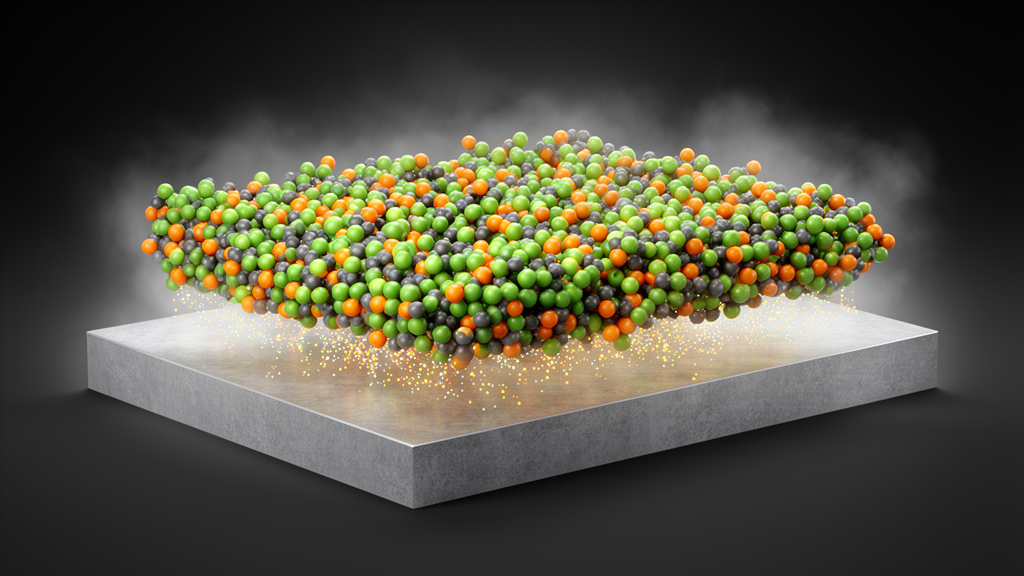
Image Credits: AI Generated
DOI: 10.1007/s11581-026-07588-8
Keywords: supercapattery, nickel phosphate, amorphous materials, ethylene glycol, porosity, electrode design, specific capacity, energy storage, structural disorder, nanomaterials, Balancing, intraparticle
News Source: Denise Maddox. (October 28, 2026). Porous amorphous nickel phosphate electrode boosts supercapattery capacity. Scienmag.