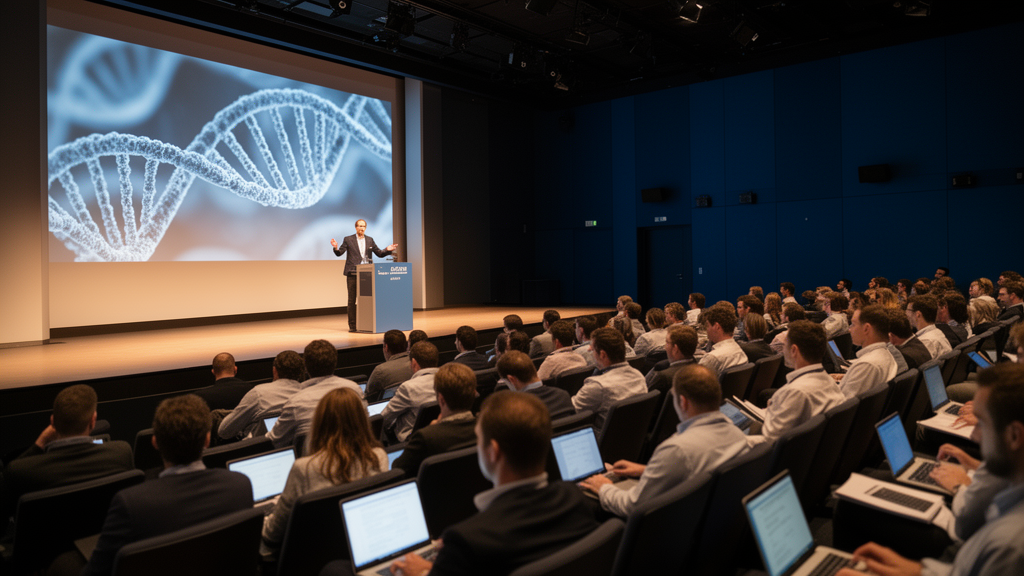
At the 53rd Annual Meeting of the Japanese Environmental Mutagen and Genome Society (JEMS), held in Okayama, Japan, on December 7 and 8, 2024, a dedicated symposium made the case that the future of genotoxicity assessment will be written in code as much as in the laboratory. Symposium 3, titled “Potential for Computational Genotoxicity,” took place on December 8, 2024, at Shujitsu University and brought together three internationally recognized specialists to argue that informatics technologies, from structure-activity modeling to error-corrected sequencing, are reshaping how scientists evaluate whether chemicals can damage DNA. A new meeting report, published in the journal Genes and Environment, summarizes the presentations and discussions for a wider audience.
The symposium was organized by Dr. Naoki Koyama of Chugai Pharmaceutical Co., Ltd. and Dr. Ayako Furuhama, and its stated goal was ambitious: to build a computational genotoxicity platform that supports a more data-informed approach to assessing the genotoxicity of drug products and a broad range of environmental mutagens. In his opening address, Dr. Koyama, who chaired the session, drew a careful distinction between two related terms. Computational toxicology, he noted, is an established field that uses computer-based models to predict how biological organisms, at levels ranging from populations to molecules, interact with chemical agents. Computational genotoxicity, by contrast, has not yet been formally defined. Koyama proposed viewing it as a field that integrates a wide variety of informatics data to elucidate, analyze, and predict genotoxicity-related phenomena from multiple perspectives, with technologies such as (quantitative) structure-activity relationship ((Q)SAR) modeling and error-corrected next-generation sequencing (ecNGS) serving as its core tools.
The first invited presentation came from Dr. Naomi Louise Kruhlak of the U.S. Food and Drug Administration’s Center for Drug Evaluation and Research (FDA/CDER), described in the report as a pioneer of (Q)SAR research in genetic toxicology. Her talk covered both the methodology and its practical use in pharmaceutical regulation. (Q)SAR computational models can predict toxicity based solely on a chemical’s structure, and FDA/CDER uses them to generate predictions for chemicals under review, such as drug impurities, when robust experimental data are unavailable. This regulatory reality has been reinforced by guidance: the International Council for Harmonisation (ICH) M7 guideline, first published in 2014, recommends (Q)SAR approaches as alternatives to the Ames test for evaluating the mutagenicity of impurities. According to the report, that recommendation has fueled growing interest in (Q)SAR modeling for drug development and regulation.
Kruhlak also presented her most recent work on modeling the carcinogenic potency of a sub-class of mutagenic impurities known as nitrosamines. That effort has resulted in the regulatory implementation of a categorical SAR model, referred to in the report’s abbreviations as the Carcinogenic Potency Categorization Approach (CPCA), to determine acceptable intake limits for these compounds. In closing her presentation, Kruhlak shared practical considerations for the regulatory use of (Q)SAR models, aimed at promoting transparency and enhancing predictive performance.
The second talk, by Dr. Nicolas Ken Shinada of SBX Corporation, tackled a different bottleneck: the cost and speed of traditional genotoxicity testing. Shinada argued that conventional methods such as the Ames test are expensive, time-consuming, and labor-intensive, and that reliable in silico methods, particularly artificial intelligence (AI) tools, are fundamental to the drug design process. He presented recent research using machine learning (ML) and natural language processing (NLP) to develop cost-effective and scalable in silico mutagenicity prediction models. Yet he was candid about the central obstacle: constructing reliable genotoxicity models requires substantial training data, and the structured resources that exist, such as the Hansen mutagenicity benchmark dataset and various (Q)SAR databases, cover only part of the available knowledge.
That gap led Shinada to the scientific literature itself. A vast amount of valuable information on mutagenicity is embedded in published papers but remains underutilized, largely because extracting structured data from unstructured text is difficult. His response was a novel text-mining framework built on a transformer-based model called MutaPredBERT, which reformulates the extraction task as a biomedical question-answering problem, allowing the model to pull mutagenic information directly from scientific abstracts. On a curated dataset, the model achieved a high macro F1-score of 0.88, a result the report presents as evidence of its accuracy. Shinada also highlighted a separate 2022 machine learning study on optimizing molecular fingerprint-based models through systematic feature selection, in which algorithms such as descriptors aggregation and recursive feature elimination significantly improved prediction performance. His overall message was that modernizing mutagenicity assessment will require a multidisciplinary strategy combining cheminformatics and NLP rather than any single technique.
The third presentation shifted from chemistry to sequencing. Dr. Kazuki Izawa of the Division of Genome Safety Science at the National Institute of Health Sciences spoke on ecNGS-based data analysis. Izawa emphasized that domain knowledge, not just computational power, is crucial for developing ecNGS technologies. Researchers need a deep understanding of chemical mutagens, genome structure, mutation types, and the potential artifacts that arise within the data analysis pipeline.
Izawa explained that the DNA synthesizing steps in library preparation, such as end-repair, introduce artifacts that produce residual errors in low-frequency mutation detection. He demonstrated that identifying and filtering these artifacts is essential for accurate mutation quantification. His presentation, according to the report, highlighted the critical synergy between data-driven science and human expertise, and he called for genotoxicity researchers to collaborate with informatics scientists to fully harness these technologies.
The meeting itself was well attended: the 53rd Annual Meeting of JEMS attracted over 200 participants, and Symposium 3 brought together stakeholders and researchers from various sectors to take stock of the field. In the report’s conclusion, the authors state that participants gained an understanding of computational genotoxicity as a new and rapidly evolving discipline, and that the symposium showed how informatics technologies like (Q)SAR and ecNGS are, in their words, revolutionizing genotoxicity prediction. The four talks mapped neatly onto that vision: Koyama supplied the foundational concepts, Kruhlak contributed practical regulatory experience with (Q)SAR, Shinada presented machine learning prediction models at the research frontier, and Izawa underscored the indispensable role of domain knowledge in interpreting complex ecNGS data.
The report’s authors, who include Koyama, Furuhama, Kruhlak, Shinada, and Izawa, frame computational genotoxicity as an emerging interdisciplinary field that integrates informatics and biological expertise to enable more efficient and accurate genotoxicity evaluation. The organizers express hope that publishing the summary will increase awareness of the field, and they thank Professor Masahiko Watanabe, President of the 53rd Annual Meeting of JEMS, along with the organizing committee and the staff of Senkyo Co., Ltd., for their support. No datasets were generated or analyzed during the preparation of the report itself.
Subject of Research: Computational genotoxicity approaches including (Q)SAR modeling, machine learning prediction, and error-corrected next-generation sequencing for genotoxicity assessment
Article Title: Potential for Computational Genotoxicity: A Report on Symposium 3 of the 53rd Annual Meeting of the Japanese Environmental Mutagen and Genome Society (JEMS), 2024
Article References: Koyama, N., Furuhama, A., Kruhlak, N. L., Shinada, N. K., & Izawa, K. (2026). Potential for Computational Genotoxicity: A Report on Symposium 3 of the 53rd Annual Meeting of the Japanese Environmental Mutagen and Genome Society (JEMS), 2024. Genes and Environment, 48(1), Article 8. https://doi.org/10.1186/s41021-026-00358-y
Image Credits: AI Generated
DOI: 10.1186/s41021-026-00358-y
Keywords: computational genotoxicity, (Q)SAR, ecNGS, machine learning, natural language processing, Ames test, ICH M7, nitrosamines, mutagenicity prediction, JEMS, genotoxicity assessment, drug impurities
News Source: Drew Townsend. (October 29, 2026). Computational Genotoxicity Takes Center Stage at JEMS 2024 Symposium. Scienmag.