• HOME
  • NEWS
  • EXPLORE
    • CAREER
      • Companies
      • Jobs
    • EVENTS
    • iGEM
      • News
      • Team
    • PHOTOS
    • VIDEO
    • WIKI
  • BLOG
  • COMMUNITY
    • FACEBOOK
    • INSTAGRAM
    • TWITTER
Thursday, October 29, 2026
BIOENGINEER.ORG
No Result
View All Result
  • Login
  • HOME
  • NEWS
  • EXPLORE
    • CAREER
      • Companies
      • Jobs
        • Lecturer
        • PhD Studentship
        • Postdoc
        • Research Assistant
    • EVENTS
    • iGEM
      • News
      • Team
    • PHOTOS
    • VIDEO
    • WIKI
  • BLOG
  • COMMUNITY
    • FACEBOOK
    • INSTAGRAM
    • TWITTER
No Result
View All Result
Bioengineer.org
No Result
View All Result
Home NEWS Science News Technology

Porous amorphous nickel phosphate electrode boosts supercapattery capacity

by
October 28, 2026
in Technology
Reading Time: 2 mins read
0
Porous amorphous nickel phosphate electrode boosts supercapattery capacity

Porous amorphous nickel phosphate electrode boosts supercapattery capacity

Share on FacebookShare on TwitterShare on LinkedinShare on RedditShare on Telegram

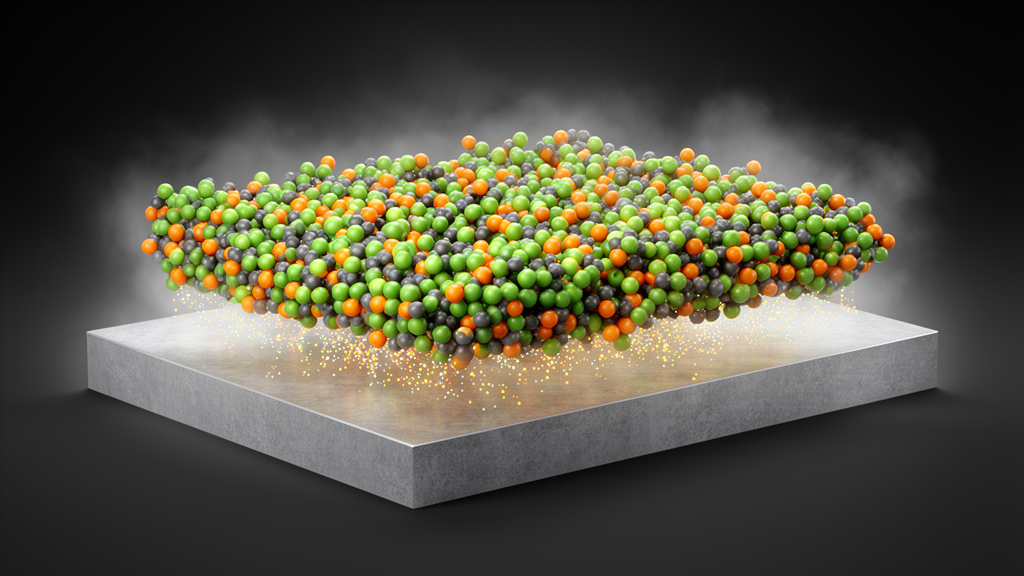
Amorphous nickel phosphate has emerged as a promising electrode material for supercapatteries, but a new study argues that the field has been looking in the wrong place for performance gains. Rather than simply maximizing surface area or shrinking particles, researchers report that the internal structure of the particles themselves—pores inside particles, alongside the disorder of the amorphous framework—plays a decisive role in how well the electrode performs.

The team synthesized nickel phosphate using ethylene glycol as a structural modifier, a choice that turned out to do two jobs at once. Ethylene glycol acted as a capping agent, restricting how large the particles could grow, and simultaneously as a templating agent, inducing a porous structure within them. As the ethylene glycol concentration increased, structural analysis showed a transition from dense blocks to smaller, irregular spheres that contained co-existing intraparticle pores.

What distinguishes this work, according to the authors, is the effort to separate the effects of interparticle mesopores, intraparticle pores, particle size, and structural disorder on electrochemical behaviour, instead of correlating performance solely with surface area or particle size. Electrochemical testing identified nickel phosphate prepared with an 18.75 percent ethylene glycol concentration as the optimal configuration, delivering a specific capacity of 386.7 C g⁻¹ at 0.8 A g⁻¹.

A full supercapattery device built with the optimized electrode delivered a maximum specific capacity of 13 C g⁻¹ at 0.8 A g⁻¹ and retained approximately 75 percent of its post-activation capacity after 5000 cycles. The authors emphasize that maximizing surface area or minimizing particle size does not necessarily produce the best electrode; instead, the intermediate ethylene glycol concentration struck a balance between pore accessibility, hydroxide ion transport, internal active-site utilization, and electronic connectivity.

The findings suggest that electrode engineering for supercapatteries should look beyond nanoscale particle engineering and interparticle porosity, which are established strategies for facilitating electrolyte-ion transport, and consider how the internal architecture of amorphous materials can be deliberately designed and exploited.

Subject of Research: Synthesis of porous amorphous nickel phosphate supercapattery electrodes using ethylene glycol as a structural modifier

Article Title: Balancing intraparticle porosity and structural disorder in amorphous nickel phosphate for enhanced supercapattery performance

Article References: Rosli, A., Omar, F. S., Khairudin, A., Mohd Akhiri, A. S., & Abu Hassanisazin, N. I. A. (2026). Balancing intraparticle porosity and structural disorder in amorphous nickel phosphate for enhanced supercapattery performance. Ionics. https://doi.org/10.1007/s11581-026-07588-8

Image Credits: AI Generated

DOI: 10.1007/s11581-026-07588-8

Keywords: supercapattery, nickel phosphate, amorphous materials, ethylene glycol, porosity, electrode design, specific capacity, energy storage, structural disorder, nanomaterials, Balancing, intraparticle

News Source: Denise Maddox. (October 28, 2026). Porous amorphous nickel phosphate electrode boosts supercapattery capacity. Scienmag.


Tags: amorphous materialsbalancingelectrode designEnergy storageethylene glycolintraparticlenanomaterialsnickel phosphateporosityspecific capacitystructural disordersupercapattery
Share12Tweet7Share2ShareShareShare1

Related Posts

Deep reinforcement learning model audits and improves listed companies' disclosure quality

Deep reinforcement learning model audits and improves listed companies’ disclosure quality

October 29, 2026
New LAMPP Model Aims to Guide LLM Use in Programming Education

New LAMPP Model Aims to Guide LLM Use in Programming Education

October 29, 2026

Waste Heat From Steel Furnaces Turned Into Electricity and Freshwater in Optimized New Design

October 29, 2026

Wind Farm Controller Targets Profit and Guarantees 20-Year Turbine Lifetime

October 29, 2026

POPULAR NEWS

  • Scoping review finds clinical supervision of radiography students in Africa lacks structure and training

    Scoping review finds clinical supervision of radiography students in Africa lacks structure and training

    29 shares
    Share 12 Tweet 7
  • Three Suicide Risk Subtypes Identified in Adolescents with Major Depression

    29 shares
    Share 12 Tweet 7
  • Adding a Skin Bilirubin Scan to Visual Jaundice Checks Cuts Costs in Clinics

    29 shares
    Share 12 Tweet 7
  • AI in public health remains pre-emergent in one Congolese health zone, study finds

    29 shares
    Share 12 Tweet 7

About

We bring you the latest biotechnology news from best research centers and universities around the world. Check our website.

Follow us

Recent News

Phase 2b trial of neflamapimod in dementia with Lewy bodies fails to replicate earlier promise

Olive Pollen Allergy Shots Show Mild Safety Profile in Spanish Real-World Study

Disease Microenvironments May Reshape the Safety of Near-Infrared Theranostic Nanomaterials, Review Finds

Subscribe to Blog via Email

Enter your email address to subscribe to this blog and receive notifications of new posts by email.

Join 85 other subscribers
  • Contact Us

Bioengineer.org © Copyright 2023 All Rights Reserved.

Welcome Back!

Login to your account below

Forgotten Password?

Retrieve your password

Please enter your username or email address to reset your password.

Log In
No Result
View All Result
  • Homepages
    • Home Page 1
    • Home Page 2
  • News
  • National
  • Business
  • Health
  • Lifestyle
  • Science

Bioengineer.org © Copyright 2023 All Rights Reserved.