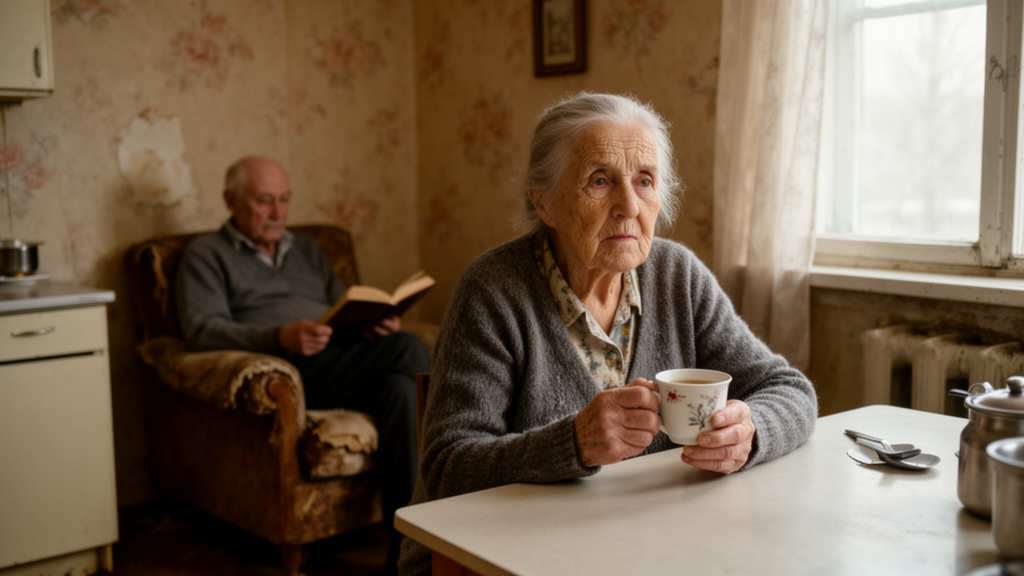
Nearly four in ten older adults living in low-income urban communities in Malaysia show the combined burden of physical frailty and mild cognitive impairment, a syndrome researchers call cognitive frailty, according to a new cross-sectional study published in the journal Discover Aging. Among 255 community-dwelling adults aged 60 and older recruited from senior activity centers in the Klang Valley, 16.9 percent met the full criteria for cognitive frailty and a further 21.6 percent were classified as cognitively pre-frail. When the two groups were combined, as the study’s operational definition allows, the overall prevalence reached 38.4 percent. That figure is striking when set against community-based estimates from other settings, which typically fall between 0.9 and 12.0 percent, and it exceeded the roughly 6 percent global estimate reported for cognitive frailty when cognitive pre-frailty is excluded.
The study, led by Resshaya Roobini Murukesu and colleagues, focused deliberately on a population that frailty research has largely overlooked: older adults from the bottom of the income distribution. All participants belonged to Malaysia’s B40 income bracket, meaning the bottom 40 percent of households by monthly income, which ranged from zero to approximately 2,848 ringgit, or about 639 US dollars, according to the national household income survey the researchers cited. Many of the recruits lived in low-cost housing built under the country’s People Housing Program and attended Senior Citizen Activity Centers, community facilities run under the Department of Social Welfare. The authors argue that because socioeconomically disadvantaged older adults face barriers to medical care, higher rates of malnutrition, and more pronounced physical frailty and cognitive impairment than their wealthier peers, prevalence figures drawn from general population samples may seriously understate the burden in this group.
Cognitive frailty, as defined in this work following the criteria of Kelaiditi and colleagues, requires the simultaneous presence of physical frailty and mild cognitive impairment. The researchers operationalized the physical component using Fried’s Frailty Phenotype from the Cardiovascular Health Study, in which one or two of five criteria indicate pre-frailty and three or more indicate overt frailty. The cognitive component was assessed with the Clinical Dementia Rating Scale, where a score of 0.5 flagged very mild, or questionable, impairment consistent with mild cognitive impairment. Participants who showed either pre-frailty or frailty together with a CDR score of 0.5 were counted as having cognitive frailty, an approach the authors note aligns with earlier studies from Taiwan, Singapore, and Malaysia that pooled pre-frail and frail individuals into a single construct, on the grounds that both groups carry elevated risk of cognitive impairment.
Data collection was intensive and multidimensional. Trained research assistants with health sciences backgrounds conducted standardized face-to-face interviews at the participating centers, covering sociodemographics, self-reported chronic conditions, lifestyle behaviors, and falls history over the previous twelve months. Objective testing added a battery of physical measures: the 30-second chair stand test for lower body strength, the back scratch and chair sit-and-reach tests for upper and lower body flexibility, the two-minute step test for cardiovascular endurance, and the timed up-and-go test for dynamic balance. Functional independence was scored with the Lawton Instrumental Activities of Daily Living scale, which ranges from 0 for full dependence to 14 for full independence. Cognitive assessment combined the Mini Mental State Examination for global cognition, the Digit Span subtest from the WAIS-III for attention and working memory, and the Rey Auditory Verbal Learning Test for immediate and delayed verbal memory. Nutritional intake was captured with a Malaysian dietary history questionnaire, depressive symptoms with the 15-item Geriatric Depression Scale, and health-related quality of life with the 15-D questionnaire.
The sample averaged 68.58 years of age and was predominantly Malay at 72.9 percent, with Chinese participants at 16.9 percent and Indian participants at 10.2 percent. In the descriptive comparisons, Malay ethnicity showed the highest prevalence of cognitive frailty, and the cognitively frail group had significantly fewer years of education than the non-frail group, with 40.8 percent of that group reporting primary school as their highest level of education. Diabetes mellitus was more common among women with cognitive frailty, affecting 46.8 percent of them compared with 30.1 percent of women without the condition. The cognitively frail group was also measurably shorter, averaging 151.0 centimeters against 154.0 centimeters in the comparison group, and reported lower intake of energy, carbohydrate, niacin, and calcium. The authors suggest that adult height, often used as a proxy for early-life socioeconomic conditions and long-term health, may reflect both biological and socioeconomic contributors to the syndrome.
To move beyond simple group differences, the researchers used hierarchical binary logistic regression, entering variables that were significant in univariate screening into sequential models organized around five conceptual domains: sociodemographic and health characteristics, cognitive status, physical function and functional status, nutritional status, and depression with quality of life. In the final model for the total sample, four factors remained independently associated with cognitive frailty. Poorer immediate recall verbal memory on the Rey Auditory Verbal Learning Test carried an odds ratio of 0.816 per point, meaning each one-point drop in recall score was linked to roughly a 20 percent increase in the odds of cognitive frailty. Reduced attention and working memory on the Digit Span test showed an odds ratio of 0.722 per point, decreased instrumental functional ability an odds ratio of 0.673 per point, and lower self-rated quality of life in the usual activities domain an odds ratio of 1.165.
The sex-stratified models revealed markedly different patterns. Among men, cognitive frailty was associated with poorer immediate recall verbal memory, with an odds ratio of 0.719 per point, and with reduced attention and working memory, at an odds ratio of 1.274. Among women, the significant correlates were lower educational attainment, with an odds ratio of 0.869, poorer attention and working memory, at 0.699, and reduced quality of life in the mental function domain, at 1.091. Women with cognitive frailty had averaged fewer than six years of schooling, 4.66 years, compared with 6.26 years among men with the condition, and the authors link this to historical gendered barriers to education in Malaysia, which they argue compound present-day health inequities for older women. In the descriptive analyses, women with cognitive frailty also showed poorer scores across nearly all physical and functional measures and significantly lower quality of life in eight domains, whereas men differed mainly in the mental function domain.
The prevalence figures themselves carried a sex skew. Cognitive frailty affected 41.1 percent of the women in the sample, 79 individuals, compared with 30.2 percent of the men, 19 individuals. This echoes broader findings the authors cite showing that women exhibit higher frailty prevalence on both the Fried phenotype and the Frailty Index, and are more susceptible to cognitive impairment and dementia across all age groups, even though they tend to live longer. Men, by contrast, face higher mortality from major diseases including cardiovascular conditions, cancer, and diabetes. The authors interpret the divergent correlates as evidence that cognitive frailty may develop and manifest through distinct sex-specific pathways shaped by biological, social, and behavioral factors, though they caution that sex-stratified research on cognitive frailty, especially in disadvantaged populations, remains scarce.
The study’s limitations deserve close attention when weighing these findings. The cross-sectional design means the reported associations are correlates, not demonstrated causes; poorer memory, reduced functional ability, and lower quality of life may contribute to cognitive frailty, result from it, or share common underlying mechanisms such as chronic inflammation, neurodegeneration, and reduced physiological reserve, which the authors cite as shared drivers of physical frailty and cognitive impairment. Participants were recruited purposively from selected urban low-income communities, so the prevalence estimates apply to this population and cannot be generalized to all older adults. Because cognitive frailty is defined by both physical frailty and cognitive impairment, some observed associations may partly overlap with the syndrome’s defining components. The authors also note that cognitive measures were analyzed as raw scores without adjustment for age, sex, or education, and that educational attainment was not included as a covariate in the final models, which may have introduced residual confounding, particularly for the education finding among women. With those caveats in place, the authors conclude that targeted, cost-effective interventions centered on cognitive training, education, and mental wellbeing warrant attention for prevention and reversal of cognitive frailty in this vulnerable population, with particular emphasis on older women, and they point to community-based programs and inclusive health education as possible vehicles for reducing these disparities.
Subject of Research: Prevalence and sex-stratified correlates of cognitive frailty among community-dwelling older adults of lower socioeconomic status in Malaysia
Article Title: Prevalence and associated factors of cognitive frailty among community dwelling older adults of lower socioeconomic status stratified by sex
Article References: Murukesu, R. R., Shahar, S., Subramaniam, P., Rasdi, H. F. M., & Singh, D. K. A. (2026). Prevalence and associated factors of cognitive frailty among community dwelling older adults of lower socioeconomic status stratified by sex. Discover Aging, 1(1), Article 6. https://doi.org/10.1007/s44518-026-00006-1
Image Credits: AI Generated
DOI: 10.1007/s44518-026-00006-1
Keywords: cognitive frailty, physical frailty, mild cognitive impairment, older adults, socioeconomic status, sex differences, Malaysia, cross-sectional study, verbal memory, working memory, quality of life, health equity
News Source: Beatrice Stafford. (October 28, 2026). Cognitive frailty affects nearly four in ten low-income older adults, with sex-specific risk patterns. Scienmag.