


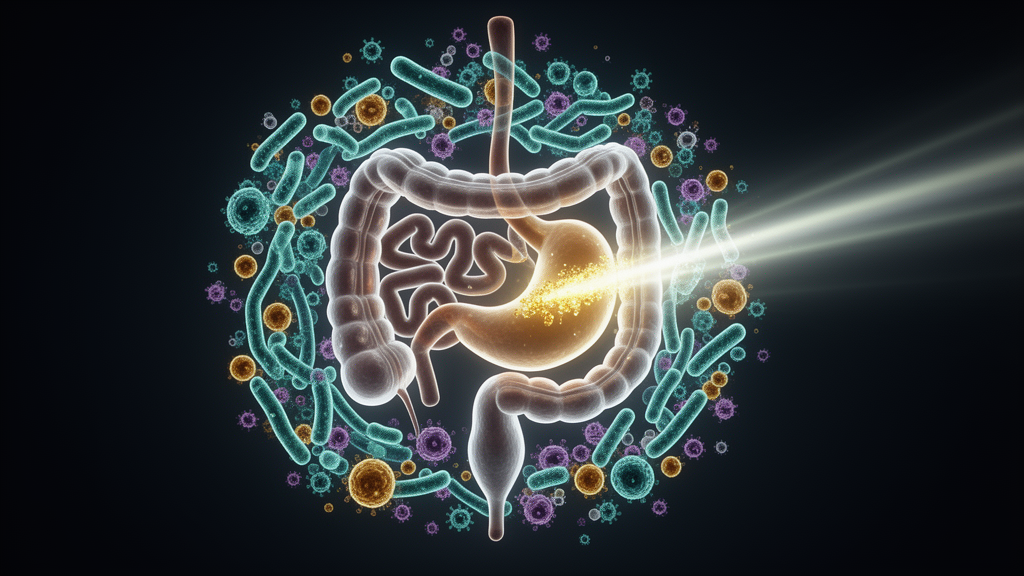
Scientists in China have built a stool-based diagnostic model that detects cholangiocarcinoma, a notoriously hard-to-catch liver cancer, by reading signatures from the entire gut microbiome—not just bacteria. In a study published in Genome Medicine, a team led by Zhigang Ren of the First Affiliated Hospital of Zhejiang University sequenced fecal samples from 700 participants across three regions of China and showed that a machine learning model combining archaea, bacteria, fungi, viruses and microbial genes could identify the cancer with an average area under the curve of 91 percent across three validation cohorts.
Cholangiocarcinoma, or CCA, is the second most common primary liver malignancy, accounting for roughly 3 percent of all gastrointestinal cancers. Despite its rarity, its outlook is grim: five-year survival rates generally fall below 20 percent, and half of patients die within a year of diagnosis. Early disease is often silent or produces only vague symptoms such as abdominal discomfort, fatigue or weight loss, so many patients are found only when the tumor is advanced and curative surgery is no longer possible.
Existing diagnostic tools each carry well-known weaknesses. The serum biomarker CA19-9 lacks sensitivity and specificity and cannot be produced by people who are Lewis antigen-negative. Cross-sectional imaging can misclassify intrahepatic CCA as hepatocellular carcinoma in cirrhotic livers and struggles to separate malignant from benign bile duct strictures. Definitive diagnosis requires invasive, operator-dependent tissue sampling that presupposes a visible lesion. High-risk groups—including patients with primary sclerosing cholangitis, cirrhosis, chronic viral hepatitis, hepatolithiasis or liver fluke infection—currently lack an effective non-invasive screening tool.
Previous gut microbiome research in CCA had focused almost entirely on bacteria. The new study is the first to comprehensively profile the non-bacterial kingdoms—fungi, archaea and viruses—together with functional features such as KEGG Orthology genes, KEGG pathways and carbohydrate-active enzymes in this cancer. The researchers performed shotgun metagenomic sequencing on 700 fecal samples: 289 CCA patients, 312 healthy controls and 99 patients with hepatocellular carcinoma (HCC), recruited from four cohorts in Eastern, Central and Northwestern China.
The analysis revealed extensive alterations in CCA patients across every layer examined: 198 archaeal, 154 bacterial, 78 fungal and 120 viral species differed between cases and controls, along with 278 genes, 99 pathways and 151 carbohydrate-active enzymes. Bacteria known for beneficial metabolic functions, including the butyrate producers Faecalibacterium prausnitzii, Anaerostipes hadrus, Blautia wexlerae and Agathobacter rectalis, were enriched in healthy controls, while potential opportunistic pathogens such as Klebsiella pneumoniae and Enterocloster bolteae were enriched in CCA patients. Alpha diversity of bacterial and viral species was significantly reduced in patients, and within-group community heterogeneity was higher across all four kingdoms.
The functional picture was strikingly different. While species composition became more heterogeneous among patients, their collective functional profiles converged: beta diversity decreased significantly at all three functional levels, and alpha diversity of KEGG pathways and CAZymes increased. Genes enriched in CCA patients were associated with outer membrane receptors, drug efflux pumps and siderophore uptake systems, and pathways tied to membrane transport, quorum sensing and bacterial secretion systems were prominent. The authors interpret this as a shift toward enhanced nutrient acquisition, stress resistance and potential pathogenicity, with carbohydrate metabolism shifting toward degradation of complex carbohydrates.
To convert these associations into a diagnostic, the team integrated nine machine learning algorithms into 117 distinct modeling schemes, training on the Hangzhou discovery cohort and validating in Zhengzhou and Xinjiang cohorts plus a held-out Hangzhou test set. A gradient boosting machine model using 21 multi-kingdom and functional features—2 archaea, 13 bacteria, 2 fungi, 3 viruses and 1 gene—performed best, achieving AUCs of 100 percent, 91.9 percent and 81.2 percent in the three test sets. Viral species contributed the most influential features, including Valbvirus ValB1MD2 and Andhravirus andhra, both enriched in CCA patients, alongside the bacterium Mycobacterium canettii.
Distinguishing CCA from HCC, another primary liver cancer with overlapping presentations, is a major clinical challenge, and the model handled it well: in the independent HCC cohort it achieved an AUC of 99.74 percent, with a false positive rate of 11.11 percent. Sensitivity analyses confirmed the discrimination was independent of hepatitis B status and demographics. The model also detected CCA at comparable rates across anatomical subtypes, with sensitivity of 94.96 percent for intrahepatic, 96.08 percent for perihilar and 100 percent for distal tumors.
Benchmarking against 15 clinical practice guidelines and consensus statements published between 2023 and 2026 supported a complementary role. The stool-based model showed pooled sensitivity of 96.2 percent, specificity of 78.5 percent, accuracy of 0.87 and a negative predictive value of 0.957. Notably, among 266 CCA patients with available CA19-9 measurements, only 69.17 percent had elevated levels of the serum marker, yet the model detected 97.56 percent of CA19-9-negative cases—patients who would be missed by conventional biomarker testing. Sensitivity remained high in patients with preserved liver function, at 98.62 percent in Child–Turcotte–Pugh class A, but fell to 85 percent in the small class C subgroup.
The authors are careful about what the model can and cannot do. Because the case-control design carried a disease prevalence of roughly 48 percent, positive predictive values would be expected to drop substantially in a real-world low-prevalence screening population, reinforcing a rule-out rather than confirmatory role. The cross-sectional design shows correlation, not causation, so whether the microbial changes drive the cancer or merely accompany it remains open. The cohort was limited to Chinese populations and excluded Southeast Asian groups where liver fluke infection is a major risk factor, and the HCC cohort comprised exclusively HBV-related cases. The researchers say prospective validation against CA19-9, imaging, benign biliary disease and other malignancies is needed before the 21-marker panel could enter clinical use as a non-invasive screening aid for high-risk populations.
Subject of Research: Multikingdom gut microbiota and functional markers for non-invasive diagnosis of cholangiocarcinoma
Article Title: Multikingdom and functional gut microbiota markers for cholangiocarcinoma
Article References: Rao, B., Liu, S., Cui, G., Jiang, J., Li, N., Hu, J., Sun, R., Li, A., Zhang, R., Lu, H., Wen, P., Xue, J., Aji, T., Wang, H., Chen, X., Zheng, S., Yu, Z., & Ren, Z. (2026). Multikingdom and functional gut microbiota markers for cholangiocarcinoma. Genome Medicine, 18(1), Article 168. https://doi.org/10.1186/s13073-026-01757-0
Image Credits: AI Generated
DOI: 10.1186/s13073-026-01757-0
Keywords: cholangiocarcinoma, gut microbiome, metagenomics, machine learning, diagnostic model, fungi, viruses, archaea, CA19-9, hepatocellular carcinoma, non-invasive screening, bile duct cancer
News Source: Morgan Morrow. (October 29, 2026). Gut Microbiome Test Spots Cholangiocarcinoma Across Fungi, Viruses and Bacteria. Scienmag.



