A new study in Cell Biology and Toxicology reports a competitive mechanism by which the SARS-CoV-2 spike protein may contribute to pulmonary edema, centered on the enzyme plasmin and the epithelial sodium channel (ENaC). The research, published on 21 October 2026, was led by Tingyu Wang and Yunmei Fu, with Hongguang Nie among the senior authors.
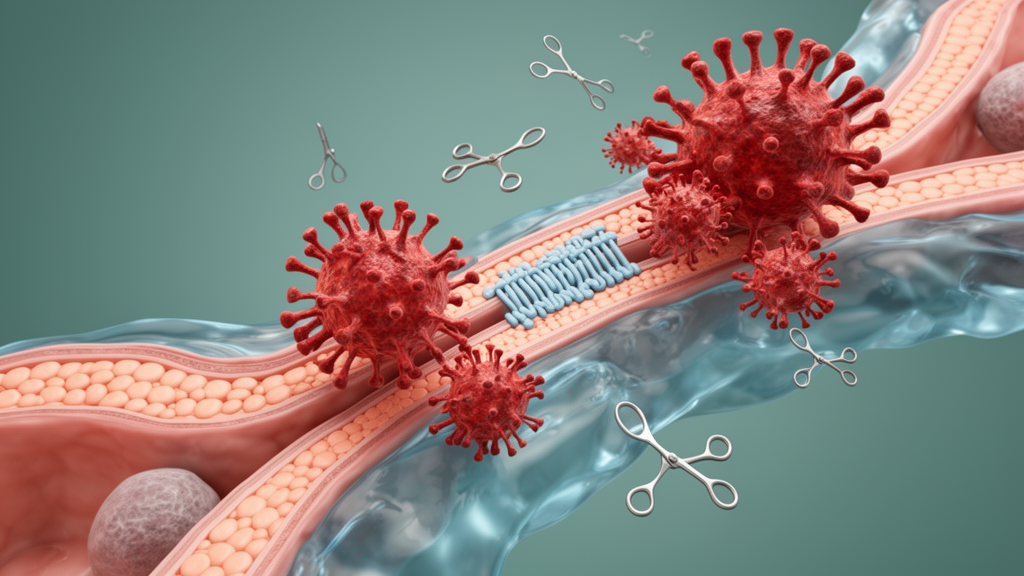
The authors begin from a structural observation: the spike protein of SARS-CoV-2 contains a polybasic cleavage site consisting of four amino acid residues, RRAR, which is strikingly identical to a cleavage site found in ENaC. Both proteins can be cleaved by plasmin, an enzyme of the fibrinolytic system. ENaC is a protein responsible for regulating fluid balance in the lungs, and dysregulation of human ENaC is directly associated with mortality resulting from pulmonary damage.
Despite this connection, the involvement of ENaC and its regulation by the fibrinolytic system during SARS-CoV-2 infection had remained elusive, according to the study. To investigate, the researchers used S plasmids and pseudovirus systems to mimic SARS-CoV-2 infection in laboratory models.
In mice expressing human angiotensin converting enzyme 2 (ACE2), the receptor used by SARS-CoV-2 to enter cells, the team observed manifestations of pulmonary edema together with dysregulation of ENaC. Mechanistic experiments then showed that both the S protein and ENaC could be cleaved by plasmin.
The key finding emerged from competition experiments. The S protein competitively inhibited the cleavage of ENaC by plasmin, while overexpression of ENaC suppressed plasmin-induced cleavage of the S protein. According to the authors, this ENaC-mediated suppression of spike cleavage impeded SARS-CoV-2 invasion, suggesting that the two proteins compete for the same enzymatic processing event.
Notably, when the researchers co-enabled the polybasic cleavage site mutated S plasmid or pseudovirus with plasmin, the downregulation of ENaC was reversed. This indicates that the polybasic cleavage site is the main point at which the competitive regulation occurs, tying the virus’s infectivity-enhancing RRAR motif directly to the disruption of sodium channel function.
In conclusion, the data suggest that a competitive mechanism of ENaC by SARS-CoV-2 via plasmin is mainly regulated at the polybasic cleavage site. The authors present this as a novel mechanism underlying SARS-CoV-2-induced pulmonary edema, offering a mechanistic explanation for how fluid balance in the lung could be disturbed during infection.
The study also identifies ENaC as a potential therapeutic target for treating SARS-CoV-2-associated respiratory failure, although the evidence comes from plasmid, pseudovirus and mouse models expressing human ACE2 rather than from human clinical trials. The article is published open access, and the version shared on 21 October 2026 is a peer-reviewed, accepted manuscript that remains subject to further edits before the final Version of Record is released.
Subject of Research: Competitive plasmin-mediated cleavage of the SARS-CoV-2 spike protein and the epithelial sodium channel ENaC as a mechanism of pulmonary edema
Article Title: Plasmin‑mediated cleavage between SARS-CoV-2 spike protein and ENaC drives pulmonary edema
Article References: Wang, T., Fu, Y., Wang, J., Zhu, Z., Ding, Y., Yu, T., & Nie, H. (2026). Plasmin‑mediated cleavage between SARS-CoV-2 spike protein and ENaC drives pulmonary edema. Cell Biology and Toxicology. https://doi.org/10.1007/s10565-026-10321-w
Image Credits: AI Generated
DOI: 10.1007/s10565-026-10321-w
Keywords: SARS-CoV-2, spike protein, ENaC, plasmin, polybasic cleavage site, pulmonary edema, ACE2, pseudovirus, fibrinolytic system, respiratory failure, mediated, cleavage
News Source: Kristina Jarvis. (October 28, 2026). SARS-CoV-2 Spike Protein Competes with ENaC for Plasmin Cleavage, Driving Pulmonary Edema. Scienmag.