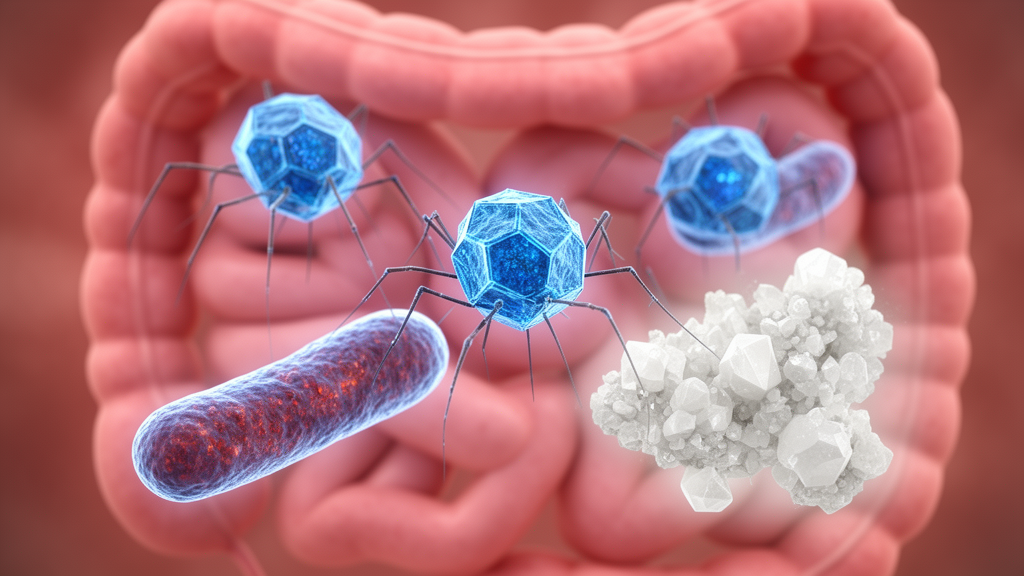
Post-weaning diarrhea caused by enterotoxigenic Escherichia coli remains one of the most persistent problems in modern swine production, and with pharmacological-dose zinc oxide now restricted or banned in animal feed in many regions, producers are searching for workable substitutes. A new study published in BMC Microbiology reports that bacteriophages, viruses that specifically attack bacteria, reduced diarrhea rates in piglets experimentally challenged with ETEC K88, and used an integrated multi-omics approach to map how the treatment worked at the molecular level.
The research team combined microbiome, metabolomic, and proteomic analyses to compare phage-treated animals against infected controls. Their objective was to identify the molecular pathways and multi-omics signatures associated with phages serving as a high-dosage zinc oxide alternative for mitigating post-weaning diarrhea in weaned piglets.
The central finding was straightforward: phages reduced the diarrhea rate compared with the ETEC K88 group. Behind that clinical observation, however, the sequencing and profiling data revealed a coordinated set of changes across the gut ecosystem, spanning bacterial communities, their metabolic products, and the host’s own intestinal responses.
Fecal microbiome analysis showed that phage treatment shifted the composition of the gut bacterial community in specific directions. Abundances of Phascolarctobacterium and Faecalibacterium increased, while Clostridium sensu stricto 6 declined.
Fecal metabolomics added a chemical dimension to the picture. The phage treatment modulated bile secretion, fatty acid biosynthesis, and unsaturated fatty acid biosynthesis, indicating that the intervention reached beyond simply killing targeted bacteria and altered the metabolic output of the gut environment as well.
Proteomic analysis of jejunal tissue showed that phages changed the interaction between the gut microbiota and the host through several immune-related pathways. The affected pathways included the immune network for IgA production, Fc gamma R-mediated phagocytosis, and the NF-κB pathway, all of which participate in how the intestinal lining recognizes bacteria and coordinates mucosal immune defenses.
When the three data layers were integrated, the analysis pointed to bile secretion and ferroptosis pathways as the routes through which phages appeared to reduce diarrhea in the ETEC K88-infected pigs.
The authors conclude that the study offers novel insights into how phages influence gut microbiota, microbial metabolites, and host interactions in weaned piglets, and provides a reference for phage-based strategies as an alternative to pharmacological-dose zinc oxide in mitigating post-weaning diarrhea. Because the work was conducted in an experimental infection model, the findings describe mechanisms and outcomes under controlled conditions rather than results from routine farm use, and further validation in production settings would be needed before the approach could be considered an established replacement for zinc oxide.
Even so, the multi-omics framework demonstrates the value of looking at an antimicrobial alternative from several angles at once. Rather than reporting only whether piglets had diarrhea, the study connects a clinical outcome to specific bacterial genera, metabolic pathways, and host immune signaling, giving researchers and feed formulators a mechanistic map of what a phage intervention actually does inside the weaned piglet’s gut.
Subject of Research: Bacteriophage treatment as an alternative to pharmacological-dose zinc oxide for mitigating post-weaning diarrhea in piglets
Article Title: Bacteriophage as an alternative to pharmacological-dose zinc oxide for mitigating post-weaning diarrhea in piglets: insights from integrated multi-omics analysis
Article References: Ding, M., Li, J., Luo, Y., Chen, X., Zou, T., Chen, Y., Chen, J., & You, J. (2026). Bacteriophage as an alternative to pharmacological-dose zinc oxide for mitigating post-weaning diarrhea in piglets: insights from integrated multi-omics analysis. BMC Microbiology. https://doi.org/10.1186/s12866-026-05834-7
Image Credits: AI Generated
DOI: 10.1186/s12866-026-05834-7
Keywords: bacteriophage, piglets, post-weaning diarrhea, zinc oxide, ETEC K88, microbiome, metabolomics, proteomics, ferroptosis, bile secretion, swine health, gut microbiota
News Source: Morgan Morrow. (October 29, 2026). Bacteriophages Show Potential as Zinc Oxide Alternative Against Piglet Diarrhea. Scienmag.