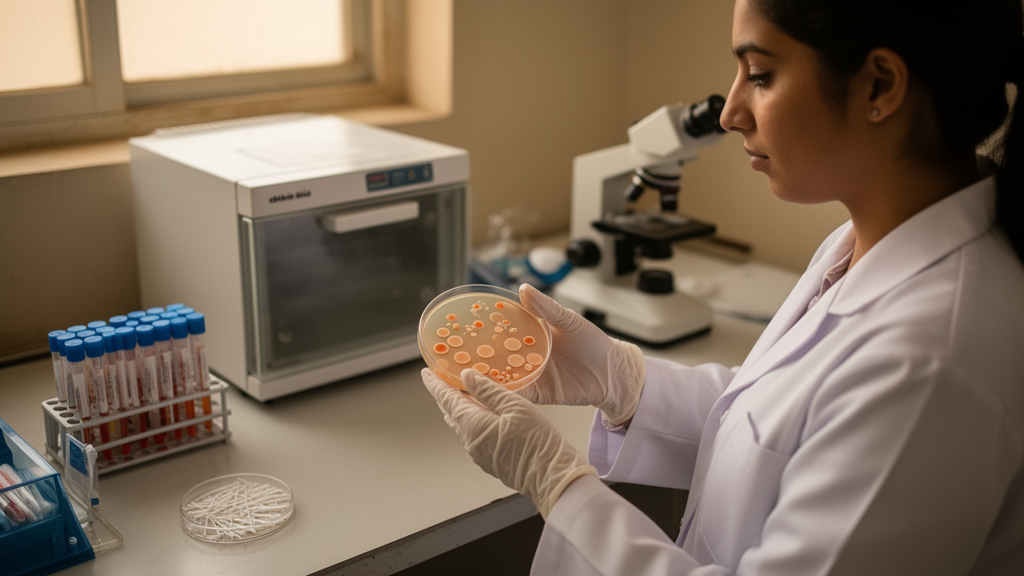
Bacteria isolated from skin and soft tissue infections in hospitals in Ibb City, Yemen, show strikingly high levels of antimicrobial resistance, according to a new study published in Annals of Clinical Microbiology and Antimicrobials. Gram-negative isolates were fully resistant to amoxicillin and ceftriaxone and showed variable resistance to ciprofloxacin and gentamicin.
The study was carried out between January and April 2022 and involved 103 wound swab samples collected from both inpatients and outpatients at five hospitals in Ibb City. Bacteria were cultured and identified using standardized microbiological methods, and antimicrobial susceptibility was assessed with the Kirby-Bauer disc diffusion method following Clinical and Laboratory Standards Institute guidelines.
Bacterial growth was detected in 96 of the 103 samples, a detection rate of 93.2 percent. Gram-positive bacteria made up the majority of isolates, accounting for 69 isolates, or 69.8 percent of the total, with Staphylococcus aureus alone representing 53 isolates, or 53.5 percent. Gram-negative bacteria accounted for 29 isolates, or 29.1 percent.
Resistance patterns among the Gram-positive isolates were particularly concerning. In addition to the very high oxacillin resistance, the isolates showed resistance to ceftriaxone and penicillin, with 43 isolates, more than 80 percent, resistant to penicillin.
Among the Gram-negative isolates, resistance to first-line oral agents was complete: every Gram-negative isolate tested was resistant to both amoxicillin and ceftriaxone. Resistance to ciprofloxacin and gentamicin varied across isolates, suggesting that these agents may retain some activity against certain Gram-negative pathogens, although the study reports the overall pattern as variable rather than uniform.
The researchers also collected information on patient demographics and potential risk factors, including diabetes, obesity, malnutrition, and prior antibiotic use, using structured questionnaires and medical records. Diabetes and malnutrition emerged as the most common risk factors among patients in the study, and frequent prior antibiotic exposure was also recorded. The authors note that these risk factors were based on prior clinical diagnoses made by attending physicians, and no additional laboratory or standardized assessments were performed to confirm them.
The study was designed to investigate the spectrum of bacterial pathogens associated with skin and soft tissue infections in hospitals in Ibb City and to characterize their antibiotic resistance profiles. According to the authors, data on antimicrobial resistance in skin and soft tissue infections from Ibb governorate had been limited, and the findings are intended to provide baseline information to guide local antimicrobial stewardship strategies.
They emphasize, however, that the sample size is small and that the results may not be generalized nationally, so the findings should be read as local baseline data rather than a picture of resistance across Yemen.
Based on their results, the researchers recommend continuous surveillance of antimicrobial resistance in the region and the implementation of targeted antimicrobial stewardship programs. The article was published as an open access paper on 14 October 2026, and the version shared at publication is a peer-reviewed, accepted manuscript that is citable and carries a permanent DOI, subject to further edits before the final version of record is released.
For clinicians and public health workers in the region, the study underscores the challenge posed by resistant bacteria in wound infections, particularly the near-universal oxacillin resistance among Staphylococcus aureus isolates and the complete resistance of Gram-negative isolates to amoxicillin and ceftriaxone.
Subject of Research: Antimicrobial resistance profiles of bacteria isolated from skin and soft tissue infections in Ibb City, Yemen
Article Title: Phenotypic assessment of resistant bacteria isolated from skin and soft tissue infections in Ibb City, Yemen
Article References: Esmail, A., Saleh Al-Faqeeh, L. A., Alsana, A., Shabeeta, A., Al-Shaebi, B., Al-Smawi, D., Yahya, E., Al-Dumaini, G., Al-Dhafer, G., Al-Mansob, M., Al-Farga, A., & Al-Gabri, O. (2026). Phenotypic assessment of resistant bacteria isolated from skin and soft tissue infections in Ibb City, Yemen. Annals of Clinical Microbiology and Antimicrobials. https://doi.org/10.1186/s12941-026-00891-2
Image Credits: AI Generated
DOI: 10.1186/s12941-026-00891-2
Keywords: antimicrobial resistance, skin and soft tissue infections, Staphylococcus aureus, Yemen, Ibb City, wound swabs, Kirby-Bauer disc diffusion, oxacillin resistance, vancomycin, Gram-negative bacteria, antimicrobial stewardship, hospital surveillance
News Source: Kristina Jarvis. (October 28, 2026). High Antibiotic Resistance Found in Skin Infection Bacteria in Ibb City, Yemen. Scienmag.