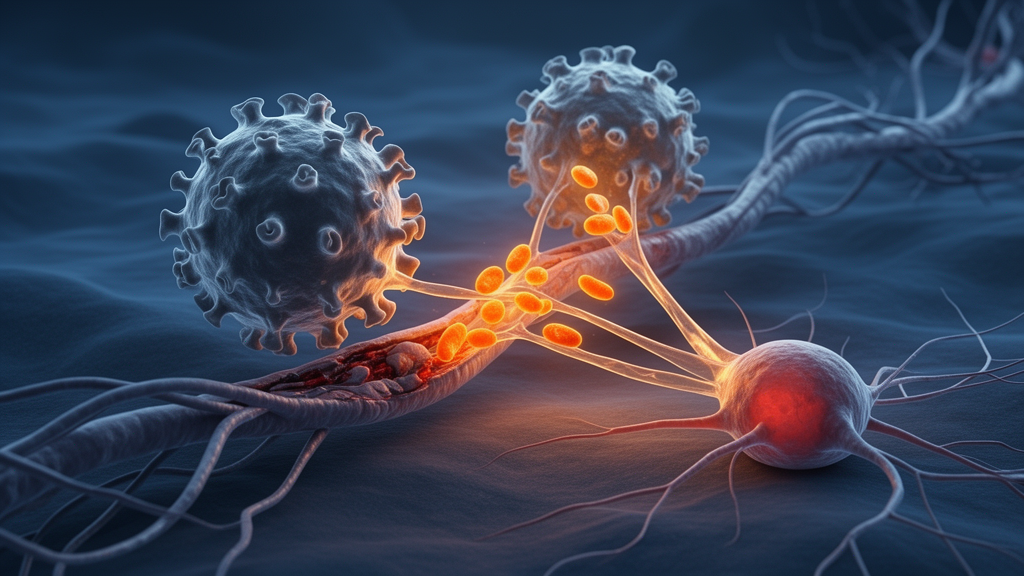
In a study published in Cell & Bioscience, a team constructed macrophages with mitochondria transferred into them, giving the cells an enhanced M2 reparative phenotype and greater metabolic activity, and tested them in a rat model of bilateral cavernous nerve injury.
According to the abstract, the mitochondria-transferred macrophages, or MTM, significantly restored erectile function in the injured rats. The treatment also preserved the structure of cavernous tissue and promoted both myelination and axonal regeneration of the damaged cavernous nerve, addressing the nerve damage that underlies postoperative erectile dysfunction.
The study went on to trace the mechanism by which the modified macrophages act. The researchers found that MTM transferred mitochondria to Schwann cells, the glial cells responsible for supporting nerve repair. This transfer elevated levels of acetyl-CoA within the Schwann cells, a metabolite that feeds into histone acetylation.
Building on that metabolic change, the team observed increased enrichment of the histone modification H3K27ac at the promoter of FDFT1, a gene encoding a key enzyme in the cholesterol biosynthesis pathway. This epigenetic change upregulated cholesterol biosynthesis in the Schwann cells, linking mitochondrial transfer to a specific lipid metabolic program.
To test whether this pathway was functionally required, the researchers inhibited histone acetylation or cholesterol synthesis. Either intervention impaired Schwann cell repair and blocked the recovery of erectile function in the model, indicating that the axis is not merely correlated with repair but contributes to it.
The team also performed a rescue experiment. When they supplemented the system with squalene, a precursor in the cholesterol biosynthesis pathway, the damaging effects of blocking acetylation or cholesterol synthesis were reversed. This suggests that supplying the lipid intermediate downstream of the blocked steps can compensate for the disrupted signaling.
The authors describe their findings as identifying a mitochondrial-epigenetic-lipid metabolic axis that drives Schwann cell-mediated myelin repair. In their framing, the work provides a promising therapeutic strategy not only for cavernous nerve injury-related erectile dysfunction but also, potentially, for other demyelinating neurological disorders, although the reported experiments were conducted in a rat model of bilateral cavernous nerve injury.
Cavernous nerve injury is described in the study as a leading cause of postoperative erectile dysfunction, for which effective etiological therapies are currently lacking. The results reported here remain preclinical, and the article was shared early as a peer-reviewed accepted manuscript that is subject to further edits before the final version of record. As with any animal study, translation to human patients will require further research, but the work points to mitochondria transfer, epigenetic regulation and cholesterol metabolism as connected targets for future therapies aimed at nerve repair.
Subject of Research: Mitochondria-transferred macrophages promoting Schwann cell myelin repair and erectile function recovery after cavernous nerve injury in rats
Article Title: Mitochondria-transferred macrophages promote Schwann cell-mediated myelin repair and erectile function recovery via the H3K27ac/FDFT1/cholesterol biosynthesis axis in CNI-ED
Article References: Sun, K., Chen, Z., Liang, Z., Zhang, Y., Wei, Z., Zhang, C., Chen, C., Zhang, W., Wu, K., Liu, Y., Duan, M., Wei, H., & Zheng, Z. (2026). Mitochondria-transferred macrophages promote Schwann cell-mediated myelin repair and erectile function recovery via the H3K27ac/FDFT1/cholesterol biosynthesis axis in CNI-ED. Cell & Bioscience. https://doi.org/10.1186/s13578-026-01674-0
Image Credits: AI Generated
DOI: 10.1186/s13578-026-01674-0
Keywords: mitochondria transfer, macrophages, Schwann cells, myelin repair, erectile dysfunction, cavernous nerve injury, H3K27ac, FDFT1, cholesterol biosynthesis, squalene, epigenetics, rat model
News Source: Drew Townsend. (October 28, 2026). Macrophages engineered to donate mitochondria restore nerve repair in rat erectile dysfunction model. Scienmag.