• HOME
  • NEWS
  • EXPLORE
    • CAREER
      • Companies
      • Jobs
    • EVENTS
    • iGEM
      • News
      • Team
    • PHOTOS
    • VIDEO
    • WIKI
  • BLOG
  • COMMUNITY
    • FACEBOOK
    • INSTAGRAM
    • TWITTER
Friday, October 30, 2026
BIOENGINEER.ORG
No Result
View All Result
  • Login
  • HOME
  • NEWS
  • EXPLORE
    • CAREER
      • Companies
      • Jobs
        • Lecturer
        • PhD Studentship
        • Postdoc
        • Research Assistant
    • EVENTS
    • iGEM
      • News
      • Team
    • PHOTOS
    • VIDEO
    • WIKI
  • BLOG
  • COMMUNITY
    • FACEBOOK
    • INSTAGRAM
    • TWITTER
No Result
View All Result
Bioengineer.org
No Result
View All Result
Home NEWS Science News Technology

Physical Design and Mobility Drive Vitality in Tehran Residential Complexes

by
October 28, 2026
in Technology
Reading Time: 2 mins read
0
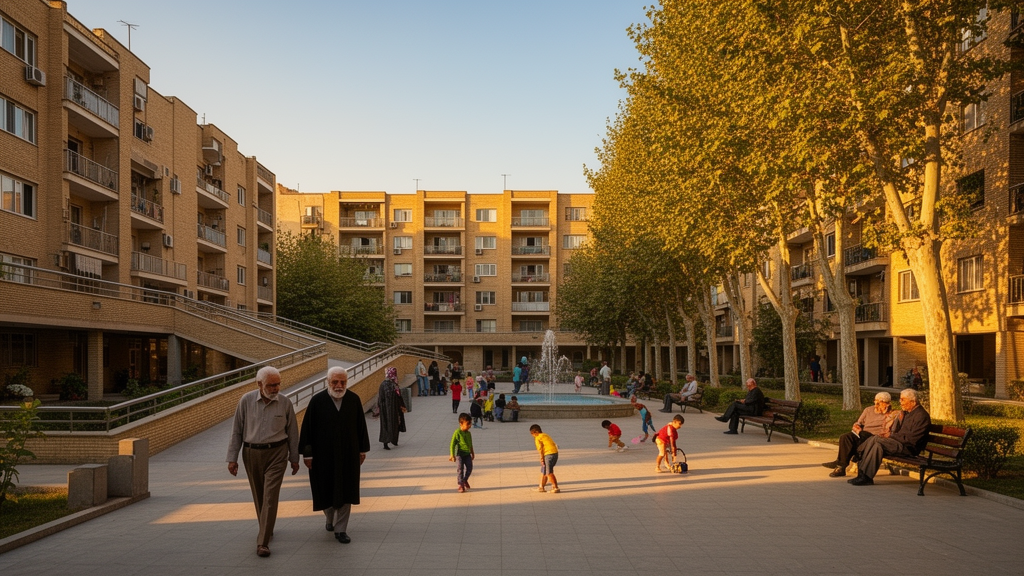
Physical Design and Mobility Drive Vitality in Tehran Residential Complexes

Physical Design and Mobility Drive Vitality in Tehran Residential Complexes

Share on FacebookShare on TwitterShare on LinkedinShare on RedditShare on Telegram

A mixed-methods study of residential complexes in Tehran, Iran, reports that the vitality of public spaces is shaped primarily by physical design factors, with mobility acting as a mediating mechanism. The research, published open access in the journal City, Territory and Architecture on 15 October 2026, used structural equation modeling and path analysis to map how physical, behavioral, and semantic components interact to promote liveliness in shared residential environments.

Importantly, the study takes a normative, expert-based approach rather than measuring residents’ perceptions or lived experiences directly. Data were collected through structured questionnaires administered to 500 housing experts recruited via snowball sampling. The authors state that adequate sample representation was confirmed by the KMO test, while the reliability and validity of the questionnaire were verified using Cronbach’s alpha and model fit indices. The findings therefore reflect expert judgments about the determinants of residential vitality, not observational measurements of how residents actually use or experience these spaces.

The analysis, conducted in SPSS and AMOS, identified three key relationships within the structural model. First, physical attributes enhance residents’ vitality when mediated by mobility variables. Second, behavioral patterns also contribute to increased vitality through the same mobility pathway. Third, perceptual-semantic values, described as the dependent dimension of vitality, are significantly influenced by physical factors. Across all three pathways, mobility emerged as essential, encompassing physical, behavioral, and semantic dimensions.

Among the individual physical factors examined, integrity played the most important role in enhancing residents’ vitality, according to the path analysis. The authors also highlight collectivism as one of the most influential determinants of vitality in the model.

The study is framed as addressing a gap in understanding the structural components that promote vitality in the public spaces of residential complexes in Tehran, Iran. Because the model rests on expert opinion gathered through a snowball-sampled questionnaire, the authors’ conclusions about causal structure come from statistical modeling of those judgments rather than from longitudinal or observational field data. The sample size of 500 and the reported reliability and fit checks support the internal coherence of the model, but generalization to residents’ actual day-to-day experience would require further research measuring perceptions directly.

For readers following urban design research, the paper’s central contribution is its integrated structural model linking three factor families: physical attributes, behavioral patterns, and perceptual-semantic values, all connected through mobility.

Subject of Research: Structural modeling of physical, behavioral, and semantic factors influencing vitality in the public spaces of residential complexes in Tehran

Article Title: Structural modeling of factors influencing vitality in residential complexes: a mixed method study

Article References: Sadat, S. A., Taher Tolou Del, M. S., & Saleh Sedghpour, B. (2026). Structural modeling of factors influencing vitality in residential complexes: a mixed method study. City, Territory and Architecture. https://doi.org/10.1186/s40410-026-00332-9

Image Credits: AI Generated

DOI: 10.1186/s40410-026-00332-9

Keywords: residential complexes, urban vitality, structural equation modeling, mobility, public spaces, Tehran, housing experts, path analysis, physical design, collectivism, Structural, modeling

News Source: Denise Maddox. (October 28, 2026). Physical Design and Mobility Drive Vitality in Tehran Residential Complexes. Scienmag.


Tags: collectivismhousing expertsmobilityModelingpath analysisphysical designpublic spacesresidential complexesStructuralstructural equation modelingTehranurban vitality
Share12Tweet7Share2ShareShareShare1

Related Posts

Green energy trade could anchor a new international role for the renminbi

Green energy trade could anchor a new international role for the renminbi

October 30, 2026
China's coal mining technology reaches record depths and heights

China’s coal mining technology reaches record depths and heights

October 30, 2026

Electric vehicle knowledge, attitude and practice may be one fused mindset, Indian survey suggests

October 30, 2026

Simulating the Microcirculation: How Models Reveal Hidden Blood Vessel Networks

October 30, 2026

POPULAR NEWS

  • Coronary calcium on lung scans may flag heart risk in pulmonary embolism patients

    Coronary calcium on lung scans may flag heart risk in pulmonary embolism patients

    29 shares
    Share 12 Tweet 7
  • Gold nanoparticles turn blue in the presence of milk fatty acids, pointing toward low-cost fat sensing

    29 shares
    Share 12 Tweet 7
  • Caper Flower Extract Shows Antioxidant and Vibrio-Killing Power in Lab Tests

    29 shares
    Share 12 Tweet 7
  • Cold agglutinin disease: rare anemia gets first approved drug as treatment map redrawn

    29 shares
    Share 12 Tweet 7

About

We bring you the latest biotechnology news from best research centers and universities around the world. Check our website.

Follow us

Recent News

Green energy trade could anchor a new international role for the renminbi

Wood Smoke Particles Trigger Asthma-Like Airway Disease in Mice Through a Sprouty2-Dependent Pathway

Ultra-Processed Foods May Reshape Gut Microbes and Fuel Colon Cancer Risk

Subscribe to Blog via Email

Enter your email address to subscribe to this blog and receive notifications of new posts by email.

Join 87 other subscribers
  • Contact Us

Bioengineer.org © Copyright 2023 All Rights Reserved.

Welcome Back!

Login to your account below

Forgotten Password?

Retrieve your password

Please enter your username or email address to reset your password.

Log In
No Result
View All Result
  • Homepages
    • Home Page 1
    • Home Page 2
  • News
  • National
  • Business
  • Health
  • Lifestyle
  • Science

Bioengineer.org © Copyright 2023 All Rights Reserved.