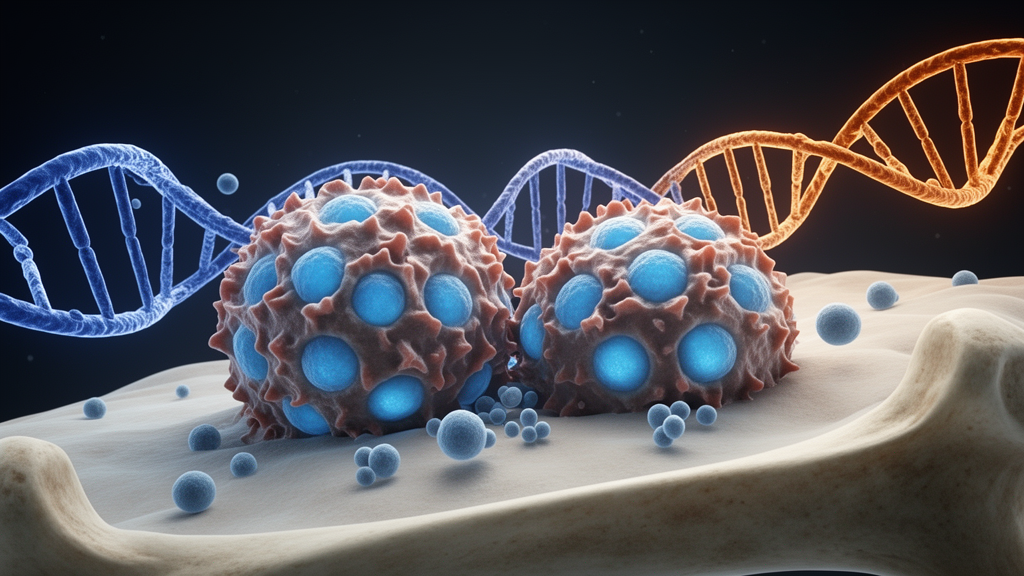
The formation of osteoclasts, the bone-resorbing cells of the skeleton, is accompanied by extensive remodelling of the DNA methylome, according to a new genome-wide study of human cells published in Epigenetics & Chromatin. While the transcriptional programmes that control osteoclast differentiation are well established, the contribution of DNA methylation to this process in human cells had remained less fully characterised.
The researchers compared osteoclasts differentiated in vitro with their precursors derived from peripheral blood mononuclear cells. Differentiation was induced using receptor activator of NF-κB ligand (RANKL) and macrophage colony-stimulating factor (M-CSF), the standard cytokines used to drive osteoclast formation from blood-derived precursors. Genome-wide DNA methylation was profiled with the Illumina Infinium MethylationEPIC (850k) array, and RNA sequencing was performed on matched samples to relate methylation changes to gene expression.
The analysis revealed that osteoclastogenesis is associated with extensive methylation remodelling. Using thresholds of an absolute change in methylation beta value greater than 0.2 and a false discovery rate below 0.05, the team identified 9,006 differentially methylated CpG sites between the PBMC-derived precursors and osteoclasts. The overwhelming majority, 8,366 loci, became hypomethylated, while 640 became hypermethylated. The study also identified 1,526 differentially methylated regions between the two cell populations.
Integrating the methylation data with RNA-seq from the same samples showed that several key osteoclast genes exhibited co-ordinated promoter and regulatory-region methylation changes alongside altered gene expression.
Motif enrichment analysis of the hypomethylated regions identified sequences associated with the transcription factors PU.1 (SPI1), SPI-C and MYC.
Osteoclast differentiation from haematopoietic precursors is essential for bone remodelling and homeostasis, making the epigenetic control of this process relevant to understanding skeletal health. The study’s conclusion states that, collectively, the findings provide a genome-wide view of DNA methylation remodelling during human osteoclast differentiation and identify epigenetic signatures associated with osteoclast gene activation.
The work is an in vitro study of cells differentiated from peripheral blood precursors, and the article was released as a peer-reviewed, accepted manuscript shared early to provide faster access; it is citable and carries a permanent DOI, but remains subject to further edits before the final Version of Record. As with all array-based methylation profiling, the reported differentially methylated sites and regions reflect the CpG coverage of the EPIC platform, and the findings describe methylation patterns associated with differentiation in this experimental system rather than effects measured directly in bone tissue.
Subject of Research: DNA methylation changes during human osteoclast differentiation from blood precursors
Article Title: Genome-wide methylation analysis reveals epigenetic remodelling during osteoclastogenesis
Article References: Rashid, S., Schultz, N., Kular, J., Zhu, K., Walsh, J. P., Xu, J., Wilson, S. G., Pavlos, N. J., & Mullin, B. H. (2026). Genome-wide methylation analysis reveals epigenetic remodelling during osteoclastogenesis. Epigenetics & Chromatin. https://doi.org/10.1186/s13072-026-00706-w
Image Credits: AI Generated
DOI: 10.1186/s13072-026-00706-w
Keywords: DNA methylation, osteoclasts, osteoclastogenesis, epigenetics, bone resorption, MethylationEPIC array, RANKL, M-CSF, differentially methylated regions, PU.1, gene expression, Epigenetics & Chromatin
News Source: Juliet Wilcox. (October 27, 2026). Human osteoclast formation drives widespread DNA methylation remodelling, study finds. Scienmag.