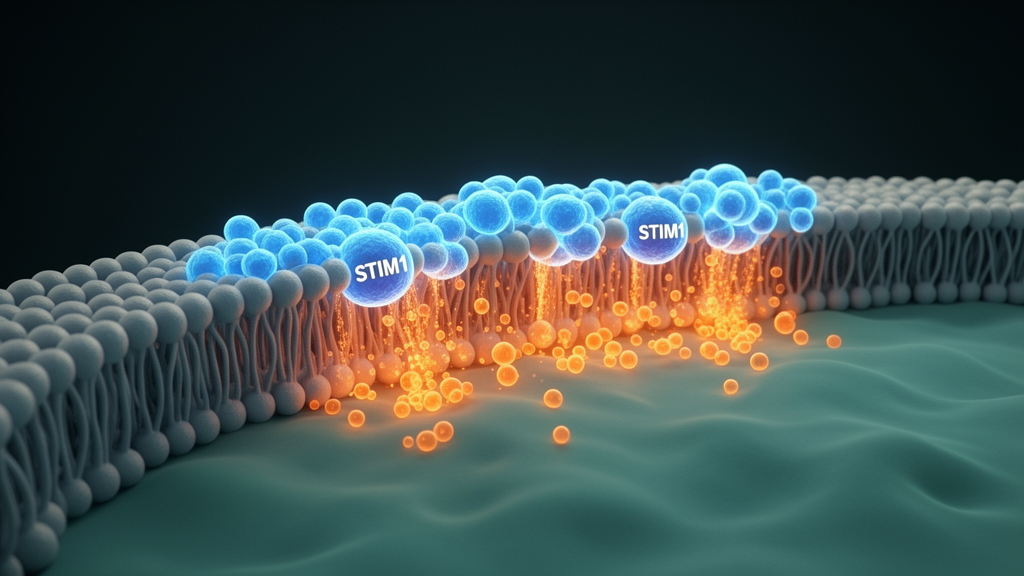
Calcium is one of biology’s most versatile signaling molecules, acting as a universal second messenger in virtually every cell type and tissue. A new review published in Cell Communication and Signaling examines one of the central mechanisms controlling cellular calcium balance: store-operated calcium entry, or SOCE, a process that essentially depends on the calcium sensor STIM1 and the calcium channel ORAI1.
According to the review by Laura Pérez-Guàrdia, Jocelyn Laporte and Johann Böhm, STIM1 and ORAI1 together regulate a broad range of signaling pathways and physiological processes. These include cell proliferation and migration, nerve conduction, immune response, thrombus formation, and muscle contraction. The authors emphasize that STIM1 activity is highly tissue-dependent and finely tuned by the cellular context and by multiple regulatory layers, such as post-translational modifications, alternative splicing, and interactions with partner proteins.
The review’s core contribution is a synthesis of STIM1’s tissue-specific roles. The authors summarize current knowledge on STIM1 regulation and function in immune cells, skeletal and cardiac muscle, platelets, secretory epithelial cells, and neurons, drawing together findings from across these fields into a single account of how the same molecular machinery serves such different physiological purposes.
When STIM1 is dysregulated, the consequences can be severe. The review discusses the molecular and biochemical pathomechanisms underlying STIM1-related disorders, including tubular aggregate myopathy, Stormorken syndrome, immunodeficiency, neurodegeneration, and cancer. Genetic mutations or environmental factors that impair STIM1 can profoundly disturb calcium homeostasis, and the authors trace how these disturbances translate into distinct human diseases affecting muscle, immunity, the nervous system, and beyond.
The review also turns to a less familiar dimension of STIM1 biology: aging.
Finally, the authors address the relevance of STIM1 and SOCE as therapeutic targets for both common and rare calcium-related disorders. They outline emerging strategies aimed at restoring calcium homeostasis and report encouraging results from preclinical studies and early clinical trials. As the authors note, the article is being shared early to provide faster access to peer-reviewed, accepted research; this version is citable and carries a permanent DOI, but remains subject to further edits before the final Version of Record replaces it.
Subject of Research: The roles of STIM1 and store-operated calcium entry in cellular calcium signaling, human disease, and therapeutic targeting.
Article Title: STIM1 and store-operated Ca2+ entry (SOCE) in health and disease
Article References: Pérez-Guàrdia, L., Laporte, J., & Böhm, J. (2026). STIM1 and store-operated Ca2+ entry (SOCE) in health and disease. Cell Communication and Signaling. https://doi.org/10.1186/s12964-026-03269-1
Image Credits: AI Generated
DOI: 10.1186/s12964-026-03269-1
Keywords: STIM1, SOCE, ORAI1, calcium signaling, tubular aggregate myopathy, Stormorken syndrome, immunodeficiency, neurodegeneration, cancer, aging, therapeutic targets, Cell Communication and Signaling
News Source: Drew Townsend. (October 27, 2026). How the STIM1 protein and store-operated calcium entry shape health and disease. Scienmag.