Whitehead Institute scientists have genetically and enzymatically modified red blood cells to carry a range of valuable payloads—from drugs, to vaccines, to imaging agents—for delivery to specific sites throughout the body.
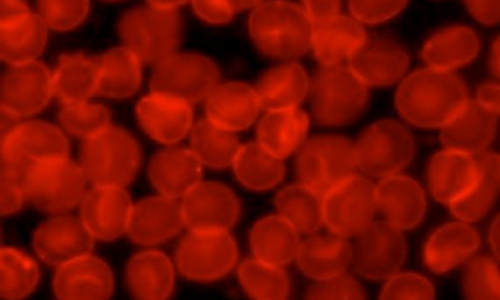
“We wanted to create high-value red cells that do more than simply carry oxygen,” says Whitehead Founding Member Harvey Lodish, who collaborated with Whitehead Member Hidde Ploegh in this pursuit. “Here we’ve laid out the technology to make mouse and human red blood cells in culture that can express what we want and potentially be used for therapeutic or diagnostic purposes.”
The work, published this week in the Proceedings of the National Academy of Sciences (PNAS), combines Lodish’s expertise in the biology of red blood cells (RBCs) with biochemical methods developed in Ploegh’s lab.
RBCs are an attractive vehicle for potential therapeutic applications for a variety of reasons, including their abundance—they are more numerous than any other cell type in the body—and their long lifespan (up to 120 days in circulation). Perhaps most importantly, during RBC production, the progenitor cells that eventually mature to become RBCs jettison their nuclei and all DNA therein. Without a nucleus, a mature RBC lacks any genetic material or any signs of earlier genetic manipulation that could result in tumor formation or other adverse effects.
Exploiting this characteristic, Lodish and his lab introduced genes coding for specific slightly modified normal red cell surface proteins into early-stage RBC progenitors. As the RBCs approach maturity and enucleate, the proteins remain on the cell surface, where they are modified by Ploegh’s protein-labeling technique. Referred to as “sortagging,” the approach relies on the bacterial enzyme sortase A to establish a strong chemical bond between the surface protein and a substance of choice, be it a small-molecule therapeutic or an antibody capable of binding a toxin. The modifications leave the cells and their surfaces unharmed.
“Because the modified human red blood cells can circulate in the body for up to four months, one could envision a scenario in which the cells are used to introduce antibodies that neutralize a toxin,” says Ploegh. “The result would be long-lasting reserves of antitoxin antibodies.”
The approach has captured the attention of the U.S. military and its Defense Advanced Research Projects Agency (DARPA), which is supporting the research at Whitehead in the interest of developing treatments or vaccines effective against biological weapons.
Lodish believes the applications are potentially vast and may include RBCs modified to bind and remove bad cholesterol from the bloodstream, carry clot-busting proteins to treat ischemic strokes or deep-vein thrombosis, or deliver anti-inflammatory antibodies to alleviate chronic inflammation. Further, Ploegh notes there is evidence to suggest that modified RBCs could be used to suppress the unwanted immune response that often accompanies treatment with protein-based therapies. Ploegh is exploring whether these RBCs could be used to prime the immune system to allow patients to better tolerate treatment with such therapies.
Story Source:
The above story is based on materials provided by Whitehead Institute for Biomedical Research.