• HOME
  • NEWS
  • EXPLORE
    • CAREER
      • Companies
      • Jobs
    • EVENTS
    • iGEM
      • News
      • Team
    • PHOTOS
    • VIDEO
    • WIKI
  • BLOG
  • COMMUNITY
    • FACEBOOK
    • INSTAGRAM
    • TWITTER
Tuesday, October 27, 2026
BIOENGINEER.ORG
No Result
View All Result
  • Login
  • HOME
  • NEWS
  • EXPLORE
    • CAREER
      • Companies
      • Jobs
        • Lecturer
        • PhD Studentship
        • Postdoc
        • Research Assistant
    • EVENTS
    • iGEM
      • News
      • Team
    • PHOTOS
    • VIDEO
    • WIKI
  • BLOG
  • COMMUNITY
    • FACEBOOK
    • INSTAGRAM
    • TWITTER
No Result
View All Result
Bioengineer.org
No Result
View All Result
Home NEWS Science News Agriculture

Maize transcription factor ZmHY5L shapes waxy gene starch quality and grain size

by
October 27, 2026
in Agriculture
Reading Time: 2 mins read
0
Maize transcription factor ZmHY5L shapes waxy gene starch quality and grain size

Maize transcription factor ZmHY5L shapes waxy gene starch quality and grain size

Share on FacebookShare on TwitterShare on LinkedinShare on RedditShare on Telegram

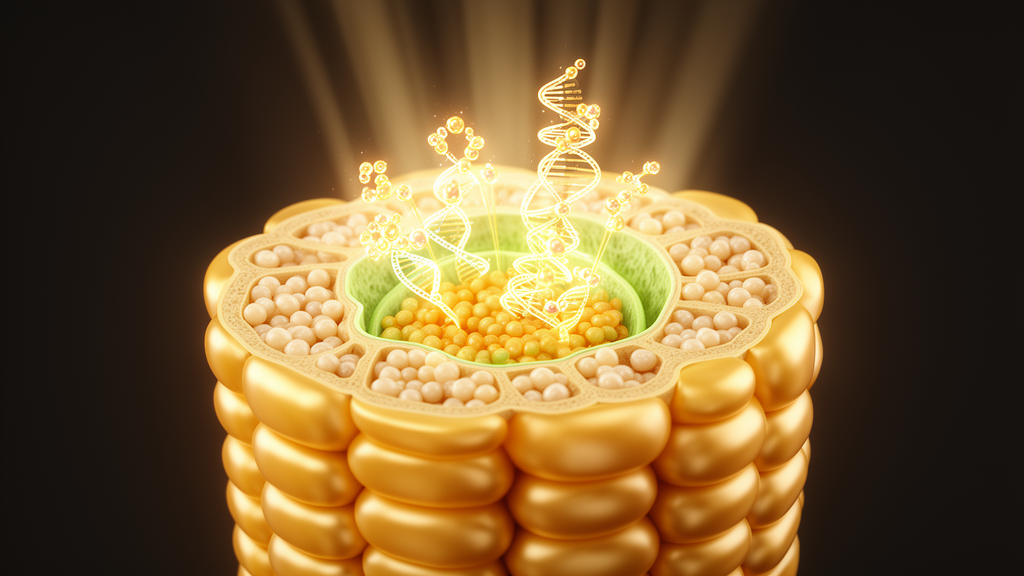
Researchers working with two characteristic waxy maize landraces from Yunnan have identified a transcription factor that directly controls the expression of the waxy gene, a key determinant of grain quality in maize. The factor, named ZmHY5L, belongs to the basic leucine zipper (bZIP) family and is one of the homologous genes of the Arabidopsis light-signaling regulator HY5. According to the study, published in Theoretical and Applied Genetics, ZmHY5L positively regulates waxy transcription by specifically binding to G-box elements in the gene’s promoter, and in doing so simultaneously influences both starch quality and grain morphology in the maize endosperm.

To find candidate regulators, the team used DNA pull-down combined with mass spectrometry, and this screen pointed to ZmHY5L as an upstream regulatory factor of the waxy gene.

The researchers then verified the interaction with a series of standard molecular tests. Subcellular localization confirmed that the ZmHY5L protein resides in the nucleus, as expected for a transcription factor. Electrophoretic mobility shift assays and yeast one-hybrid assays both confirmed a direct interaction between ZmHY5L and the regulatory region of the waxy gene.

The functional consequences became clear when the team constructed ZmHY5L gene-editing mutants and compared their phenotypes with normal plants. In the mutants, the GBSSI protein content in maize kernels was significantly reduced, consistent with the loss of a positive transcriptional activator acting on the gene that encodes that enzyme.

Reduced GBSSI shifted the composition of the starch itself. At the same time, the edited plants produced grains with larger volume and higher hundred-grain weight, meaning the transcription factor’s influence extends beyond starch chemistry into the physical morphology of the grain.

Notably, these shifts occurred without altering the total starch content of the kernels, indicating that ZmHY5L reshapes the balance between amylose and amylopectin and the architecture of the grain rather than the overall amount of starch deposited.

Taken together, the findings establish ZmHY5L as a G-box-binding transcriptional activator of the maize waxy gene with pleiotropic effects on endosperm starch quality and grain morphology. Because the study was conducted in two Yunnan waxy landraces using gene-editing mutants for phenotype comparison, the results are rooted in a specific genetic background, but they provide a mechanistic entry point for understanding how a light-signaling-associated factor tunes amylose synthesis and grain traits in maize.

Subject of Research: Transcriptional regulation of the maize waxy gene by the bZIP factor ZmHY5L and its effects on endosperm starch quality and grain morphology

Article Title: ZmHY5L synergistically affects endosperm starch quality and grain morphology through G-box-mediated transcriptional regulation of the maize waxy gene

Article References: Du, J., Ye, Y., Chen, X., Li, F., Yin, G., & Wu, X. (2026). ZmHY5L synergistically affects endosperm starch quality and grain morphology through G-box-mediated transcriptional regulation of the maize waxy gene. Theoretical and Applied Genetics, 139(11), Article 312. https://doi.org/10.1007/s00122-026-05425-0

Image Credits: AI Generated

DOI: 10.1007/s00122-026-05425-0

Keywords: maize, waxy gene, ZmHY5L, GBSSI, amylose, starch quality, grain morphology, transcription factor, G-box, gene editing, waxy maize landraces, Yunnan

News Source: Juliet Wilcox. (October 27, 2026). Maize transcription factor ZmHY5L shapes waxy gene starch quality and grain size. Scienmag.


Tags: amyloseG-boxGBSSIGene editinggrain morphologymaizestarch qualitytranscription factorwaxy genewaxy maize landracesYunnanZmHY5L
Share12Tweet7Share2ShareShareShare1

Related Posts

Brachypodium genome reveals conserved gene networks governing seed dormancy in temperate cereals

Brachypodium genome reveals conserved gene networks governing seed dormancy in temperate cereals

October 27, 2026
Korla Fragrant Pear Genes and Metabolites Shift During Black Spot Infection

Korla Fragrant Pear Genes and Metabolites Shift During Black Spot Infection

October 27, 2026

GWAS Pinpoints Candidate Genes Behind Wheat Stripe Rust Resistance

October 27, 2026

Satellites Reveal Hidden Drought Patterns in India’s Hadoti Region

October 27, 2026

POPULAR NEWS

  • Patients and Doctors Rank Rare Cancer Care Needs Differently in EORTC Survey

    Patients and Doctors Rank Rare Cancer Care Needs Differently in EORTC Survey

    29 shares
    Share 12 Tweet 7
  • Italy’s alien flora grows: new records and rising invasive species mapped

    29 shares
    Share 12 Tweet 7
  • Trametinib falls short in molecularly selected advanced solid tumours, with a possible signal in RAS Q61 mutations

    29 shares
    Share 12 Tweet 7
  • Mixing Natural and Synthetic Surfactants Reshapes Micelles, CMC and Surface Activity

    29 shares
    Share 12 Tweet 7

About

We bring you the latest biotechnology news from best research centers and universities around the world. Check our website.

Follow us

Recent News

Patients and Doctors Rank Rare Cancer Care Needs Differently in EORTC Survey

Italy’s alien flora grows: new records and rising invasive species mapped

Trametinib falls short in molecularly selected advanced solid tumours, with a possible signal in RAS Q61 mutations

Subscribe to Blog via Email

Enter your email address to subscribe to this blog and receive notifications of new posts by email.

Join 85 other subscribers
  • Contact Us

Bioengineer.org © Copyright 2023 All Rights Reserved.

Welcome Back!

Login to your account below

Forgotten Password?

Retrieve your password

Please enter your username or email address to reset your password.

Log In
No Result
View All Result
  • Homepages
    • Home Page 1
    • Home Page 2
  • News
  • National
  • Business
  • Health
  • Lifestyle
  • Science

Bioengineer.org © Copyright 2023 All Rights Reserved.