• HOME
  • NEWS
  • EXPLORE
    • CAREER
      • Companies
      • Jobs
    • EVENTS
    • iGEM
      • News
      • Team
    • PHOTOS
    • VIDEO
    • WIKI
  • BLOG
  • COMMUNITY
    • FACEBOOK
    • INSTAGRAM
    • TWITTER
Tuesday, October 27, 2026
BIOENGINEER.ORG
No Result
View All Result
  • Login
  • HOME
  • NEWS
  • EXPLORE
    • CAREER
      • Companies
      • Jobs
        • Lecturer
        • PhD Studentship
        • Postdoc
        • Research Assistant
    • EVENTS
    • iGEM
      • News
      • Team
    • PHOTOS
    • VIDEO
    • WIKI
  • BLOG
  • COMMUNITY
    • FACEBOOK
    • INSTAGRAM
    • TWITTER
No Result
View All Result
Bioengineer.org
No Result
View All Result
Home NEWS Science News Biology

Schwann Cells Rewired by Tumors May Shape Nerve Invasion and Immune Responses

by
October 27, 2026
in Biology
Reading Time: 2 mins read
0
Schwann Cells Rewired by Tumors May Shape Nerve Invasion and Immune Responses

Schwann Cells Rewired by Tumors May Shape Nerve Invasion and Immune Responses

Share on FacebookShare on TwitterShare on LinkedinShare on RedditShare on Telegram

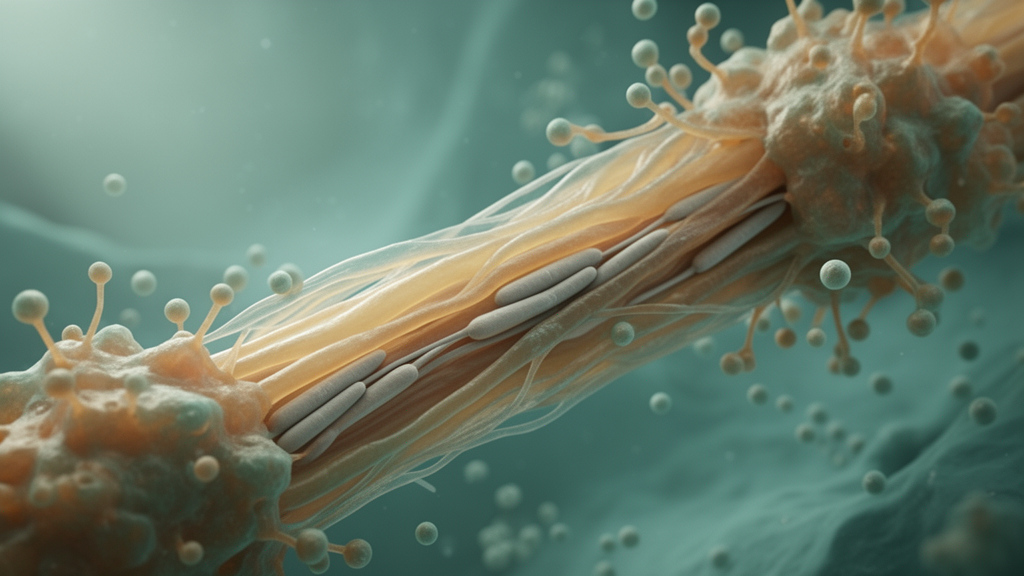
Schwann cells, the peripheral nervous system’s glial support cells, can be redirected by tumors into specialized states that may influence how cancers grow along and around nerves, according to a review published in Molecular Biology Reports. The article, authored by Hongbin Li, Wenyang Liu, Jing Liang, Yuan Li, Jianying Pei and Chong Zhang, synthesizes recent work on tumor-associated Schwann cells, or TAScs, and argues that these cells deserve attention as active participants in the cancer microenvironment rather than passive bystanders.

Under normal conditions, Schwann cells support and repair peripheral nerves. The review explains that tumor-derived factors, inflammatory mediators and metabolic stress can hijack this intrinsic repair program, pushing Schwann cells into tumor-associated states. These reprogrammed cells are enriched around nerves and at invasive fronts of tumors, locations where they have been linked to perineural invasion, the process by which cancer cells travel along nerve sheaths, as well as to remodeling of the extracellular matrix and to changes in where immune cells reside and how they function.

A substantial portion of the review focuses on the molecular machinery behind this reprogramming. The authors discuss how transcriptional regulators, chemokines, neurotrophic factors, extracellular vesicles and metabolic pathways collectively shape Schwann cell states within tumors. They then trace how these altered cells communicate with other players in the microenvironment, including cancer cells themselves, macrophages, T cells and natural killer cells, positioning TAScs as potential coordinators of both tumor behavior and immune activity.

The review also highlights how newer genomic tools are changing the field. However, the authors are careful to note limitations: marker-based annotation can be unreliable, model systems may not reflect human tumors, and findings from one cancer type cannot simply be extrapolated to another.

Looking toward application, the authors evaluate whether TASc-associated molecular programs could serve as biomarkers or as entry points for therapy, particularly in tumors characterized by perineural invasion or resistance to immunotherapy. Their overall assessment, however, is cautious. The available evidence indicates that Schwann cell reprogramming is a context-dependent process, and the review concludes that it should be studied as part of the wider cellular organization of the cancer microenvironment rather than in isolation. As a review of existing literature, the article does not report new experimental findings, but it consolidates a rapidly evolving area at the intersection of neurobiology and oncology.

Subject of Research: How tumors reprogram Schwann cells and how these altered glial cells interact with cancer and immune cells in the tumor microenvironment.

Article Title: Schwann cell reprogramming and immune regulation in the cancer microenvironment

Article References: Li, H., Liu, W., Liang, J., Li, Y., Pei, J., & Zhang, C. (2026). Schwann cell reprogramming and immune regulation in the cancer microenvironment. Molecular Biology Reports, 53(1), Article 1837. https://doi.org/10.1007/s11033-026-13000-5

Image Credits: AI Generated

DOI: 10.1007/s11033-026-13000-5

Keywords: Schwann cells, tumor microenvironment, perineural invasion, glial cells, cancer immunology, single-cell transcriptomics, extracellular vesicles, biomarkers, tumor-associated Schwann cells, Molecular Biology Reports, Schwann, cell

News Source: Drew Townsend. (October 27, 2026). Schwann Cells Rewired by Tumors May Shape Nerve Invasion and Immune Responses. Scienmag.


Tags: biomarkersCancer Immunologycellextracellular vesiclesGlial CellsMolecular Biology Reportsperineural invasionSchwannSchwann cellssingle-cell transcriptomicstumor microenvironmenttumor-associated Schwann cells
Share12Tweet7Share2ShareShareShare1

Related Posts

Employers in Latin America screen for customer service and communication, not digital skills

Employers in Latin America screen for customer service and communication, not digital skills

October 27, 2026
Steamed or Boiled? Science Maps Cameroon's Beloved Eggplant Herbal Tea for the First Time

Steamed or Boiled? Science Maps Cameroon’s Beloved Eggplant Herbal Tea for the First Time

October 27, 2026

Choosing the Right Pre-Fire Image Date Changes Wildfire Severity Maps Made from 3 m Satellite Data

October 27, 2026

Hospital sink drains harbor shared plasmid carrying VIM-2 resistance gene across Pseudomonas species

October 27, 2026

POPULAR NEWS

  • Mitochondrial dysfunction emerges as a shared thread across neurological disease

    Mitochondrial dysfunction emerges as a shared thread across neurological disease

    29 shares
    Share 12 Tweet 7
  • Schwann Cells Rewired by Tumors May Shape Nerve Invasion and Immune Responses

    29 shares
    Share 12 Tweet 7
  • Silk fibroin scaffolds emerge as a platform for tendon and tendon-bone repair

    29 shares
    Share 12 Tweet 7
  • Automated Software and High-Tilt Holders Push Atomic-Resolution Electron Tomography Into 3D Interface Imaging

    29 shares
    Share 12 Tweet 7

About

We bring you the latest biotechnology news from best research centers and universities around the world. Check our website.

Follow us

Recent News

Mitochondrial dysfunction emerges as a shared thread across neurological disease

Schwann Cells Rewired by Tumors May Shape Nerve Invasion and Immune Responses

Silk fibroin scaffolds emerge as a platform for tendon and tendon-bone repair

Subscribe to Blog via Email

Enter your email address to subscribe to this blog and receive notifications of new posts by email.

Join 85 other subscribers
  • Contact Us

Bioengineer.org © Copyright 2023 All Rights Reserved.

Welcome Back!

Login to your account below

Forgotten Password?

Retrieve your password

Please enter your username or email address to reset your password.

Log In
No Result
View All Result
  • Homepages
    • Home Page 1
    • Home Page 2
  • News
  • National
  • Business
  • Health
  • Lifestyle
  • Science

Bioengineer.org © Copyright 2023 All Rights Reserved.