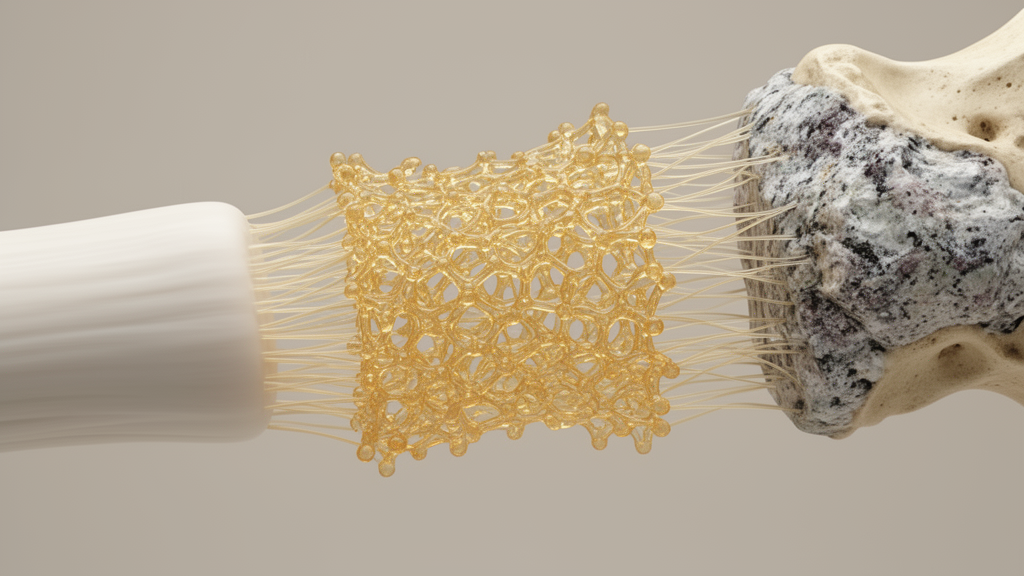
Tendon and tendon-bone interface injuries, including rotator cuff tears, Achilles tendon ruptures, and anterior cruciate ligament damage, remain among the most stubborn problems in orthopedic practice. A new review published in the Chinese Medical Journal argues that silk fibroin, the structural protein of silkworm cocoons, offers a versatile biomaterial platform for rebuilding these tissues, which too often heal with disorganized scar tissue rather than the native hierarchical architecture, leading to compromised mechanical function and high re-tear rates.
The review, led by corresponding authors Dr. Xiao Chen and Dr. Zi Yin with first authors Dr. Ziang Guan and Dr. Sicheng Zhou of the Dr. Li Dak Sum and Yip Yio Chin Center for Stem Cells and Regenerative Medicine at Zhejiang University School of Medicine, was published online on August 24, 2026. It synthesizes current knowledge on how silk fibroin can be engineered into hydrogels, sponges, and electrospun fibers to repair tendon and restore the complex tendon-bone interface.
The authors ground their argument in silk’s remarkable structural hierarchy. At the first level lies the amino acid sequence; at the second, alpha-helix and beta-sheet structures stabilized by intermolecular hydrogen bonds, with beta-sheets crystallizing into ordered domains. At the third level, neighboring beta-sheets from different molecules crystallize into intermolecular beta-crystallites. These crystallites connect through amorphous chains to form a crystal network, which constitutes an individual nanofibril, and shear forces during formation can help orient the crystallites. Finally, nanofibrils assemble into networks: in silk fibers they bundle along the fibrous axis, while in non-fiber silk materials they interconnect in a nearly random arrangement.
Each level of this hierarchy contributes to the material’s mechanical performance. Silk fibroin combines high tensile strength, reported at 300 to 740 megapascals, with tunable biodegradability and low immunogenicity, a combination the authors identify as well suited to musculoskeletal tissue engineering. The protein is derived primarily from the cocoons of the silkworm Bombyx mori.
The review catalogs regenerated silk fibroin into five principal scaffold formats: particles and films, hydrogels, sponges, polymeric fibers, and emerging hybrid constructs. Each format is evaluated against the specific mechanical and biological demands of tendon and tendon-bone repair. Electrospun silk fibroin nanofibers can be aligned to mimic the anisotropic collagen architecture of native tendon, while gradient-mineralized scaffolds recapitulate the spatial transition from soft tendon to mineralized bone at the enthesis, the graded junction that autografts and allografts typically fail to reproduce.
Beyond structural mimicry, the authors highlight bioactive functionalization strategies. Silk fibroin scaffolds can incorporate stem cells, growth factors such as TGF-beta, BMP-2, and CTGF, and osteoinductive nanoparticles to actively guide tissue regeneration. The review also surveys silk-based applications in adjacent fields, including skin wound healing, peripheral nerve repair, myocardial infarction treatment, and osteosarcoma therapy, underscoring the versatility of the material platform.
Progress has not translated easily into the clinic. The authors caution that few silk-based products have entered clinical trials, that the exceptional mechanical properties of native silk fibers are not yet fully recovered in regenerated silk fibroin scaffolds, and that integrating multiple gradient types, physical, chemical, and biological, into single constructs remains technically demanding. These limitations frame the gap between promising laboratory scaffolds and approved therapies for patients with rotator cuff, Achilles, or ligament injuries.
Looking forward, the review envisions smart silk-based scaffolds incorporating sensors for non-invasive monitoring of graft strain, alongside machine learning-driven material screening to accelerate the discovery of optimized formulations. “Silk-based materials have shown great application potential in tendon and TBI regeneration due to their excellent biocompatibility, tunable mechanical properties, and controllable biodegradability,” the authors conclude. The work was supported by NSFC grants No. 32271406 and No. 32471211 and the Key R&D Program of Zhejiang (No. 2024C03077). As a literature review, the article consolidates existing research rather than reporting new experimental results, and its translational vision remains a roadmap rather than an achieved clinical outcome.
Subject of Research: Silk fibroin biomaterials for tendon and tendon-bone interface regeneration
Article Title: Silk-based materials for regeneration
Article References: Silk-based materials for regeneration. Original publication (Bibliographic details unavailable.)
Image Credits: AI Generated
DOI: Not provided
Keywords: silk fibroin, tendon repair, tendon-bone interface, biomaterials, tissue engineering, electrospun fibers, hydrogels, rotator cuff, regenerative medicine, Chinese Medical Journal, Silk-based, materials
News Source: Ophelia Keating. (October 27, 2026). Silk fibroin scaffolds emerge as a platform for tendon and tendon-bone repair. Scienmag.