A large-scale, single-center retrospective study published in the Journal of Perinatology reports that the cutaneous application of pure hypochlorous acid (pHA) solution significantly decreases the incidence of methicillin-resistant Staphylococcus aureus (MRSA) colonization in neonates, while simultaneously demonstrating both systemic and topical safety across a cohort of 444 infants.
The investigation, which spanned two years from August 2024 to March 2026, involved neonates ranging from 22 to 41 weeks of gestation. The primary objective was to determine the clinical efficacy of pHA in preventing neonatal skin colonization, with a secondary aim to evaluate the cutaneous and systemic safety of full-body application. The intervention involved performing a full-body wipe with pHA-soaked sterile gauze three times a week—specifically on Sundays, Tuesdays, and Thursdays—as part of an established colonization prevention bundle. This approach was implemented to address leadership concerns regarding persistent MRSA and MSSA colonization rates within the regional perinatal center, which handles approximately 5000 deliveries and 700 inborn neonatal admissions annually.
The results indicated a substantial reduction in MRSA colonization. Pre-intervention data showed 32 MRSA-positive colonizations, while post-intervention data recorded only 15, representing a 53% decrease in the absolute number and a 47% decrease in the incidence rate. Statistical analysis, utilizing exact Poisson rate tests, determined that the crude MRSA rate ratio comparing the treatment period to the pre-treatment period was 0.53 (95% CI 0.27–1.01, p = 0.0417). In contrast, the crude MRSA rate decreased from 2.97 per 1000 patient-days during the pre-treatment period to 1.58 per 1000 patient-days during the treatment period. Conversely, the crude MSSA rate remained stable across both periods, with a rate ratio of 1.01 (95% CI 0.76 to 1.34, p = 0.945), suggesting the intervention was specifically effective against MRSA strains.
The safety profile of pHA was rigorously assessed through multiple secondary outcomes. Cutaneous tolerance was evaluated using the Neonatal Skin Condition Score (NSCS), a 3-criterion grading system assessing dryness, erythema, and skin breakdown. A higher NSCS score indicates a poorer skin condition, with 3 representing the best possible condition and 9 the worst. The study found no incidences of erythema directly attributed to pHA application; the most frequent causes of skin breakdown were attributed to diaper dermatitis. While a few babies developed very mild dryness after multiple applications, primarily on the upper extremities, none required treatment beyond the unit’s approved lotion application. Furthermore, systemic safety was monitored via weekly comprehensive metabolic panel (CMP) and biweekly liver function tests (LFT). No abnormalities were observed related to the hypochlorous acid application, and no increase in chloride levels or changes in protein metabolism (BUN) were noted.
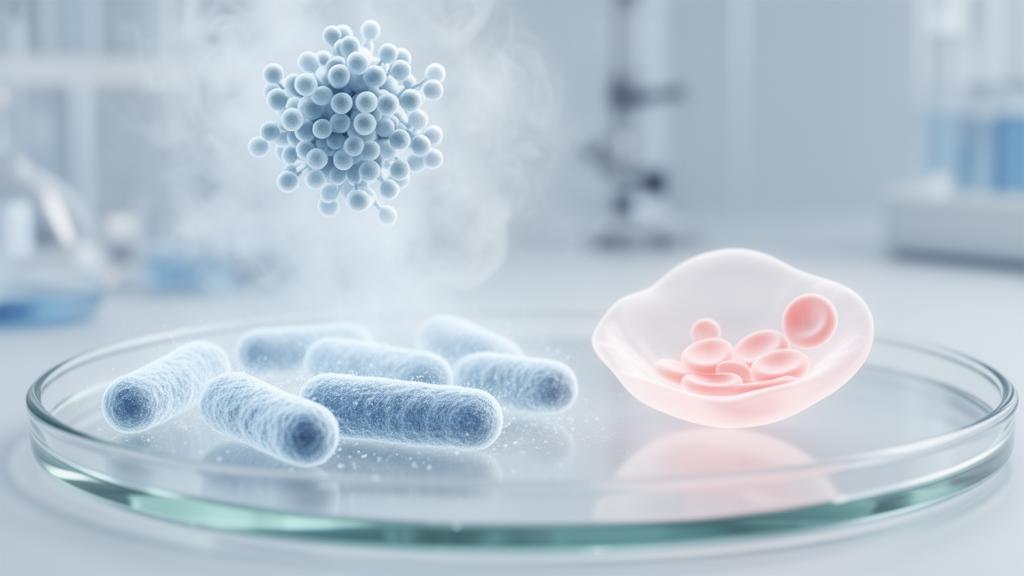
Technically, the pHA solution used in the study contained 99.6% water and 0.4% sodium chloride, yielding a concentration of $\le 0.033\%$ hypochlorous acid (HOCl), maintaining a pH range of 3.5–5.5. Hypochlorous acid is a potent oxidant and a weak acid, naturally occurring in mammals and released by activated leukocytes. In the pH range of 3 to 5.5, HOCl is the predominant species, possessing maximal antimicrobial properties. Its mechanism of action involves inhibiting protein synthesis through the oxidation of thiol-containing proteins and enzymes, reducing DNA replication, and disrupting mitochondrial metabolism. A key advantage of pHA is its rapid decomposition upon contact with skin into salt and water, which minimizes systemic absorption and avoids the formation of lasting toxic waste, unlike synthetic byproducts from agents like chlorhexidine gluconate (CHG).
The study’s design, a retrospective review of all hospitalized neonates from the NICU, provides a substantial dataset, encompassing 1332 total pHA applications across the cohort. The patient population included infants born at 22 to 41 weeks of gestation, with the median gestational age being 32.4 weeks and median birth weight 1625 g. The study acknowledges limitations inherent in its single-center, retrospective nature, but highlights its strength as the largest reported neonatal cohort to consistently receive preventive pHA wipes, including extremely preterm neonates born at 22 weeks GA. The researchers also noted that while pHA showed efficacy against MRSA, there was no similar effect observed on MSSA colonization, suggesting potential factors such as increased nasal carriage burden of MSSA or differences in bacterial strain resistance.
The findings contribute significantly to the ongoing debate regarding skin decolonization in neonates, particularly given that current clinical practice guidelines often refrain from recommending specific antiseptic solutions for preventive use in preterm infants due to concerns over the systemic absorption and cytotoxicity of agents like CHG. The authors emphasize that pHA’s lack of cytotoxicity in various cell lines and its minimal systemic absorption make it a promising candidate for routine use in neonatal bundles. Furthermore, the biological properties of hypochlorous acid—such as decreased activity of histamine and mast cell degranulation—suggest potential benefits for skin health beyond simple bacterial reduction, including improved skin integrity in infants with moisture-associated dermatitis.
Despite the positive outcomes, the authors advocate for future research. They stress that while this study demonstrates safety and efficacy, additional multicenter trials analyzing a greater number of infants are necessary to strengthen the conclusions. Furthermore, future trials specifically investigating the application of pHA on day one in extremely low gestational age neonates (ELGAN) are required. The data gathered here, however, add a crucial layer of evidence to the growing body of knowledge concerning the safety and tolerability of pure hypochlorous acid in the delicate neonatal environment, offering a viable alternative to more controversial antiseptic protocols.
Subject of Research: The efficacy and safety of using pure hypochlorous acid solution for bacterial skin decolonization in preterm neonates.
Article Title: Efficacy and safety of pure hypochlorous acid solution for neonatal skin bacterial decolonization
Article References: Boyar, V., Lafond, L., Austin, J., Woodford, A., & Assing, E. (2026). Efficacy and safety of pure hypochlorous acid solution for neonatal skin bacterial decolonization. Journal of Perinatology. https://doi.org/10.1038/s41372-026-02932-2
Image Credits: AI Generated
DOI: 10.1038/s41372-026-02932-2
Keywords: hypochlorous acid, neonatal care, MRSA, skin decolonization, antimicrobial agents, preterm infants, NICU, infection prevention, Efficacy, safety, pure, hypochlorous
News Source: Harold Sullivan. (October 27, 2026). Pure Hypochlorous Acid Reduces MRSA Colonization and Demonstrates Neonatal Safety. Scienmag.