The trillions of microbes living in the human gut have moved from the margins of neuroscience to one of its most active frontiers, and a new large-scale analysis of the scientific literature now shows just how fast that shift has happened. A bibliometric study published in Frontiers in Microbiology on 27 October 2026 mapped three decades of research linking gut microbiota to cognitive impairment in older adults, charting who is publishing, where the work is concentrated, and which themes are driving the field forward. Drawing on the Web of Science Core Collection and Scopus databases, the team led by Ming-Yue Sun and colleagues at Shandong Second Medical University in Weifang, China, identified 406 relevant publications in the Web of Science Core Collection and 180 in Scopus, spanning the period from 1995 to 8 September 2025.
The headline finding is one of explosive growth. The field passed through three distinct phases, according to the analysis. Before 2016, output was minimal, with the first core paper appearing only in 2009 and annual publication counts remaining very low during what the authors describe as the nascent period. Between 2017 and 2020, the field entered a development phase, with annual output climbing steadily to more than 31 articles in 2020. From 2021 onward, the field entered what the authors call an explosive period, producing more than 59 articles in that window and averaging 64 papers per year. In the Scopus database, the growth rate likewise accelerated sharply after 2021. The trajectory reflects a scientific community that has increasingly recognized the potential value of studying the gut-brain connection in aging populations.
Geographically, the field is dominated by China in sheer volume. The country ranks first with 186 papers, followed by the United States with 90, while the United Kingdom and Italy are tied for third with 29 papers each. But volume tells only part of the story. When the researchers examined average citations per paper, the United Kingdom led with 70.14, followed by Italy at 69.00 and the United States at 48.67. China’s average citation count did not place among the top five, a gap the authors interpret as a sign that high output has not yet translated into equivalent influence within the global knowledge network. The United States, by contrast, performed well on both measures, which the authors describe as a balanced advantage in the scale of academic output and international cooperation. The United Kingdom’s high citation profile, combined with relatively high network centrality, suggests it plays a pivotal role in connecting research clusters across North America, Europe and the Asia-Pacific region.
At the institutional level, Nanjing Medical University and Zhejiang University are joint leaders, each publishing 11 papers in the field. Huazhong University of Science and Technology follows with 10 papers and Capital Medical University with 9. Yet the citation picture again complicates the output rankings. Kyung Hee University in South Korea recorded the highest average citation count among institutions at 49.00, followed by Capital Medical University at 45.33 and Huazhong University of Science and Technology at 31.40. The authors note that the combination of high output and relatively low average citations among Chinese institutions reflects the serious challenges that current research on gut microbiota and cognitive function in China faces in gaining traction within the global knowledge network, even as Chinese research funding has risen substantially and the country’s large population base offers particular advantages for cohort studies and clinical trials.
Among individual researchers, Hariom Yadav tops the Web of Science rankings with seven publications and an average of 92.14 citations per paper, while Luo Ailin ranks second with six papers and the highest total link strength in that database, a measure of how densely connected an author is within the collaboration network. In Scopus, Zhang Y leads on publication count with ten papers, while a cluster of Japanese collaborators including Hisada T., Murotani K., Niida S., Saji N. and Sakurai T. share the highest total link strength. The authors caution that these rankings should be read as measures of publication activity rather than assessments of individual academic influence. Because research in this field is team-based, several authors from the same laboratory can appear on the list simultaneously through co-authorship of the same set of papers, while independent researchers who published a small number of pioneering studies may be excluded simply because their total output is low.
The keyword analysis reveals where the intellectual center of gravity lies. In the Web of Science database, the most frequent keyword is gut microbiota, appearing 234 times, followed by Alzheimer’s disease at 148, dementia at 99, microbiota at 88 and cognitive impairment at 81. Aging, inflammation, probiotics, neuroinflammation and older adults round out the top ten. The Scopus database, which relies more heavily on automated indexing, shows a similar pattern with slightly different terminology: intestine flora leads at 150 occurrences, followed by aged, cognitive defect, cognition and gastrointestinal microbiome. The authors emphasize that despite the terminological differences, the two databases point to the same core themes, and this mutual corroboration strengthens confidence in the identified research hotspots. Alzheimer’s disease emerges as the most intensively studied cognitive disorder within the field, and inflammatory response stands out as the key pathological mechanism attracting sustained attention.
The most cited work in the corpus underscores why inflammation has become such a focal point. Cattaneo and colleagues’ 2017 paper in Neurobiology of Aging, which associated brain amyloidosis with pro-inflammatory gut bacterial taxa and peripheral inflammation markers in cognitively impaired elderly people, has accumulated 1,019 citations, far ahead of the second most cited paper, Kowalski and Mulak’s 2019 review of the brain-gut-microbiota axis in Alzheimer’s disease at 564 citations. Other highly influential works include studies linking altered bile acid profiles to cognitive impairment in Alzheimer’s disease, a modified Mediterranean-ketogenic diet trial modulating the gut microbiome in subjects with mild cognitive impairment, and fecal microbiota transplantation experiments alleviating Alzheimer’s disease-like pathology in transgenic mice. The list spans human association studies, randomized trials and animal models, illustrating the breadth of approaches the field has deployed.
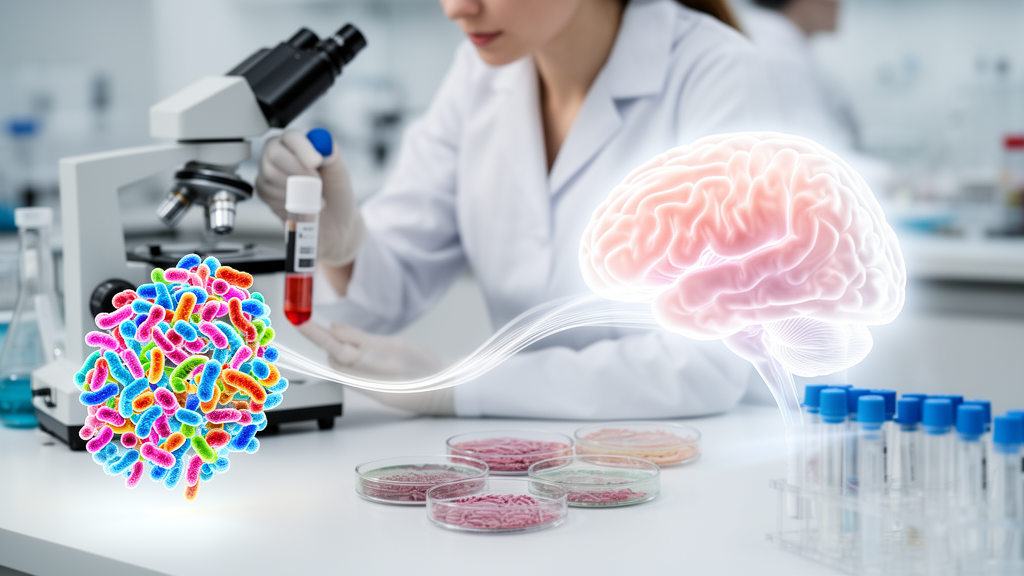
Behind the bibliometric maps lies a biological story that explains the field’s appeal. The gut microbiota is one of the most abundant microbial communities in the human body, regulating metabolic, immune and nervous system functions, and imbalanced gut microbiota has been linked to cognitive impairment in older adults. The proposed communication channel, the gut-brain axis, links the enteric nervous system, sometimes called the second brain, with the central nervous system, the autonomic nervous system and the hypothalamic-pituitary-adrenal axis through neural, immune, endocrine and metabolic pathways. Candidate mechanisms described in the literature include pro-inflammatory factors and reactive oxygen species released by dysbiotic flora that activate microglia and damage neurons; short-chain fatty acids that influence histone deacetylation, synaptic plasticity and neurotrophic factor expression; and microbial toxins and metabolites that compromise intestinal barrier permeability, promoting neuroinflammation and neurodegeneration in the central nervous system. Studies cited in the review report that Alzheimer’s disease patients show higher abundance of Bacteroides and Proteus in their gut microbiota, with relatively less Firmicutes and Bifidobacteria, and that gut microbiota profiles differ across elderly populations with varying cognitive states.
The review’s authors are careful to mark the boundary between what the literature supports and what remains speculative. Current microbiome-based interventions, including probiotics and fecal microbiota transplantation, rest largely on small-scale pilot trials with inconsistent effects and no evidence from long-term follow-up, and further work is needed to confirm their safety and effectiveness in clinical settings. They suggest that future investigations could benefit from integrating multi-omics approaches, combining metagenomics, metabolomics, proteomics and host transcriptomic or epigenomic data with neuroimaging and refined clinical phenotypes, to explore potential biomarkers and nutritional intervention strategies, while stressing that these directions should be pursued through rigorous experimental and clinical research. They also flag gaps in population coverage, noting that most studies focus on European and American populations while data on East Asian populations remain comparatively scarce, though teams from China and South Korea have begun to close that gap.
The study itself carries methodological limitations that the authors acknowledge openly. The search was restricted to English-language research articles and reviews, relied on specific keywords and Boolean logic that may have introduced selection bias, and did not include supplementary searches in PubMed/MEDLINE or Embase or sensitivity testing of the search strings. High keyword thresholds may have excluded low-frequency but important emerging themes, and the authors note that precise replication of their VOSviewer results could be affected by the parameter settings used. More fundamentally, bibliometrics is a descriptive and mapping tool: it can reveal knowledge structures, collaborative networks and research trends, but it cannot evaluate the clinical effectiveness of therapeutic strategies or clarify the biological processes by which gut microbes affect cognition. What the analysis does deliver is a clear-eyed snapshot of a field in rapid ascent, one that has moved from exploratory observations before 2016 to a maturing discipline now pushing toward mechanistic models, early-warning biomarkers and, ultimately, personalized interventions for age-related cognitive decline.
Subject of Research: Bibliometric mapping of gut microbiota research on cognitive impairment in the elderly
Article Title: Current status and trends of gut microbiota in the study of cognitive impairment in the elderly
Article References: Sun, M.-Y., Wang, Y., Jiang, J., Feng, S., & Sun, Y.-G. (2026). Current status and trends of gut microbiota in the study of cognitive impairment in the elderly. Frontiers in Microbiology, 17, 1910406. https://doi.org/10.3389/fmicb.2026.1910406
Image Credits: AI Generated
DOI: 10.3389/fmicb.2026.1910406
Keywords: gut microbiota, cognitive impairment, Alzheimer's disease, bibliometrics, gut-brain axis, aging, probiotics, neuroinflammation, dementia, multi-omics, older adults, VOSviewer
News Source: Cassandra Pierce. (October 27, 2026). Gut Microbiota Research on Cognitive Decline in Older Adults Maps a Rapidly Growing Field. Scienmag.