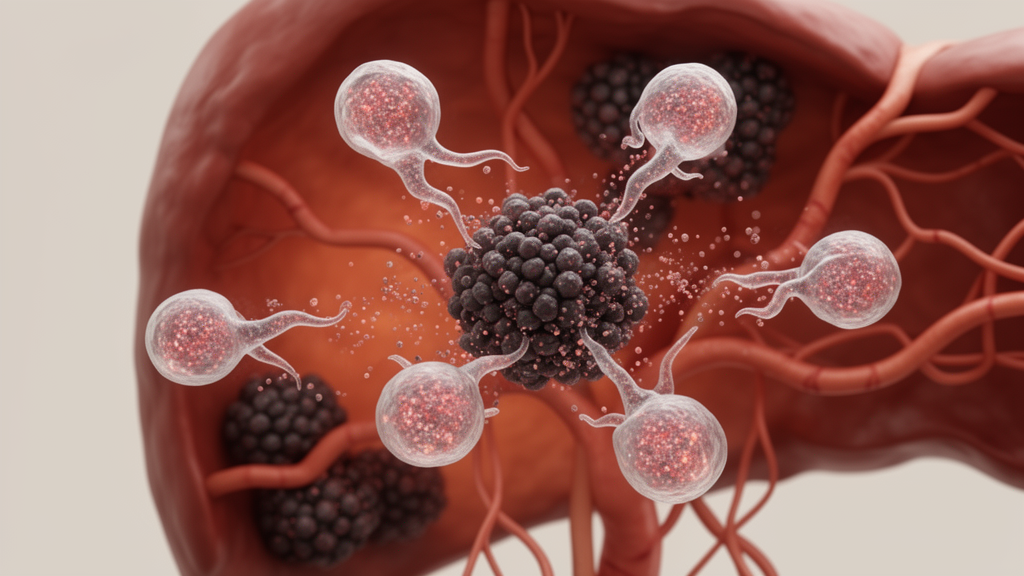
Natural killer cells have long been portrayed as the immune system’s blunt instruments: pre-armed killers that destroy tumor cells on sight, no prior training required. A review published on 26 October 2026 in Frontiers in Oncology by Yi Lu, Chenyue Xia and Jinhui Gu of Suzhou Traditional Chinese Medicine Hospital Affiliated to Nanjing University of Chinese Medicine argues that this picture collapses under scrutiny in one of the deadliest clinical settings in oncology. In colorectal cancer liver metastasis, the authors contend, natural killer cells are not a uniform garrison of cytotoxic sentinels but a heterogeneous spectrum of cell states, each shaped by the liver’s distinctive immune architecture and by the evolving tactics of the tumor itself. Drawing together single-cell transcriptomics, spatial profiling and experimental metastasis models, the review reframes innate immune surveillance in the metastatic liver as a balance among functionally distinct populations rather than a simple headcount of killer cells.
The stakes are considerable. Colorectal cancer liver metastasis remains a critical bottleneck in the management of colorectal cancer and a major cause of cancer-related mortality. The liver is not a passive landing zone. It is a specialized immunological organ in which tolerance to dietary and microbial antigens arriving through the portal circulation, metabolic regulation and continuous antigen exposure are tightly integrated. That tolerogenic wiring, the review notes, makes colorectal liver metastases one of the most immunologically restrictive metastatic environments, typically marked by limited lymphocyte infiltration, weak spontaneous antitumor immune activation and comparatively poor responses to immune checkpoint blockade, particularly in microsatellite-stable disease. Within this landscape, disseminated tumor cells either succumb to immune surveillance or establish metastatic lesions, and natural killer cells sit squarely at that interface.
Mechanistically, natural killer cells earn their reputation through perforin and granzyme release, death-receptor pathways involving TNFα, FasL and TRAIL, and cytokine output including interferon-γ. Their activation reflects an integrated tally of activating inputs, such as NKG2D recognizing stress ligands like MICA/B and ULBPs, and DNAM-1 binding CD112 and CD155, against inhibitory inputs from killer-cell immunoglobulin-like receptors and NKG2A, which sense MHC class I and HLA-E to enforce self-tolerance. When tumor cells reduce these self ligands, the resulting missing-self signal exposes them to killing. Experimental metastasis models have repeatedly shown that depleting natural killer cells or using natural-killer-deficient hosts increases metastatic outgrowth, consistent with a nonredundant role in constraining dissemination and seeding.
The review highlights a concrete example of how local inflammatory circuitry can empower this surveillance. In colorectal cancer liver metastasis models, activation of the NLRP3 inflammasome promotes interleukin-18-dependent licensing of natural killer cells, enhancing FasL expression and tumor cell killing, while disruption of this axis yields functionally immature natural killer cells and accelerated metastatic growth. Conversely, tumors evolve ways to blunt the threat. Cancer cells can remodel the activating and inhibitory ligand landscape that natural killer cells read, dampening degranulation and cytokine production in co-culture assays. Lipid remodeling programs that increase membrane unsaturated phospholipids, for instance through upregulation of stearoyl-CoA desaturase activity, have been associated with reduced susceptibility to natural-killer-mediated lysis, and can be partially reversed by targeting the lipid pathway. The generalizable principle, the authors stress, is that metastatic success reflects not the absence of natural killer cells but the emergence of tumor- and niche-driven adaptations that reshape the cues governing activation and killing.
The core of the review is a reconceptualization of hepatic natural killer cell diversity. The liver hosts both circulating natural killer cells trafficking through the sinusoidal vasculature and tissue-resident populations marked by retention molecules such as CXCR6, CD69 and CD49a, which are locally maintained and transcriptionally distinct. In human colorectal liver metastases, the CXCR6-positive CD69-positive resident population is markedly diminished within metastatic lesions, suggesting that tumor growth disrupts resident niches or actively excludes these cells. Experimental studies indicate that effective antimetastatic immunity in the liver can involve coordinated activity between conventional natural killer cells and tissue-resident group 1 innate lymphoid cells, underscoring complementary roles. The authors are candid about classification problems: markers such as CD49a, CXCR6 and CD69 overlap across lineages and vary between mice and humans, so they advocate state-based terminology and caution that cross-sectional single-cell data can describe coexisting populations without proving that one state converts into another.
Within metastatic lesions themselves, the phenotypic picture is striking. Natural killer cells are reduced in overall abundance compared with non-tumor liver tissue, and the remaining cells show a relative enrichment of CD56-dim CD16-positive subsets traditionally associated with peripheral circulation. At the receptor level, the activating receptor NKG2D, a key mediator of tumor recognition, is markedly downregulated, while the inhibitory receptor NKG2A is upregulated, alongside increased expression of NKp44. The review interprets this rewiring as evidence of a distinct phenotypic state with modified signaling thresholds rather than proof of a causal differentiation program, noting that direct evidence linking altered T-bet activity to natural killer cell dysfunction in human colorectal liver metastasis remains limited. Single-cell and spatial studies add further texture: ILC1-like CD49a-positive populations have been associated with strong cytotoxic and antitumor transcriptional programs within metastatic lesions, and chemokine signaling through CXCR3 contributes to natural killer cell localization within CXCL9- and CXCL10-rich tumor regions, where experimental models show natural killer cells co-localizing with macrophages. These signatures indicate functional potential, the authors caution, but do not by themselves establish superior tumor killing or causal protection in humans.
Perhaps the most provocative section addresses dual functionality. Superficially similar tissue-associated phenotypes can carry different meanings in different tumors. In hepatocellular carcinoma, accumulation of CD49a-positive tumor-infiltrating natural killer cells has been associated with impaired antitumor immunity and unfavorable outcome, but the review explicitly warns against extrapolating that to colorectal liver metastasis. More direct preclinical evidence for tumor-permissive activity comes from experimental liver metastasis models, where phenotypically resting natural killer cells were shown to facilitate colon cancer liver metastasis by increasing tumor-derived stem cell factor, an indirect route that supports metastatic growth without requiring total loss of effector capacity. The authors distinguish heterogeneity, tissue adaptation and plasticity as separate concepts, reserving terms like state transition or reversible reprogramming for settings with lineage-tracing, perturbational or longitudinal evidence. In human colorectal liver metastasis, they conclude, most observed phenotypes should be read as context-associated functional states whose reversibility remains unproven, not as fixed endpoints of exhaustion.
That distinction carries therapeutic weight. The metastatic niche does not suppress natural killer cells uniformly; it selectively rewires them. Experimental models show that hepatocyte-intrinsic activation of cell cycle-related kinase signaling can drive CXCL1 expression, recruit polymorphonuclear myeloid-derived suppressor cells and establish an immunosuppressive hepatic niche, with depletion of these myeloid populations reducing metastatic burden. Endothelial cells actively shape the niche as well: in experimental liver metastasis models, CD4-positive T-cell-derived interleukin-22 promoted angiogenesis within established lesions through endothelial signaling. Beyond these axes, the review catalogs overlapping suppressive circuits, including regulatory T cells, cancer-associated fibroblasts, tumor-derived extracellular vesicles, hypoxia, adenosine and TGF-β, while noting that most of these mechanisms are established in broader tumor immunology but incompletely validated specifically in human colorectal liver metastasis. Even cytotoxic natural killer states, the authors argue, can be neutralized by spatial restriction within the sinusoidal architecture if access or timing fails.
On the therapeutic front, the review maps two broad strategies: strengthening natural killer cytotoxic function and relieving suppressive conditioning. Checkpoint blockade of NKG2A, TIGIT and killer-cell immunoglobulin-like receptors aims to restore responsiveness of restrained antitumor populations rather than merely increase cell numbers. Cytokine support with interleukin-15, interleukin-12 and interleukin-18 builds on the inflammasome licensing precedent, though systemic toxicity and persistent niche suppression remain obstacles. Metabolic rewiring offers a mechanistically striking entry point: a metabolism-focused CRISPR screen in a spontaneous metastasis model identified BBOX1-driven carnitine production in tumor cells as a determinant of immune evasion, inhibiting RhoA activity in natural killer cells, preventing immunological synapse formation and shielding metastatic cells from killing, with genetic loss of BBOX1 improving the efficacy of adoptive natural killer transfer in vivo. Bispecific and trispecific killer cell engagers, chemokine-receptor engineering and locoregional delivery round out the toolkit, though the review emphasizes that CRLM-specific clinical evidence remains scarce.
The translational precedent is real but qualified. A phase 1 dose-escalation study of intraperitoneal NKG2D CAR-NK cells in heavily pretreated colorectal cancer patients with peritoneal metastases reported feasibility and tolerability, with three of nine treated patients achieving stable disease, and multi-omics analyses suggesting the infusions could expand activated cytotoxic CD8-positive T-cell populations. The review is careful to note this involved peritoneal rather than liver metastases and does not establish hepatic efficacy. On the prognostic side, increased intratumoral natural killer cell infiltration in resected colorectal liver metastases has been associated with improved overall survival, particularly alongside higher T-cell infiltration, but the authors stress this is a clinical association, not a validated predictive biomarker. Their closing argument is that future trials must integrate NK-cell state, spatial localization and microenvironmental context, because a broadly activating strategy could prove counterproductive if it also expands tumor-permissive populations, and indiscriminate depletion could remove subsets that contribute to local tumor control.
Subject of Research: Natural killer cell heterogeneity and plasticity in colorectal cancer liver metastasis
Article Title: Natural killer cells in colorectal cancer liver metastasis: redefining immune surveillance and plasticity
Article References: Lu, Y., Xia, C., & Gu, J. (2026). Natural killer cells in colorectal cancer liver metastasis: redefining immune surveillance and plasticity. Frontiers in Oncology, 16, Article 1975628. https://doi.org/10.3389/fonc.2026.1975628
Image Credits: AI Generated
DOI: 10.3389/fonc.2026.1975628
Keywords: natural killer cells, colorectal cancer, liver metastasis, tumor microenvironment, immune surveillance, cellular plasticity, immunotherapy, single-cell analysis, tissue-resident lymphocytes, NKG2A, TIGIT, CAR-NK
News Source: Nathaniel Bowman. (October 26, 2026). Natural Killer Cells in Liver Metastasis Prove Far More Than Simple Killers. Scienmag.