A newly proposed International Association for the Study of Lung Cancer (IASLC) tumor budding-based grading system identified patients with resected lung squamous cell carcinoma who had poorer outcomes and showed potential to distinguish those more likely to benefit from adjuvant chemotherapy. The findings, presented at the IASLC 2026 World Conference on Lung Cancer, came from an independent retrospective validation study at Yonsei University Medical Center in Seoul, Republic of Korea. Investigators applied the IASLC system, proposed in 2025, to 585 consecutive patients who underwent curative-intent, upfront resection at Yonsei University Medical Center between 2015 and 2022.
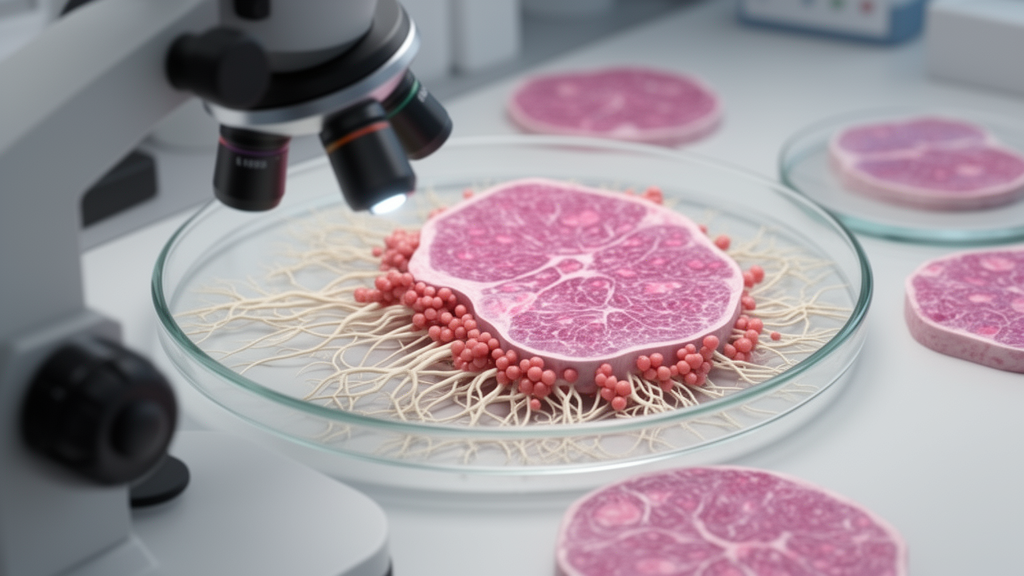
The two-tier classification uses tumor budding alone to divide resected lung squamous cell carcinoma into low-grade and high-grade groups. Of the 585 patients, 520, or 88.9%, had low-grade tumors, while 65, or 11.1%, had high-grade tumors. High-grade disease was associated with a significantly more advanced distribution of pathological stage.
On multivariable analysis, high-grade classification was independently associated with worse overall and disease-free survival, showing that tumor budding grade supplied prognostic information beyond the other variables included in the analysis. The researchers next examined patients with pathological stage IB–III disease who were eligible for adjuvant treatment. Across the subgroup as a whole, investigators found no overall disease-free survival benefit from adjuvant chemotherapy.
The pattern differed after patients were stratified by tumor budding grade: low-grade patients showed no observed benefit, whereas high-grade patients demonstrated a clinically meaningful trend toward benefit. The result instead suggests that tumor budding grade may eventually help identify patients for whom adjuvant chemotherapy is more useful. Exploratory genomic profiling in a case-matched subset of 100 patients provided a possible biological perspective on the two grades.
The analysis found no difference in global genomic instability between low- and high-grade tumors. However, low-grade tumors showed significant enrichment of PI3K pathway alterations, and high-grade tumors showed directional enrichment of truncating TP53 mutations. These patterns suggest that the grades may represent divergent oncogenic programs even though a broad measure of genomic instability did not distinguish them.
The genomic findings do not demonstrate that the molecular differences predict chemotherapy response or establish a mechanism connecting either alteration pattern to survival outcomes. Overall, the independent validation supports further evaluation of the IASLC tumor budding-based system as a prognostic stratification tool for resected lung squamous cell carcinoma. High-grade tumors were associated with more advanced pathological stage and independently associated with poorer overall and disease-free survival in multivariable analysis.
The same grade marked the subgroup with a trend toward greater disease-free survival benefit from adjuvant chemotherapy, while exploratory profiling identified molecular differences between the grades. Prospective multicenter validation is needed to determine whether tumor budding grade can improve treatment selection for people with resected lung squamous cell carcinoma.
Subject of Research: Independent retrospective validation of IASLC tumor budding grading in 585 patients with resected lung squamous cell carcinoma.
Article Title: IASLC tumor budding grade identifies high-risk patients with resected lung squamous cell carcinoma
Article References: IASLC tumor budding grade identifies high-risk patients with resected lung squamous cell carcinoma. Original publication (Bibliographic details unavailable.)
Image Credits: AI Generated
DOI: Not provided
Keywords: lung cancer, squamous cell carcinoma, tumor budding, prognosis, adjuvant chemotherapy, survival, genomic profiling, IASLC, tumor, budding, grade, identifies
News Source: Nathaniel Bowman. (October 26, 2026). Retrospective validation links tumor budding grade to lung cancer prognosis. Scienmag.