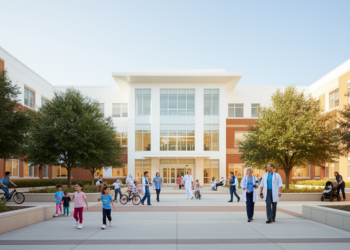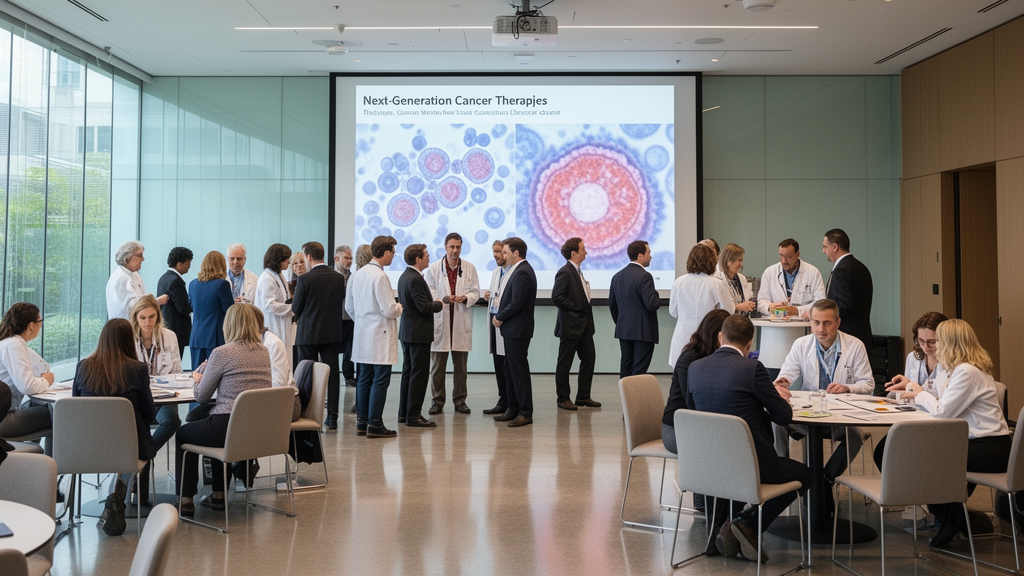
The University of Texas MD Anderson Cancer Center and Springer Nature will co-host the three-day “Next Generation Cancer Therapeutics” conference on Oct. 6-8, 2026, at MD Anderson’s Houston campus, according to the meeting announcement. The in-person event is intended to examine recent work on emerging cancer treatments and the technologies supporting their development, with registration scheduled to remain open until Oct.
5. Organized by MD Anderson clinicians and scientists with colleagues from Nature Cancer, Nature Reviews Cancer and Nature Reviews Drug Discovery, the meeting will feature presentations, poster sessions and talks from 23 invited speakers. Its five sessions are titled “Next-generation biologics,” “Next-generation immunotherapy,” “Next-generation targeted therapies,” “Next-generation therapeutic platforms” and “Artificial intelligence in therapeutics.” These labels describe the scope of the scientific program rather than the results of a single clinical study, and the announcement does not report trial findings or patient outcomes.
Planned presentations in the immunotherapy and biologics sessions include T-cell engagers, cancer vaccines, in vivo chimeric antigen receptor approaches, oncolytic virotherapy and microbiome-based therapies. The targeted-therapy program will address new paradigms in protein modulation, including molecular glues, proteolysis-targeting chimeras, or PROTACs, and RNA degraders. The announcement identifies these as research topics for discussion; it does not establish the safety or efficacy of any of the approaches or present new results about them.
Scheduled talks cover AI-assisted drug design and screening, biomarker-guided patient stratification, agentic AI systems and foundation models. The program will also consider how artificial intelligence is informing drug design and discovery and therapy decisions for patients. These subjects are being presented as active areas of research and development, and the conference announcement itself provides no measured clinical benefit from using the listed computational methods.
Christina Curtis, RZ Cao Professor of Medicine, Genetics and Biomedical Data Science at Stanford University, and Paul Workman, Harrap Professor of Pharmacology and Therapeutics at The Institute of Cancer Research, are scheduled to give keynote presentations. MD Anderson chief scientific officer Albert Koong said the meeting would showcase innovation, facilitate the exchange of ideas and support collaboration around next-generation therapeutics and AI-enabled discoveries. Alexia-Ileana Zaromytidou, chief editor of Nature Cancer, said the event is the second in a series of Nature conferences and is returning to MD Anderson.
She said researchers would discuss immunotherapies, targeted therapies, cancer biologics, nanomedicine and artificial intelligence in drug design, discovery and therapy decisions. The full agenda, registration links and abstract-submission information are available through the Nature conferences website.
Subject of Research: Conference on next-generation cancer therapeutics, protein modulation and AI-enabled drug development
Article Title: UT MD Anderson and Nature to co-host conference on next-generation cancer therapeutics
Article References: UT MD Anderson and Nature to co-host conference on next-generation cancer therapeutics. Original publication (Bibliographic details unavailable.)
Image Credits: AI Generated
DOI: Not provided
Keywords: cancer therapeutics, immunotherapy, cancer biologics, targeted protein modulation, PROTACs, RAS proteins, artificial intelligence, drug design, patient stratification, MD Anderson, Springer Nature, Anderson
News Source: Nathaniel Bowman. (October 26, 2026). MD Anderson and Nature to host conference on next-generation cancer therapies. Scienmag.