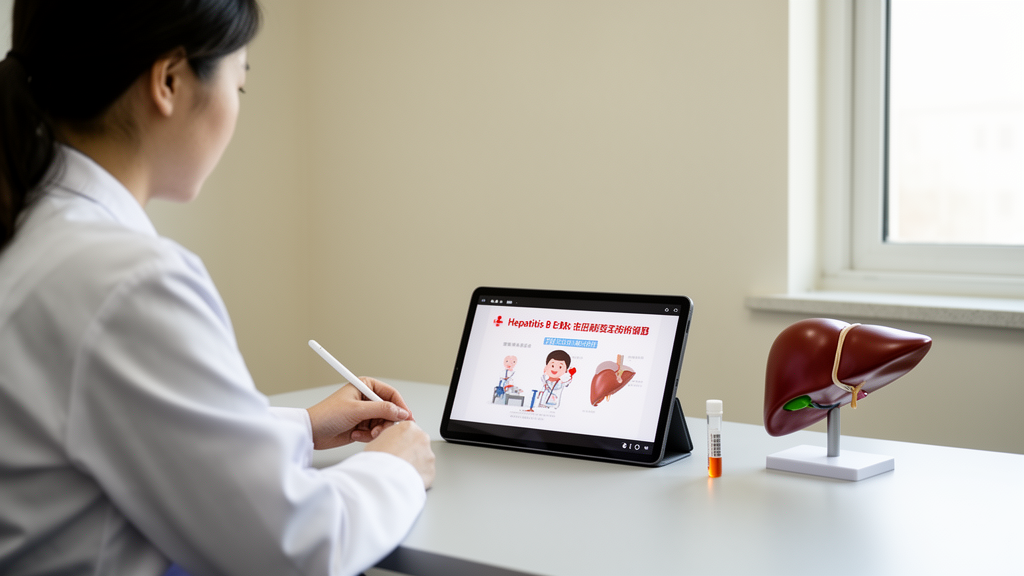
A cross-sectional study of 174 short videos about hepatitis B virus (HBV) on the Chinese platforms Bilibili and Douyin found that the sampled content was generally of suboptimal quality. Douyin videos received substantially more user engagement, but popularity was not consistently associated with higher quality, according to the analysis published in BMC Infectious Diseases. The researchers searched both platforms on March 10, 2026, using the Chinese translation of “hepatitis B Virus.” After applying inclusion and exclusion criteria, the final sample contained 174 videos, including 87 from each platform.
The investigators extracted video characteristics such as duration, age, engagement metrics and uploader identity before evaluating the information presented in each video. Content quality and reliability were assessed with five instruments: the Global Quality Scale (GQS), the modified Decision-making Information Support Criteria for Evaluating the Reliability of Non-randomized Studies (mDISCERN), JAMA benchmark criteria, a Content Completeness Score (CCS) and the Video Information and Quality Index (VIQI). The statistical analysis included Mann–Whitney U tests, Kruskal–Wallis tests, Spearman correlation and multivariable regression, conducted in R version 4.3.2.
Douyin videos attracted substantially greater engagement than Bilibili videos even after adjustment for video age. However, the study did not find a consistent relationship between engagement and superior content quality, indicating that user interaction could not serve as a dependable proxy for the quality of HBV-related videos. Bilibili videos were longer and scored significantly higher on three of the five assessment instruments: GQS, mDISCERN and VIQI.
The reported P values for these differences were 0.027, 0.046 and below 0.001, respectively. These cross-sectional findings describe the selected videos and do not show that either platform inherently produces better material or that watching content from a particular platform improves viewers’ understanding of HBV. Multivariable analyses indicated that longer duration was independently associated with higher scores on all five quality measures, with all P values below 0.05.
Platform was not independently associated with any quality measure after the other variables included in the models were considered. Video length was therefore the characteristic most consistently associated with higher assessed quality in this sample, rather than platform identity. The videos also differed in the clinical topics they addressed.
Treatment was the most common subject, appearing in 59.8% of the sampled videos, followed by diagnosis in 52.9% and prevention in 48.3%. Symptoms were covered least frequently, appearing in 22.4%. The analysis therefore identified gaps in topic coverage as well as differences in the measured quality and reliability of the selected HBV content.
Uploader identity showed no uniformly favorable pattern. Videos made by professionals received higher GQS scores but lower mDISCERN, JAMA and VIQI scores than videos from other uploader categories. Professional participation alone thus did not correspond to stronger results across the full assessment framework.
The study was limited by its single-day search, the selected sample of 87 videos per platform and the variables included in the models; it does not represent all HBV material available on either service or establish effects on clinical decisions and health behavior.
Subject of Research: Quality and reliability of short hepatitis B videos on Bilibili and Douyin in China
Article Title: The quality and reliability of short videos about hepatitis B virus (HBV) on Bilibili and Douyin in China: a cross-sectional study
Article References: Li, Z., & Hou, D. (2026). The quality and reliability of short videos about hepatitis B virus (HBV) on Bilibili and Douyin in China: a cross-sectional study. BMC Infectious Diseases. https://doi.org/10.1186/s12879-026-14291-6
Image Credits: AI Generated
DOI: 10.1186/s12879-026-14291-6
Keywords: hepatitis B, HBV, short videos, Bilibili, Douyin, social media, content quality, online engagement, cross-sectional study, quality, reliability, short
News Source: Kristina Jarvis. (October 26, 2026). Cross-sectional study finds suboptimal quality in Chinese hepatitis B videos. Scienmag.