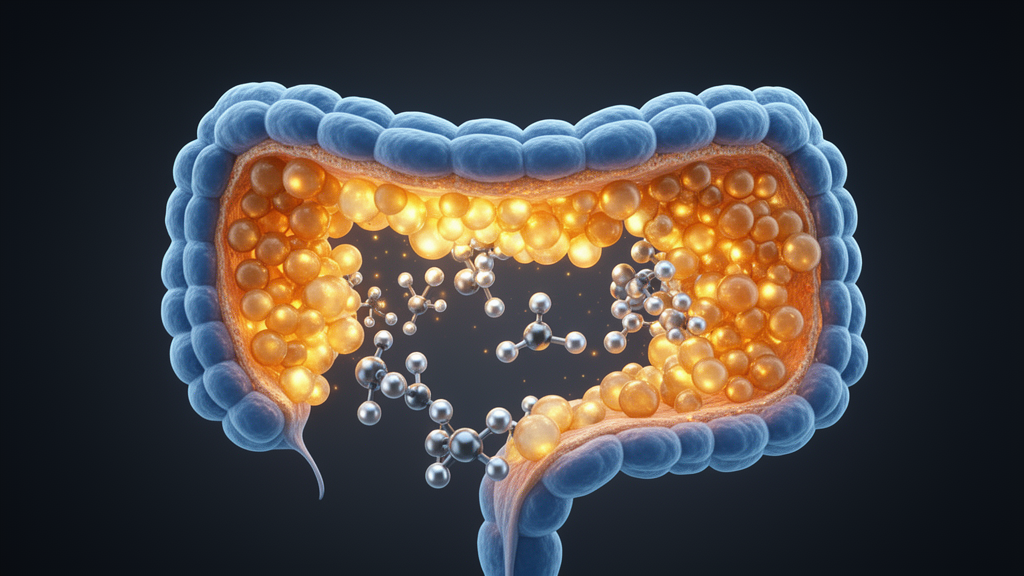
A comprehensive review concludes that altered lipid metabolism can influence several processes associated with oxaliplatin resistance in colorectal cancer, including DNA repair, reactive oxygen species control, ferroptosis, immune recognition, dormant-cell survival and tumor vascular remodeling. The synthesis, published in Frontiers in Oncology, evaluates fatty acid oxidation, lipid-droplet formation, phospholipid remodeling and antioxidant defense as interconnected rather than as a single resistance pathway. Most supporting findings come from cell cultures, organoids and mouse models, and no listed lipid-metabolic factor has been prospectively validated as a clinical predictor of oxaliplatin response.
Oxaliplatin is a backbone of colorectal cancer chemotherapy, appearing in FOLFOX and CAPOX regimens used in selected postoperative stage III and high-risk stage II cancers and in the treatment of unresectable or recurrent metastatic disease. It forms platinum-DNA adducts that interfere with replication and transcription and can generate secondary DNA breaks when stalled replication forks collapse. Cells may repair the damage, arrest their cycles, enter senescence or undergo apoptosis or ferroptosis, depending on the extent of injury, checkpoint signaling and repair capacity. This distinction is clinically relevant because postoperative treatment aims to eliminate residual disease that may not be visible on imaging, while failure of established metastatic tumors to shrink is more likely to reflect primary resistance.
One of the best-supported metabolic adaptations involves CPT1B and CPT2, enzymes that permit long-chain fatty acids to enter mitochondria for beta oxidation. In gastric and colorectal cancer models, oxaliplatin increased the expression of fatty-acid-catabolism machinery. Correlative analyses of gastrointestinal cancer samples also associated high CPT1B/CPT2 expression with poorer outcomes after oxaliplatin-based chemotherapy, although that finding does not by itself establish causality. Genetic inhibition of CPT2 or pharmacological blockade of fatty-acid catabolism with perhexiline disrupted NADPH and redox homeostasis, increased oxaliplatin-induced reactive oxygen species and apoptosis, and enhanced antitumor activity in cell-derived and patient-derived xenografts. Beta oxidation does not directly generate NADPH, but it can support mitochondrial metabolism and associated reducing-power systems that help cells tolerate oxidative stress.
CPT2 has a more complex role than a simple measure of resistance. A separate colorectal cancer study found reduced CPT2 expression in a subset of tumors, with low levels associated with advanced disease, poor prognosis and oxaliplatin resistance. Restoring CPT2 reduced reactive oxygen species, suppressed Wnt/beta-catenin signaling and glycolysis, reduced tumor-cell stemness and increased oxaliplatin sensitivity. These observations do not conflict if acute treatment-induced CPT1B/CPT2 activity protects cells from excessive oxidative stress, whereas chronically reduced CPT2 creates a different metabolic state in which sustained reactive oxygen signaling activates stemness programs. Resolving that distinction requires longitudinal measurements in the same experimental system rather than inference from a single tissue sample or one point in time.
Ferroptosis provides another major connection between lipid metabolism and oxaliplatin response. This regulated form of cell death is driven by iron-dependent peroxidation of membrane phospholipids containing polyunsaturated fatty acids. ACSL4 activates these fatty acids and LPCAT3 helps incorporate them into phospholipids, expanding the pool of substrates vulnerable to lipid peroxidation. In colorectal cancer models, CDK1-mediated ACSL4 degradation lowered polyunsaturated fatty-acid phospholipids and lipid peroxidation, suppressed ferroptosis and promoted oxaliplatin resistance; inhibiting CDK1 or restoring ACSL4 increased sensitivity. In the opposite direction, GPX4 uses glutathione to reduce phospholipid hydroperoxides to less toxic alcohols. The SLC7A11/SLC3A2 transport system supports glutathione synthesis, while KIF20A/NUAK1 signaling and the bacterium Fusobacterium nucleatum have each been reported to strengthen GPX4-dependent defenses in oxaliplatin-resistant models.
Host tissues and microorganisms can also alter the balance between oxidizable lipids and peroxide detoxification. Under conditions associated with obesity, adipocytes package microsomal triglyceride transfer protein, or MTTP, into exosomes that can be transferred to colorectal cancer cells. Exosomal MTTP forms a complex with PRAP1, represses ZEB1 transcription, raises xCT and GPX4 levels, and lowers ACSL4. The resulting reduction in polyunsaturated fatty-acid phospholipids and lipid reactive oxygen species weakens oxaliplatin-induced ferroptosis. This mechanism was tested in patient-derived organoids and obese tumor-bearing mice. Chemotherapeutic stress may also increase MTTP secretion from adipocytes, potentially creating a feedback loop that reinforces resistance. Prospective human evidence remains absent, so obesity or dyslipidemia should not be treated as proof that an individual tumor is oxaliplatin-resistant.
Lipid droplets form a broader survival system by storing triacylglycerols and cholesteryl esters, temporarily shielding cells from fatty-acid toxicity and membrane peroxidation. In drug-tolerant persister models, LPIN1 and DGAT2 promote lipid-droplet formation, and disrupting this pathway increases lipid reactive oxygen species and ferroptosis. GPAT3 has a similar role in colorectal cancer models, where increased lipid-droplet accumulation reduced oxaliplatin-induced apoptosis. An ELF1-ACSL5 axis provides a more specific example: in dormant cells exposed to combined 5-fluorouracil and oxaliplatin, ACSL5 sequestered oxidized lipids in droplets, lowered reactive oxygen species and maintained markers of dormancy. Because that experiment used combination treatment rather than oxaliplatin alone, it identifies a fluoropyrimidine-oxaliplatin treatment-context mechanism rather than a universal oxaliplatin-specific pathway.
Stored lipids may also reduce the immune consequences of treatment. Oxaliplatin can induce immunogenic cell death, characterized by surface calreticulin exposure, ATP release and HMGB1 secretion. These signals help dendritic cells recognize dying tumor cells and initiate tumor-specific CD8+ T-cell responses. In experimental colorectal cancer, GPAT3 and LPCAT2 increased lipid-droplet formation, reduced endoplasmic-reticulum stress and calreticulin exposure, and weakened antitumor immunity. Mouse models showed diminished cytotoxic T-cell responses, while metastatic human samples showed an inverse association between lipid-droplet accumulation and CD8+ T-cell infiltration. The tissue association does not prove that lipid droplets cause treatment failure in patients, but the experiments indicate that metabolically protected tumor cells may also die in a less immunogenic manner.
Lipid metabolism can further affect survival through autophagy and vascular remodeling. Autophagy removes damaged organelles and proteins, but it can also digest lipid droplets and release fatty acids for mitochondrial oxidation, potentially supporting the energy and redox balance of surviving cells. Direct evidence confirms that protective autophagy contributes to oxaliplatin resistance: inhibiting the HSF1/miR-135b-5p/MUL1/ULK1 pathway increased oxaliplatin-induced cell death in xenografts, while loss of the lipid-remodeling enzyme PLA2G16 sensitized colorectal cancer cells and tumors to the drug and altered autophagy-related markers. These findings do not prove that lipophagy-derived fatty acids feed fatty acid oxidation. Elsewhere, oxaliplatin increased COX-2 and VEGF expression in an HT29 xenograft, and adding the COX-2 inhibitor celecoxib produced greater tumor suppression than oxaliplatin alone. This supports a possible link among inflammatory lipid signaling, abnormal vessels, hypoxia and resistance, although tissue drug exposure and perfusion were not directly measured.
The review’s central conclusion is that lipid metabolism is a network connecting oxaliplatin-induced damage with repair, redox control, cell death, immunity, dormancy and the microenvironment. Its strongest candidates include CPT1B/CPT2, ACSL4, GPX4-related signaling, exosomal MTTP, protective autophagy and PLA2G16, but these remain largely experimental. Future work should compare pretreatment tumors with early residual cells and established resistant disease, integrating lipidomics, transcriptomics, lipid-droplet turnover, fatty-acid flux, reactive oxygen species, ferroptosis, immune measures and circulating tumor DNA. Patient-derived organoids could test whether disrupting candidate pathways restores oxaliplatin sensitivity or merely pushes surviving cells into a reversible dormant state. Prospective studies are needed before lipid-metabolic profiles can guide treatment selection or support combinations such as oxaliplatin with lipid-droplet, fatty-acid-oxidation or ferroptosis-targeting interventions.
Subject of Research: Lipid-metabolic mechanisms associated with oxaliplatin resistance in colorectal cancer
Article Title: Lipid metabolism mediating oxaliplatin resistance in colorectal cancer
Article References: Han, S., Gu, L., Ren, Z., Hu, J., Zhao, Y., Zhao, Z., & Wang, Y. (2026). Lipid metabolism mediating oxaliplatin resistance in colorectal cancer. Frontiers in Oncology, 16, Article 1976409. https://doi.org/10.3389/fonc.2026.1976409
Image Credits: AI Generated
DOI: 10.3389/fonc.2026.1976409
Keywords: colorectal cancer, oxaliplatin resistance, lipid metabolism, fatty acid oxidation, ferroptosis, lipid droplets, DNA repair, tumor immunity, autophagy, drug-tolerant persister cells, Lipid, metabolism
News Source: Nathaniel Bowman. (October 26, 2026). Review maps lipid metabolic links to oxaliplatin resistance in colorectal cancer. Scienmag.