A scoping review of 66 sources finds that cervicovaginal microbial communities dominated by Lactobacillus crispatus are consistently associated with clearance of high-risk human papillomavirus, while dysbiosis marked by bacterial-vaginosis-associated anaerobes or greater microbial diversity is linked to viral persistence and poorer outcomes after treatment of high-grade squamous intraepithelial lesions. The findings identify the microbiome as a promising biological correlate of treatment response, but the authors caution that the direct post-treatment evidence remains limited to five studies and does not yet support clinical testing or microbiome-based therapy.
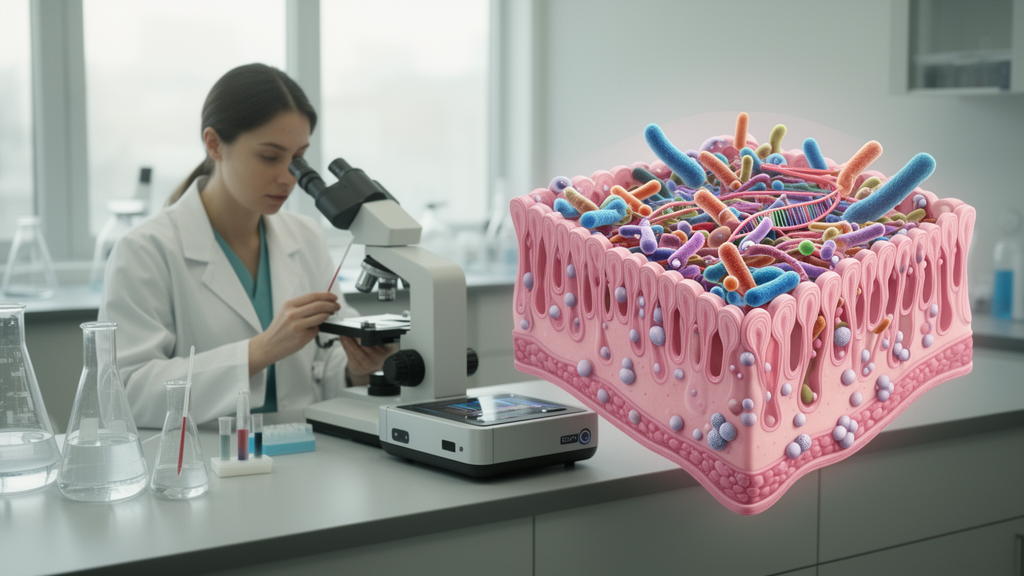
Persistent high-risk HPV is the necessary cause of virtually all HSIL and cervical cancer, yet most infections do not produce disease. Approximately 70% to 90% of new high-risk HPV infections clear spontaneously within one or two years, while only a minority progress. The review places this apparent mismatch between viral exposure and clinical outcome in the context of the cervicovaginal microbiome, a community of bacteria and, to a lesser extent, fungi and viruses inhabiting the vaginal and ectocervical mucosa. This microbial ecosystem may influence HPV persistence through changes in acidity, barrier integrity, inflammation, metabolite signaling and local immunity, although many of the proposed causal pathways remain experimental.
Research led by Ravel and colleagues established that reproductive-age vaginal communities often fall into five principal community state types. Four are dominated by a single Lactobacillus species: CST-I by L. crispatus, CST-II by L. gasseri, CST-III by L. iners and CST-V by L. jensenii. CST-IV instead contains a diverse, largely anaerobic mixture with depleted Lactobacillus and is associated with bacterial vaginosis. These states are dynamic rather than fixed, shifting over days or weeks in response to factors including menstruation, sexual activity and hygiene. Menopause can also alter the community: declining estrogen reduces glycogen available to support Lactobacillus proliferation, while CST-IV-like and more diverse states become more common in some populations.
Across observational studies, women with persistent high-risk HPV or more advanced cervical lesions generally carried higher microbial diversity and less Lactobacillus than women who cleared the virus or had no HPV. In an Italian cohort followed for one year, CST-IV was present in 43% of women whose infection persisted, compared with 7.4% of those who cleared it, while Atopobium species were enriched in the persistence group. Another cohort found that decreasing lactobacilli was independently associated with HPV persistence after adjustment for age and menopausal status. Findings from bacterial-vaginosis studies also connected dysbiosis with higher viral persistence and cytological progression. These observations establish an association, but they do not show that microbiome composition itself causes HPV to persist.
Laboratory experiments offer possible explanations for the pattern. In cultures of HPV16-transformed cervical cells, L. crispatus and L. gasseri reduced expression of the viral E6 and E7 oncoproteins and downstream p53 and Rb pathways, whereas some dysbiosis-associated bacteria produced contrasting effects. A cocktail containing L. crispatus, L. gasseri and L. jensenii also lowered E6, E7, cyclin A and CDK2 expression in vitro. L. crispatus is distinguished by producing D-lactic acid, which can lower vaginal pH and stimulate anti-inflammatory epithelial responses. Other experiments linked lactic acid to miR-744, a microRNA associated with suppression of E6 and E7 through direct and ARHGAP5-mediated pathways. Dysbiotic metabolite profiles, meanwhile, have been associated with increased TNF-alpha and reduced protective chemokines such as RANTES and IP-10. Proposed effects on cervical Langerhans cells, the antigen-presenting cells that help direct HPV-specific immunity, add another possible pathway, but these molecular results have not yet been confirmed as mechanisms operating in treated patients.
The most directly relevant studies concern women undergoing loop electrosurgical excision procedure, or LEEP, or conization for HSIL. Excision removes the HPV-associated lesion but also physically remodels the cervicovaginal niche. In a prospective Italian study of 41 women, four patients who developed persistent infection or CIN2/3 recurrence within six months had nominally L. crispatus-dominated baseline communities but carried unusually high loads of Gardnerella vaginalis, Ureaplasma parvum and Candida albicans. This suggests that co-colonization may distinguish women at risk of failure within an apparently favorable community. A separate Chinese cohort of 26 patients found that microbial diversity fell after LEEP and that pretreatment Lactobacillus depletion was associated with persistent HPV at three months. In 108 women studied around conization, persistent HPV was associated not only with bacterial-vaginosis anaerobes such as Gardnerella and Atopobium but also with Enterococcus and related aerobic-vaginitis organisms, as well as anaerobic and biofilm-forming phenotypes.
Perhaps the clearest sign that treatment response and microbiome change are connected came from 85 HSIL patients whose vaginal communities were assessed before and after conization. CST-IV prevalence fell significantly among women who subsequently cleared high-risk HPV, but remained essentially unchanged among those with persistent infection. A Norwegian cohort of 89 LEEP patients and 100 cytologically normal references likewise documented post-treatment shifts and explored whether cone depth influenced associations between microbiota and HPV persistence. Taken together, the direct evidence supports three linked observations: pretreatment dysbiosis is associated with poorer outcomes, excision alters the microbial community, and movement toward Lactobacillus dominance after the operation tracks with viral clearance. The last pattern may be a marker of successful recovery, a contributor to clearance, or both; the available studies cannot distinguish those possibilities.
Machine-learning models offer another route to prediction, but none has yet been trained and validated specifically for post-treatment clearance. A study of 272 women identified taxa including Stenotrophomonas, Streptococcus and Pseudomonas as more abundant in HSIL, while Dialister, Bifidobacterium, Faecalibacterium and Bacteroides were depleted, and proposed abundance thresholds as potential screening adjuncts. A separate random-forest classifier built from 33 species separated CIN2 or worse from CIN1 or lower with an area under the curve of 0.952, identifying L. iners as its strongest contributor. Multi-omics work has also suggested that the cervicovaginal metabolome may predict the local microenvironment more effectively than microbial composition alone. These models classify lesion presence or severity, however, rather than viral clearance after LEEP or conization, leaving a major translational gap.
Probiotic trials suggest that microbiome-directed treatment might affect HPV outcomes, although the evidence is inconsistent and remains distinct from HSIL treatment studies. In a controlled pilot of 54 women with HPV-associated cytological abnormalities, an oral probiotic drink produced numerically higher HPV clearance than no intervention, 29% versus 19%, although the difference was not statistically significant; clearance of cytological abnormalities reached 60% versus 31%, with p=0.05. A randomized, double-blind trial of oral L. rhamnosus GR-1 and L. reuteri RC-14 in 121 women found no significant difference in HPV clearance, 58.1% with probiotic and 54.2% with placebo, though smear quality improved. Direct intravaginal delivery has looked more favorable: a prospective controlled pilot of L. crispatus chen-01 in 100 women reported lower viral load, higher clearance and improved vaginal inflammation, with sequencing indicating reconstitution of Lactobacillus dominance. Nevertheless, strain, dose, delivery and outcome definitions varied substantially among trials, and no randomized trial reviewed specifically tested a microbiome intervention alongside LEEP or conization.
The review’s confidence is further limited by small cohorts, generally 26 to 108 participants in direct peri-treatment studies; inconsistent profiling methods, including microscopy, targeted assays, 16S sequencing and metagenomics; follow-up of only three to 12 months; and limited adjustment for sexual activity, antibiotic use, contraception, smoking and HIV status. Community-state distributions also vary across populations, limiting generalization from any single country or ethnic group. The authors did not pool effect estimates or perform formal risk-of-bias weighting, and their search excluded non-English studies, potentially missing relevant Chinese-language research on post-treatment microbiomes. Future priorities include adequately powered, multiethnic cohorts sampling women before and repeatedly after excision; standardized sequencing and outcome definitions; externally validated prediction models built with post-treatment endpoints; trials of intravaginal L. crispatus as an adjunct to HSIL therapy; and mechanistic studies that directly connect microbial, immune and viral measurements within the treatment window. Until then, the microbiome is a compelling correlate and experimental target, not a clinically validated predictor or therapy.
Subject of Research: Cervicovaginal microbiome associations with high-risk HPV clearance and response to HSIL excisional treatment
Article Title: The cervicovaginal microbiome as a candidate correlate and potential predictor of HPV clearance and treatment response after HSIL therapy: a scoping review
Article References: Mwesige, B., Angucia, B., Mbodi, L., Mwazha, A., Niyonzima, N., Mwansa-Kambafwile, J., Breiman, R. F., Zakumumpa, H., & Chikandiwa, A. (2026). The cervicovaginal microbiome as a candidate correlate and potential predictor of HPV clearance and treatment response after HSIL therapy: a scoping review. Frontiers in Oncology, 16, Article 1972845. https://doi.org/10.3389/fonc.2026.1972845
Image Credits: AI Generated
DOI: 10.3389/fonc.2026.1972845
Keywords: cervicovaginal microbiome, human papillomavirus, HPV clearance, high-grade squamous intraepithelial lesions, Lactobacillus crispatus, bacterial vaginosis, LEEP, conization, microbiome biomarkers, probiotics, cervicovaginal, microbiome
News Source: Morgan Morrow. (October 26, 2026). Vaginal microbiome shows promise for predicting HPV clearance after HSIL treatment. Scienmag.