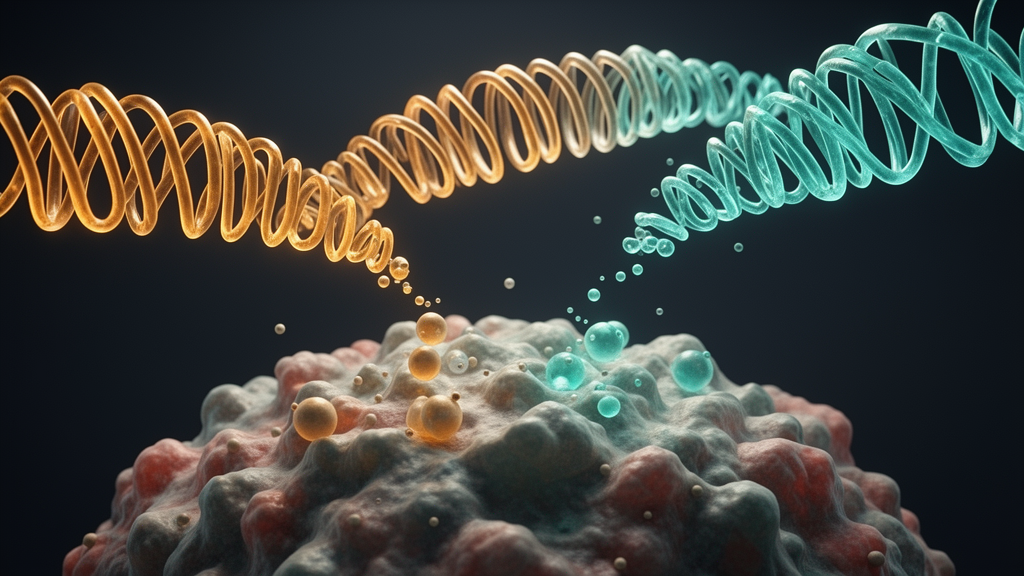
Hyaluronic acid has long been treated as a passive targeting ligand in cancer nanomedicine, valued mainly for its ability to bind CD44 receptors on tumor cells. A new review argues that this view misses the single most consequential design variable in hyaluronic acid-based nanoparticles: molecular weight. The authors propose an MW–structure–function framework in which the polymer’s chain length is treated as a bioactive material variable rather than a secondary formulation descriptor. Hyaluronic acid spans several orders of magnitude in size, from oligosaccharides below 10 kilodaltons, through low-molecular-weight chains of 10 to 500 kilodaltons, to high-molecular-weight polymers exceeding 500 kilodaltons and even megadalton-scale chains. Critically, this wide distribution encodes distinct and sometimes opposing biological activities, determining polymer conformation, receptor-binding avidity, cellular uptake, tissue penetration, and systemic clearance. The review, based on a structured search of PubMed, Embase, and Web of Science covering the past decade, connects hyaluronic acid biology directly to nanocarrier engineering and therapeutic performance.
The biological effects of hyaluronic acid are rooted in its chemistry and life cycle. It is a naturally occurring, non-sulfated glycosaminoglycan built from repeating disaccharide units of D-glucuronic acid and N-acetyl-D-glucosamine, linked by alternating β-1,3 and β-1,4 glycosidic bonds. In mammals, three hyaluronan synthase isozymes produce it, with HAS2 exhibiting the highest substrate affinity and yielding the largest molecules above 2,000 kilodaltons. HAS2 activity is coupled to cellular energy status: AMP-activated protein kinase phosphorylates HAS2 at threonine 110 when the ATP:AMP ratio declines, suppressing its secretory capacity. Degradation follows a tightly regulated sequence in which GPI-anchored HYAL2 cleaves high-molecular-weight chains at the cell surface into roughly 20 kilodalton fragments, which are then endocytosed via CD44 and digested by lysosomal HYAL1 into small oligosaccharides. Alternative pathways involving HYBID and TMEM2 expand this paradigm, although murine TMEM2 efficiently degrades high-molecular-weight chains into approximately 5 kilodalton fragments while the human enzyme shows negligible catalytic activity in vitro. Systemic clearance is remarkably rapid: regional lymph nodes remove up to 90 percent of hyaluronic acid in lymphatic fluid, and hepatic sinusoidal endothelial cells clear the remainder with a half-life of only 2 to 5 minutes.
Molecular weight determines whether hyaluronic acid protects or promotes tumor progression. High-molecular-weight chains in the range of 752 to 1,500 kilodaltons form multivalent bonds with CD44 and RHAMM, triggering receptor clustering that activates cytoskeletal cascades, promotes pseudopod formation, and drives epithelial–mesenchymal transition. These chains also act as CD44-mediated iron carriers, increasing intracellular iron and epigenetically reprogramming tumor cells via iron-dependent histone demethylases such as PHF8, thereby maintaining a highly migratory phenotype. Low-molecular-weight fragments, generated under inflammatory or hypoxic conditions, function as endogenous danger signals that drive angiogenesis, tumor invasion, and immunosuppressive microenvironment remodeling. Fragments between 50 and 200 kilodaltons elicit transient early activation of monocytes, followed by functional exhaustion and differentiation into immunosuppressive M2-polarized macrophages. Oligo-HA below 10 kilodaltons is a potent immunostimulator, engaging TLR2, TLR4, and CD44 cooperatively to upregulate pro-inflammatory genes and drive classical M1 macrophage activation. Notably, very-high-molecular-weight hyaluronic acid above 6.1 megadaltons confers cancer resistance in naked mole rats by inhibiting CD44-mediated iron uptake and suppressing epithelial–mesenchymal transition.
The review also dissects how hyaluronic acid metabolism fuels chemoresistance. Persistent engagement of high-molecular-weight hyaluronic acid with CD44 activates Wnt/β-catenin and PI3K/Akt survival signaling, driving P-glycoprotein-mediated efflux that restricts intracellular accumulation of drugs like cisplatin. Chemotherapy can paradoxically reinforce this defense: FOLFOX treatment triggers a feedback loop in which CD44v6 and WNT3A assemble an LRP6 complex to sustain P-glycoprotein activity. In PIK3CA-mutant breast cancer, prolonged treatment with PI3Kα inhibitors such as Alpelisib induces adaptive CD44 upregulation and shifts the microenvironment toward increased degradation of high-molecular-weight chains into low-molecular-weight fragments, which bind CD44 more avidly and reactivate PI3K/Akt signaling, counteracting the drug. Specific fragments around 200 kilodaltons strongly upregulate stemness factors including Nanog, Sox2, Oct4, and DOT1L in head and neck squamous cell carcinoma models, doubling cell survival under cisplatin. The stromal barrier itself has proven difficult to drug clinically: PEGPH20, a pegylated recombinant hyaluronidase designed to deplete tumor hyaluronic acid, failed to improve overall survival in metastatic pancreatic cancer in a phase III trial.
When hyaluronic acid is engineered into nanocarriers, molecular weight governs the entire architecture. Two principal construction strategies exist: hyaluronic acid-driven self-assembly, in which hydrophilic chains are modified with hydrophobic moieties to form micelles, nanogels, or core–shell nanoparticles, and surface functionalization, in which hyaluronic acid coats preformed carriers such as liposomes or inorganic cores. Lower-molecular-weight chains with reduced steric hindrance promote smaller, denser nanostructures. Comparative studies showed that 10 kilodalton hyaluronic acid drove the formation of hydrodynamically compact particles of roughly 146 nanometers, physically isolating encapsulated dye and thwarting fluorescence self-quenching. However, the benefit of shorter chains is not universal. When hydrophobic polypyrrole cores were stabilized with chains of 6.8 to 100 kilodaltons, aggregation occurred; only 1 megadalton high-molecular-weight hyaluronic acid provided adequate surface charge, near −40 millivolts, and hydration layers to maintain colloidal stability. In HA-coated systems, shorter chains expose CD44-binding motifs more efficiently, but excessively long chains form thick polymer layers that increase hydrodynamic size, limit receptor accessibility, and may promote interparticle bridging.
Perhaps the most striking finding is that the relationship between molecular weight and CD44-mediated uptake is not linear. Zhong and colleagues prepared three doxorubicin-loaded nanoparticles using hyaluronic acid of 7, 63, and 102 kilodaltons, all with similar size, surface charge, and drug release profiles. The 102 kilodalton formulation exhibited the strongest CD44 binding affinity but induced pronounced receptor clustering on the cell membrane, restricting membrane fluidity and reducing free receptors for further engagement, which paradoxically inhibited endocytosis. The 63 kilodalton formulation achieved the highest cellular uptake and cytotoxicity, outperforming both extremes. Arpicco and colleagues found the complementary pattern for carbon nanotubes: 200 kilodalton chains formed denser multivalent cooperative binding sites and showed optimal uptake compared with 4.8 and 14.8 kilodalton chains. Surface presentation matters as much as chain length. A bottlebrush coating of 5 kilodalton side chains yielded binding avidity approximately fourfold higher than the optimal linear coating, while uptake of hyaluronic acid liposomes increased with grafting density, CD44 expression, and molecular weight in the order 5–8, then 10–12, then 175–350 kilodaltons. A 1,600 kilodalton formulation showed high polydispersity and batch-to-batch variation, indicating that very high molecular weight enhances multivalent binding while compromising homogeneity.
Diagnostic performance follows the same size-dependent logic. In a systematic comparison, 5 kilodalton hyaluronic acid-modified lipid nanoparticles produced strong fluorescence signals in popliteal lymph nodes as early as 10 minutes after footpad injection, with signals detectable at 12 hours, substantially outperforming hyaluronic acid-free controls. The 15 kilodalton counterparts showed consistently weak fluorescence with no significant difference from controls. Conversely, sustained imaging often requires longer chains: subcutaneously injected liposomes modified with 4.8 and 11 kilodalton variants drained rapidly but suffered systemic washout, whereas 100 kilodalton formulations maintained intense lymph node fluorescence 24 hours after administration. A theranostic design using 170 kilodalton hyaluronic acid wrapped a chitosan core in a robust electrostatic shield, preventing payload extravasation while securing tumor localization via combined EPR and active targeting. For nuclear imaging, an 8 kilodalton hyaluronic acid-tyrosine-PEI platform achieved CD44-mediated localization in undifferentiated thyroid cancer within 24 hours with an 11.23-hour circulation half-life. Hyaluronic acid also underpins liquid-biopsy sensors, including a nanosensor distinguishing bladder cancer from healthy controls and photoelectrochemical interfaces detecting soluble serum CD44 at 0.44 picograms per milliliter.
Therapeutic outcomes across modalities confirm that no single molecular weight is universally optimal. In redox-sensitive conjugates, 9.5 kilodalton chains achieved 1.38-fold higher in vivo tumor accumulation and an 83.27 percent tumor inhibition rate versus 68.66 percent for 35 kilodalton chains. A pH-triggered nanocluster built from 1.8 kilodalton oligo-HA dissociated from 150 nanometer aggregates into 30 to 40 nanometer monomers under acidic tumor conditions, enhancing deep infiltration and achieving a 78.5 percent tumor suppression rate. For phototherapy, reducing molecular weight to 20 kilodalton increased ROS generation and drug loading to 9.6 percent in denser 132 nanometer micelles, while gold biconical particles coated with 380 kilodalton chains achieved 3.46-fold superior internalization over 102 kilodalton coatings despite lower surface density. In combination therapy, 1,000 kilodalton hyaluronic acid served as a multivalent scaffold coordinating cisplatin and gefitinib in one nanogel, converting an antagonistic drug pair into an effective combination. Immunotherapy reveals molecular weight duality: 15 kilodalton chains showed poor adjuvant effects despite rapid lymphatic drainage, whereas roughly 200 kilodalton conjugates leveraged LYVE-1 for lymphatic targeting and triggered robust cellular and humoral immunity. Self-assembled 36 kilodalton nanoparticles promoted M1-like macrophage polarization while free 36 kilodalton chains showed little activity, though HA-coated nanocapsules of 50, 330, and 1,500 kilodaltons showed no significant molecular-weight-dependent differences in human macrophages.
Translational reality tempers the preclinical enthusiasm. As of August 2026, no therapeutic nanomedicine using hyaluronic acid as a carrier or targeting ligand has received FDA approval. The paclitaxel conjugate ONCOFID-P-B is the most advanced oncology candidate, undergoing phase III evaluation by intravesical administration, while an HA-irinotecan formulation failed to improve progression-free survival in a phase III metastatic colorectal cancer trial. Total CD44 expression does not reliably predict clinical benefit, and exposed hyaluronic acid chains may undergo HARE/Stabilin-2-mediated hepatic clearance, with protein-corona formation masking receptor-binding sites. Safety questions also remain: hyaluronic acid nanoparticles induced platelet aggregation in human whole blood at high particle concentrations, and repeated intravenous dosing reduced platelet counts in preclinical studies. The authors call for systematic molecular weight mapping under matched nanoparticle properties, rigorous characterization of polydispersity, purity, and endotoxin burden, and development of adaptive systems in which a high-molecular-weight outer shell degrades into lower-molecular-weight fragments upon tumor accumulation, resolving the intrinsic trade-off between systemic stability and deep tumor penetration.
Subject of Research: Hyaluronic acid-based nanoparticles in cancer diagnosis and therapy: Molecular weight matters
Article Title: Hyaluronic acid-based nanoparticles in cancer diagnosis and therapy: Molecular weight matters
Article References: Zhang, Z., Ma, M., Dai, Y., Chen, M., Zhu, L., & Gao, S. (2026). Hyaluronic acid-based nanoparticles in cancer diagnosis and therapy: Molecular weight matters. Materials Today Bio, 41, Article 103773. https://doi.org/10.1016/j.mtbio.2026.103773
Image Credits: AI Generated
DOI: 10.1016/j.mtbio.2026.103773
Keywords: hyaluronic acid, nanoparticles, cancer therapy, drug delivery, molecular weight, CD44, cancer diagnosis, nanomedicine, Hyaluronic, acid-based, cancer, diagnosis
News Source: Sharon Glover. (October 26, 2026). Molecular weight of hyaluronic acid emerges as a master switch in cancer nanomedicine. Scienmag.