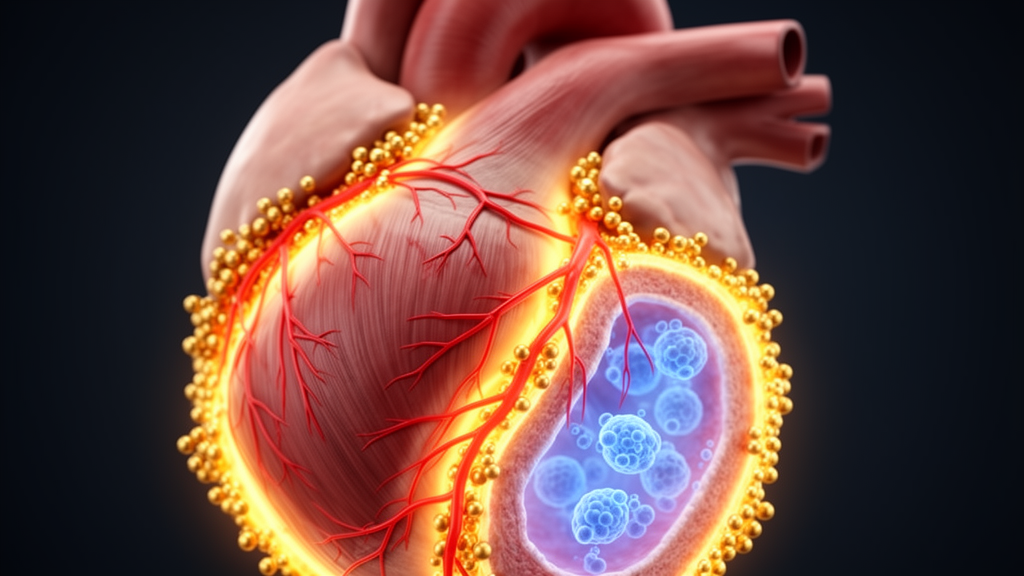
A bioactive compound extracted from a traditional Chinese medicinal herb has been shown to protect the tiny blood vessels of the heart from ischemia-reperfusion damage in cell experiments, and researchers have now traced the mechanism in detail. Icariin, derived from Epimedium brevicornu Maxim., was tested on cardiac microvascular endothelial cells (CMECs) that had been subjected to oxygen-glucose deprivation followed by reoxygenation, a laboratory model that mimics the injury myocardial tissue sustains when blood flow is restored after an ischemic event. The study, published open access in BMC Pharmacology and Toxicology, combined computational network pharmacology with molecular docking, molecular dynamics simulation and Western blot validation to show that icariin acts through protein kinase C-mediated signaling, with PKCA emerging as the leading candidate target.
The experimental results showed a dose-dependent cytoprotective effect. CMECs treated with icariin after oxygen-glucose deprivation/reoxygenation (OGD/R) displayed significantly improved viability measured by CCK-8 assay, along with enhanced migratory capacity in wound-healing assays and greater angiogenic potential in tube formation assays, with statistical significance set at P < 0.05. These functional gains matter because vascular regeneration aimed at restoring blood supply to damaged myocardium is a central strategy in heart failure management, yet reperfusion itself frequently triggers myocardial ischemia-reperfusion injury (MIRI), a paradox that kills cardiomyocytes and worsens cardiac dysfunction.
To identify plausible molecular targets, the team constructed drug-target-disease networks by integrating three databases: TCMSP and SwissTargetPrediction for the pharmacological profile of icariin, and GeneCards for genes associated with MIRI. The intersection yielded twelve key targets linking the compound’s activity to the disease process. Enrichment analysis performed with DAVID highlighted involvement of the AGE-RAGE signaling pathway, sphingolipid signaling and VEGF signaling. Protein-protein interaction analysis using STRING 11.5 mapped the relationships among these targets and helped prioritize candidates for structural validation.
Molecular docking quantified how tightly icariin binds to the leading candidates. The compound showed strong binding affinity to PKCA at -8.79 kcal/mol, to PKCB at -7.13 kcal/mol and to PTGS2 at -4.17 kcal/mol, making the protein kinase C isoforms the most energetically favorable partners. Molecular dynamics simulations then examined what happens to PKCA’s structure when icariin is bound: the ligand promoted structural compactness of the protein and reduced regional flexibility, suggesting that binding stabilizes the kinase in a conformation that could underpin the observed signaling changes. Western blotting provided the experimental counterpart, showing that icariin restored the expression of PKCA, PKCB and PTGS2 in OGD/R-injured cells.
The causal link was tested directly. When the researchers applied pharmacological inhibition of PKC signaling, the functional protective effects of icariin on the injured endothelial cells were attenuated, indicating that the intact PKC pathway is required for the compound’s benefits to materialize. Taken together, the docking, simulation, blotting and inhibition data converge on a coherent mechanism: icariin attenuates ischemia-reperfusion injury by promoting angiogenesis in cardiac microvascular endothelial cells through PKC-mediated signaling, with PKCA as the best-supported target in this model.
The authors conclude that this work demonstrates icariin’s endothelial protective mechanism in OGD/R-injured CMECs via PKCA, integrating bioinformatic prediction with experimental validation in a single framework. As with all cell-based studies, the findings describe a laboratory model rather than a clinical outcome, and the OGD/R paradigm captures only part of the complexity of myocardial ischemia-reperfusion injury in living tissue. Nevertheless, the study offers a technically detailed account of how a compound associated with cardioprotective effects engages specific molecular targets, and it identifies PKC signaling as the pathway through which those effects appear to operate in the cardiac microvasculature.
Subject of Research: Icariin's endothelial protective mechanism in ischemia-reperfusion-injured cardiac microvascular endothelial cells via PKC signaling
Article Title: Integrative bioinformatics and experimental validation reveal Icariin’s endothelial protective mechanism in OGD/R-injured CMECs via PKCA
Article References: Cao, C., Li, H., Yang, L., Liu, Z., Song, J., Li, L., Fu, J., & Liu, J. (2026). Integrative bioinformatics and experimental validation reveal Icariin’s endothelial protective mechanism in OGD/R-injured CMECs via PKCA. BMC Pharmacology and Toxicology. https://doi.org/10.1186/s40360-026-01236-7
Image Credits: AI Generated
DOI: 10.1186/s40360-026-01236-7
Keywords: icariin, Epimedium brevicornu, cardiac microvascular endothelial cells, oxygen-glucose deprivation/reoxygenation, myocardial ischemia-reperfusion injury, network pharmacology, molecular docking, PKCA, PKCB, PTGS2, angiogenesis, VEGF signaling
News Source: Ophelia Keating. (October 26, 2026). Icariin Shields Heart Microvessels from Reperfusion Injury via PKCA Signaling. Scienmag.