A computer model built on a form of artificial intelligence that reasons through visible logic rather than opaque prediction has correctly forecast whether treatment would work in 74% of cases in a simulation of a real breast cancer clinical trial, according to a new study published in Cell Reports Medicine by researchers at University College London working with a team at the University of Cambridge. The program, developed specifically to recommend treatment options for triple-negative breast cancer, uses an individual patient’s detailed genetic fingerprint to explore which treatments, if any, may kill their cancer, particularly when standard treatments have failed. Rather than relying on the large language model style of AI that has prompted scepticism among medical professionals because its inner workings cannot be clearly seen, the UCL team used symbolic AI, which relies on logic rather than prediction and where its reasoning can be openly examined.
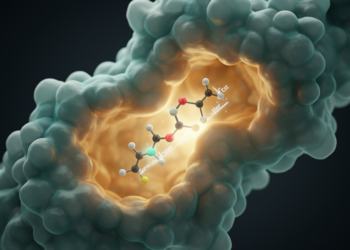
Triple-negative breast cancer is an aggressive, fast-growing form of the disease that accounts for about 15% of all breast cancer cases. It is defined by cancer cells that test negative for oestrogen receptors, progesterone receptors and the HER2 protein, and because these three common markers are absent, standard hormone therapies and HER2-targeted drugs do not work. The cancer is also often characterised by a condition known as homologous recombination deficiency, affecting roughly 15% to 20% or more of cases. This condition allows the cancer to mutate very quickly and very dangerously, but it also creates a major biological blind spot: drugs that block an enzyme called poly-ADP ribose polymerase, which normally helps damaged cells repair single-strand DNA breaks, can kill the tumour. These PARP inhibitors include olaparib, which was tested in the PARTNER clinical trial led by Professor Jean Abraham and scientists at the University of Cambridge and Addenbrooke’s Hospital between 2016 and 2024.
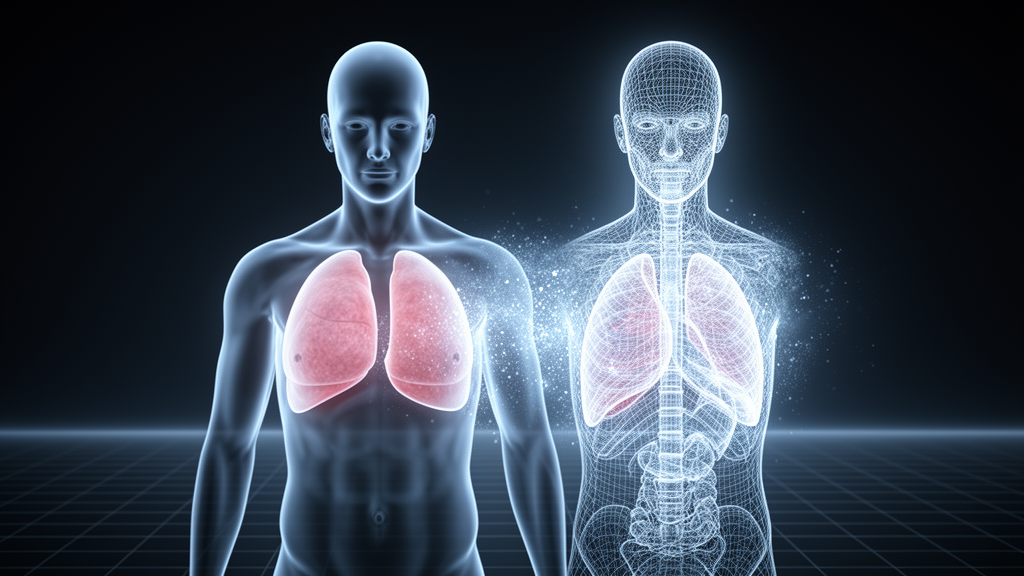
To test their approach, the UCL team built computer-generated tumours, or digital twins, that replicated the real-life tumours of 31 patients from the PARTNER trial using their genetic information. The trial’s full name, the Platinum and PolyAdenosine 5′-Diphosphoribose Polymerisation Inhibitor for Research and Treatment of Neo-Adjuvant Early and Relapse-Risk Breast Cancer trial, reflects its focus on combining platinum chemotherapy with PARP inhibition in early and relapse-risk disease. On each digital twin, the researchers simulated what happened when the tumour was treated with either chemotherapy alone or with chemotherapy plus olaparib, and they also ran a control simulation in which no treatment was carried out. When they compared the results of these computer simulations with the outcomes recorded in the actual clinical trial, the program correctly predicted whether treatment would work in 74% of cases.
The digital twins also suggested ways to help patients whose tumours had not responded well to treatment in the real trial. In 12 of the 13 patients who did not respond fully, the models identified at least one extra targeted treatment that might have improved the outcome. For 10 of these patients, the models predicted that the additional treatment could prompt such a high level of response that no invasive cancer would likely be found in the patient’s breast and lymph nodes afterwards. These are model-generated predictions from a retrospective simulation of trial data, not results from a prospective test of the suggested strategies in patients, and the researchers themselves frame the tool as a way of generating ideas rather than delivering verdicts.
Lead author Professor Jasmin Fisher of the UCL Cancer Institute said the study demonstrated the broad and powerful range of insights that personalised virtual tumours could bring to cancer medicine through the symbolic AI-based computer model. By identifying treatment approaches for patients who did not respond to standard treatments, she said, the approach paves the way for digital twins to be used by clinicians as a tool to guide therapeutic decisions, particularly in hard-to-treat cancers like triple-negative breast cancer. She emphasised that the team sees the computer model as an aid for existing cancer clinical practice, not an alternative to it: a way of generating new ideas, particularly in relation to proteins or genes that could be targeted in ways that restore a patient’s sensitivity to existing drugs and make those treatments effective.
Fisher also addressed the scepticism that some cancer specialists have understandably held towards computer models, especially those reliant on AI platforms where the inner workings are not visible, so-called black box models. The team got around this problem by using symbolic AI, which is based on logical reasoning and where how the platform arrives at its answers can be seen easily and interrogated by doctors. In practice, she noted, the treatment option recommended by the model may, under closer scrutiny, be discounted by the clinician, for example if they view the drug as too toxic. But it may also lead them to explore, and eventually settle on, a third option which they might otherwise not have arrived at.
The study, titled Tumour Digital Twins Uncover Therapeutic Strategies in Triple-Negative Breast Cancer, was published on 26 October 2026 with the DOI 10.1016/j.xcrm.2026.103119. Its method of research is computational simulation and modelling, and its subject of research is people, reflecting the fact that the digital twins were built from the genetic information of real trial participants. The work represents a collaboration between the UCL team and Professor Abraham’s group at Cambridge, building directly on the PARTNER trial infrastructure. As with any retrospective modelling study, the accuracy figures and the suggested alternative treatments apply to the 31 patients simulated and the strategies already tested in the trial, and translating the model’s recommendations into prospective clinical use would require further validation. The researchers position the platform as a decision-support aid whose suggestions clinicians can examine, question and, where appropriate, act upon, rather than as an autonomous prescriber.
Subject of Research: A symbolic AI digital twin model predicting treatment response in triple-negative breast cancer
Article Title: AI-based computer model offers new weapon against hard-to-treat cancers
Article References: AI-based computer model offers new weapon against hard-to-treat cancers. Original publication (Bibliographic details unavailable.)
Image Credits: AI Generated
DOI: Not provided
Keywords: symbolic AI, digital twins, triple-negative breast cancer, olaparib, PARP inhibitors, PARTNER trial, precision oncology, treatment prediction, computational modelling, University College London, University of Cambridge, Cell Reports Medicine
News Source: Nathaniel Bowman. (October 26, 2026). Symbolic AI digital twins predict breast cancer treatment response in trial simulation. Scienmag.