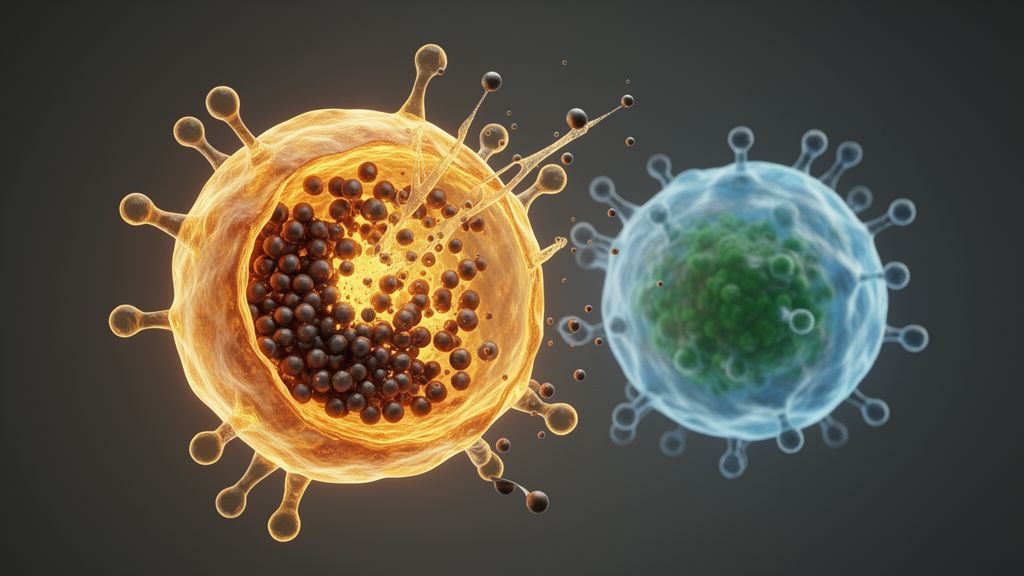
Ferroptosis, the iron-dependent form of regulated cell death driven by lipid peroxidation, is neither inherently good nor bad for patients, according to a new Perspective published in Frontiers in Pharmacology. The article argues that ferroptosis, mitochondrial stress and redox imbalance should be treated as a single interconnected axis that simultaneously determines whether a drug works, whether a tumour resists it and whether the liver, kidney, heart or brain is harmed along the way. Rather than cataloguing ferroptosis mechanisms in isolation, the authors, led by Okechukwu Paul-Chima Ugwu of Kampala International University, reframe the pathway as a unified pharmacological-toxicological platform for precision drug development, complete with proposed biomarker tiers, patient-stratification rules and a pharmacokinetic-pharmacodynamic model for separating therapeutic from toxic exposure windows.
The core biochemistry is well established but newly integrated in the framework. Ferroptosis executes when phospholipid hydroperoxides accumulate in cellular membranes faster than antioxidant systems can repair them. Glutathione peroxidase 4, or GPX4, remains the central suppressor because it detoxifies lipid hydroperoxides and preserves membrane integrity. When GPX4 activity fails, or when glutathione supply falls short, lipid peroxidation exceeds cellular tolerance and membranes are destroyed. Pharmacologically, this can be pushed in two directions: induction, to kill apoptosis-resistant tumour cells, or inhibition, to protect tissue in neurodegeneration, cardiovascular injury, renal and hepatic damage and ischaemia-reperfusion injury. The authors insist the central question is not whether a compound is a generic inducer or inhibitor, but where, when and how strongly ferroptosis should be pushed.
A key contribution is the expansion of the regulatory landscape beyond the canonical GPX4, FSP1 and NRF2 triad. Dihydroorotate dehydrogenase (DHODH), sitting at the outer surface of the mitochondrial inner membrane, reduces ubiquinone to ubiquinol and provides a GPX4-independent mitochondrial defence; its inhibition by brequinar can sensitise low-GPX4 tumours, and because teriflunomide and leflunomide already target this pathway clinically, repurposing is a near-term opportunity. The GCH1-tetrahydrobiopterin (BH4) axis offers another GPX4- and FSP1-independent resistance route by protecting two-tailed polyunsaturated phospholipids and regenerating reduced coenzyme Q10. NCOA4-mediated ferritinophagy replenishes the labile iron pool that fuels Fenton chemistry, and p53 acts as a context-dependent switch, promoting ferroptosis by repressing SLC7A11 while restraining it through p21-dependent metabolic adaptation.
The framework resolves mitochondrial stress to the level of individual electron transport chain complexes rather than treating it as a generic variable. Electrons leaking from complex I and complex III reduce oxygen to superoxide, which is converted to hydrogen peroxide that reacts with ferrous iron through Fenton chemistry to generate hydroxyl radicals, initiating the lipid-peroxidation cascade. Notably, the two complexes are not interchangeable: complex I-derived, but not complex III-derived, reactive oxygen species have been shown to drive mitochondrial lipid peroxidation under cysteine or glutathione depletion, whereas complex III dysfunction drives ferroptosis through distinct mechanisms involving voltage-dependent anion channel 1 oligomerisation. An inhibitor acting on one complex therefore cannot be assumed to reproduce the ferroptotic consequences of inhibiting the other.
This complex specificity explains why DHODH inhibition carries a disproportionate mitochondrial toxicity signal. DHODH sits precisely where complex I- and complex III-derived superoxide is generated, and the mitochondrial double membrane physically excludes cytosolic GPX4 and FSP1 from inner-membrane lipid pools, so DHODH is the only defence at that site with no cytosolic equivalent. Tissues with high mitochondrial density and oxidative-phosphorylation flux, including cardiomyocytes, hepatocytes and proximal tubular epithelium, are mechanistically distinct in their vulnerability. The authors argue that safety testing must therefore use complex-resolved respirometry and mitochondria-targeted lipid-peroxidation probes rather than a single generic mitochondrial toxicity assay, because each liability class predicts a different organ-toxicity signature and a different rescue strategy.
Lipid peroxidation itself is not uniform. ACSL4 activates arachidonic and adrenic acids, and LPCAT3 re-esterifies them into phosphatidylethanolamine, generating the arachidonoyl- and adrenoyl-PE species that are the preferred substrates for ferroptotic peroxidation. The scaffold protein PEBP1 redirects 15-lipoxygenase to oxidise these species rapidly and specifically. Tissues enriched in these substrates are correspondingly more vulnerable, while membranes weighted towards monounsaturated or saturated chains are comparatively protected regardless of GPX4 activity. This substrate specificity has biomarker consequences: generic readouts such as malondialdehyde and 4-hydroxynonenal are convenient but non-specific, and targeted lipidomic quantification of oxidised PE-AA and PE-AdA species is proposed as the more specific pharmacodynamic readout.
The immunological dimension is treated as a distinct, kinetics-dependent axis. Early ferroptotic cancer cells expose calreticulin and release ATP and HMGB1, damage-associated molecular patterns that can promote dendritic cell maturation, antigen cross-presentation and CD8-positive T-cell-mediated antitumour immunity, potentially synergising with immune checkpoint blockade. As ferroptosis progresses to late-stage membrane rupture, however, oxidised phospholipids impair dendritic cell phagocytosis, and the same HMGB1 release can instead recruit myeloid-derived suppressor cells and tumour-associated macrophages, promoting an immunosuppressive microenvironment and, in some contexts, PD-L1 upregulation. The authors argue that dosing regimens should aim to capture the early immunogenic window rather than drive tumours into a late, tolerogenic phenotype.
To make this operational, the Perspective proposes a tiered biomarker panel spanning predictive markers such as ACSL4, GPX4, SLC7A11, FSP1 and DHODH; pharmacodynamic markers including oxidised PE species and the glutathione redox ratio; safety markers such as transaminases, creatinine and troponin paired with circulating lipid-peroxidation products; and functional markers of mitochondrial respiratory reserve. The authors stress that no marker is yet a regulator-qualified companion diagnostic and that the provisional numerical benchmarks are hypothesis-generating starting points requiring prospective validation, not thresholds for current clinical practice. A p53-and-biomarker-guided stratification rule links tumour p53 status and the predictive profile to recommended therapeutic actions, from monotherapy trials in favourable profiles to combination approaches or deferred treatment when profiles are discordant.
The framework also separates disease contexts that are often lumped together. Ischaemia-reperfusion injury, acute kidney injury and acute drug-induced cardiotoxicity are time-limited insults needing short, peri-injury exposure, for which systemic agents such as deferoxamine or ferrostatin-class antioxidants are pharmacologically well matched. Neurodegenerative disease, by contrast, demands chronic, lifelong suppression behind the blood-brain barrier, requiring chemistries specifically engineered for central nervous system penetrance and long-term toxicity monitoring. The authors further propose a conceptual Emax-based model in which paired tumour-efficacy and organ-toxicity exposure-response curves would yield a provisional therapeutic index before first-in-human dosing, and they caution that most tool compounds, including RSL3, erastin and the radical-trapping antioxidants, are highly lipophilic with poor aqueous solubility, so delivery platforms must be matched to each chemical class rather than treated as a generic engineering fix. Future priorities include biomarker validation, complex-specific mitochondrial assays, lipidomic profiling, organ-specific toxicology and tumour-selective delivery systems.
Subject of Research: A pharmacological-toxicological framework linking ferroptosis, mitochondrial stress and redox imbalance to precision drug therapeutics
Article Title: Ferroptosis, mitochondrial stress and redox imbalance: a pharmacological-toxicological biochemistry framework for precision drug therapeutics
Article References: Ugwu, O. P.-C., Ugwu, C. N., Anyanwu, G. E., Basajja, M., & Ebuoh, M. C. (2026). Ferroptosis, mitochondrial stress and redox imbalance: a pharmacological-toxicological biochemistry framework for precision drug therapeutics. Frontiers in Pharmacology, 17, Article 1890015. https://doi.org/10.3389/fphar.2026.1890015
Image Credits: AI Generated
DOI: 10.3389/fphar.2026.1890015
Keywords: ferroptosis, lipid peroxidation, mitochondria, redox imbalance, GPX4, drug toxicity, precision therapeutics, biomarkers, p53, DHODH, iron metabolism, pharmacokinetics
News Source: Ophelia Keating. (October 25, 2026). Ferroptosis framework maps how iron-driven cell death could be pushed or blocked for precision drugs. Scienmag.