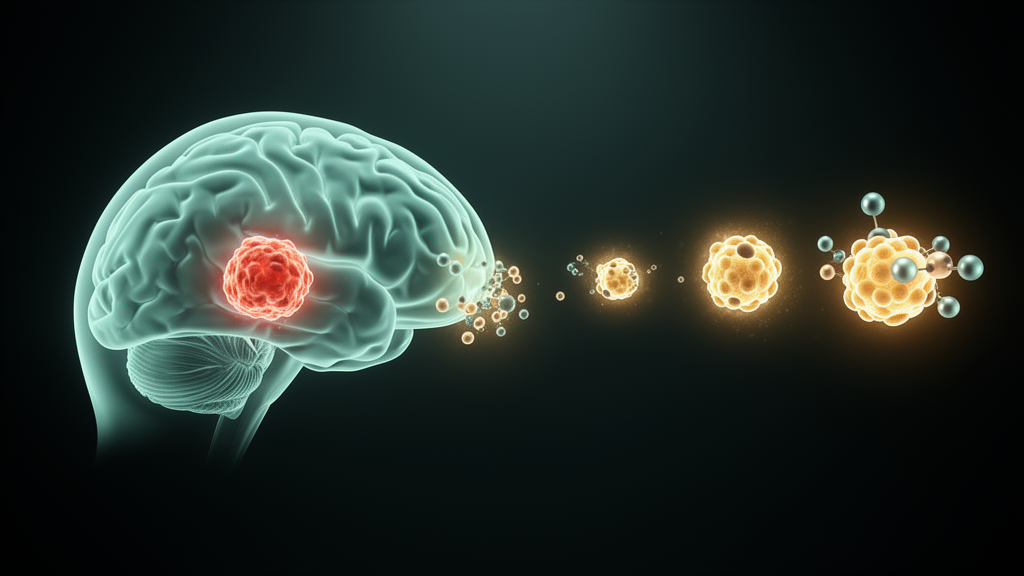
A rare and aggressive form of brain tumor that arises in people with neurofibromatosis type 1 has, for the first time, shown measurable shrinkage in response to the targeted drug mirdametinib, according to a retrospective cohort study from The University of Texas MD Anderson Cancer Center published in the Journal of Neuro-Oncology. Among nine adults with NF1-associated high-grade glioma treated with MEK inhibitors, the two patients who could be evaluated on mirdametinib both achieved a partial radiographic response, with enhancing tumor burden falling by 51 percent and 52 percent on magnetic resonance imaging. The finding is striking because high-grade gliomas in this population are notoriously resistant to treatment, and no published clinical report of mirdametinib in this disease existed before. Yet the same study makes clear that the benefit was often short-lived, with median progression-free survival from the start of MEK inhibitor therapy measured at just 2.9 months and median overall survival at 9.4 months.
Neurofibromatosis type 1 is the most common autosomal dominant tumor predisposition syndrome, caused by pathogenic variants in the NF1 tumor suppressor gene that may be inherited or arise spontaneously. The gene encodes neurofibromin, a RAS GTPase-activating protein that acts as a brake on RAS signaling and on the downstream mitogen-activated protein kinase, or MAPK, pathway. When NF1 is inactivated, this brake is released, and persistent MAPK signaling drives the formation of tumors throughout the central and peripheral nervous systems, including cutaneous and plexiform neurofibromas, malignant peripheral nerve sheath tumors, and gliomas. Central nervous system gliomas occur in roughly 15 to 20 percent of people with NF1, and they span a wide clinical spectrum, from indolent low-grade tumors that may never require treatment to aggressive high-grade gliomas with poor outcomes.
The therapeutic logic behind MEK inhibitors rests directly on this biology. Because NF1 loss leaves the MAPK pathway constitutively active, drugs that block MEK, a kinase midway along the pathway, should in principle starve the tumor of one of its central growth signals. This reasoning has already translated into clinical practice for selected NF1-associated low-grade gliomas, where guideline-based frameworks include MEK inhibition, BRAF and MEK-directed therapy for certain BRAF-altered tumors, and mTOR inhibition with everolimus as options for patients needing adjuvant treatment or therapy for progressive disease. Preclinical glioblastoma models have also suggested that NF1 deficiency may confer sensitivity to a range of clinically available and experimental MEK inhibitors, including mirdametinib, which added plausibility to the idea that the approach could extend to high-grade disease.
High-grade gliomas, however, are biologically different from their low-grade counterparts in ways that complicate this strategy. They more frequently carry additional genomic alterations, including loss of the CDKN2A and CDKN2B genes and changes involving ATRX, TP53, and the TERT promoter. They also display greater epigenetic diversity, with many tumors classified as high-grade astrocytoma with piloid features, abbreviated HGAP, or as molecular subclasses of isocitrate dehydrogenase-wildtype glioblastoma. As tumors accumulate these additional alterations, MAPK signaling may become only one component of a broader oncogenic program rather than the dominant dependency, which could explain why blocking the pathway produces radiographic stability in many patients but rarely prolonged disease control. Standard management of these tumors has otherwise been adapted from typical high-grade glioma care: maximal safe resection, radiotherapy, and alkylator-based chemotherapy, with published MEK inhibitor experience limited to case reports and small series.
The MD Anderson team identified patients through the health record system using the terms glioma and neurofibromatosis under an institutional review board-approved protocol, screening for adults aged 18 to 80 with NF1-associated high-grade glioma who initiated a MEK inhibitor between December 1, 2019, and January 31, 2026. The initial search returned fourteen patients; two fourteen-year-olds were excluded because of age, and three adults were excluded because they never started MEK inhibitor therapy, in some cases due to prescription barriers or insurance rejections. Eligible patients had progressive or recurrent disease and tumor tissue analysis confirming World Health Organization grade 3 or 4 glioma. NF1 status was determined from clinical records and molecular testing, with tumor-only testing without matched normal confirmation not used to assign germline status. The final cohort comprised nine patients, four female and five male.
The tumors in the cohort reflected the heterogeneity that makes this disease so difficult. Six patients had high-grade astrocytoma with piloid features, two had IDH-wildtype glioblastoma, and one had IDH-wildtype high-grade glioma not otherwise specified. Among the HGAP cases, ATRX alteration was the most frequent additional molecular change, present in all six, followed by CDKN2A/B loss in two. The glioblastoma and not-otherwise-specified cases carried more varied findings, including BRAF alterations at positions p.G494V and p.D594G, along with changes in TERT, TP53, GFAP, OLIG2, MYCL, and NOTCH3. Seven of the nine patients had clinical NF1 syndrome, one with a confirmed germline variant, while the remaining two had somatic tumor NF1 alterations without a clinical NF1 phenotype. The median age at high-grade glioma onset was 34 years, with a range of 22 to 58, and the median Karnofsky Performance Status at the start of MEK inhibitor therapy was 60, indicating substantial functional impairment.
Treatment exposure varied widely. Six patients received MEK inhibitors after progression following prior radiotherapy, and most had undergone other local or systemic treatments beforehand, including resection in six patients, radiotherapy in seven, and chemotherapy or biologic agents such as temozolomide, lomustine, carboplatin, bevacizumab, and an ERK inhibitor. Six patients received selumetinib for one to seven cycles, one received dabrafenib plus trametinib for two cycles, and three received mirdametinib, with overall exposure ranging from one to fourteen cycles. By Response Assessment in Neuro-Oncology criteria, the best radiographic response was partial response in two patients, stable disease in six, and not evaluable in one. Both partial responses occurred in the mirdametinib-treated group, and both met RANO criteria confirmed on imaging at least four weeks apart.
The durability of those responses diverged sharply. One of the two responding patients remained on mirdametinib without progression at last follow-up, the only patient in the cohort still on active MEK inhibitor-based therapy. The other developed radiographic progression after 4.9 months, roughly five cycles, discontinued the drug, and transitioned to lomustine. Toxicity also shaped the outcomes: one patient could not tolerate MEK inhibitor therapy at all and later progressed; one experienced a transient decline in left ventricular ejection fraction that required a treatment hold of less than a month before resumption; one developed a cutaneous rash that forced a dose reduction and ultimately prevented completion of a third cycle; and four patients discontinued therapy in the setting of complications not clearly attributed to treatment. One patient was lost to follow-up after three cycles of selumetinib, with death recorded 6.4 months after starting therapy. By Kaplan-Meier analysis, median overall survival from high-grade glioma diagnosis was 35.6 months, while median progression-free survival and overall survival from MEK inhibitor initiation were 2.9 and 9.4 months respectively. Three patients were alive at last follow-up.
The authors frame the mirdametinib responses as a clinically notable but hypothesis-generating signal rather than proof of efficacy. They suggest that the drug’s central nervous system pharmacodynamic profile and its preclinical activity in NF1-deficient glioblastoma models may account for its ability to reach intracranial NF1-driven tumors, and they argue that the observed responses justify prospective evaluation. At the same time, they acknowledge that response attribution is constrained by the retrospective design, heterogeneous prior therapy, and the possible effects of earlier radiotherapy or concurrent systemic treatment. The exclusion of the two pediatric patients cuts both ways: it reduced potential confounding from age-related differences in pharmacokinetics and dosing, but both children experienced early progression or intolerance, so their exclusion may have biased the results toward more favorable estimates.
What the study ultimately delivers is a carefully documented baseline for a disease where almost no systematic data existed. It is, to the authors’ knowledge, the first clinical report of mirdametinib in NF1-associated high-grade glioma and the largest single-center cohort of MEK inhibitor use in this population published to date, spanning HGAP, glioblastoma, and not-otherwise-specified tumors. The partial responses suggest that at least some of these tumors may retain sensitivity to MAPK pathway blockade even at high grade, although the authors caution that MAPK signaling may be only one component of a broader oncogenic program in these tumors, and the short median progression-free survival and the spectrum of toxicities underline that single-agent MEK inhibition did not produce durable disease control for most patients. The authors conclude that larger, multi-institutional prospective studies with standardized response assessment and molecular correlates are needed to define which patients are most likely to benefit, the optimal timing of therapy, and whether MEK inhibition can improve survival in this rare and underserved population.
Subject of Research: MEK inhibitor treatment outcomes in NF1-associated high-grade glioma
Article Title: MEK inhibitors in NF1-associated high-grade glioma: partial responses and outcomes from a single-institution cohort and literature review
Article References: Yu, M.-C., Hsi, A. H., Adnan, A., Knight, S. R., McCutcheon, I. E., Slopis, J. M., & Kamiya-Matsuoka, C. (2026). MEK inhibitors in NF1-associated high-grade glioma: partial responses and outcomes from a single-institution cohort and literature review. Journal of Neuro-Oncology, 180(2), Article 30. https://doi.org/10.1007/s11060-026-05835-6
Image Credits: AI Generated
DOI: 10.1007/s11060-026-05835-6
Keywords: NF1, high-grade glioma, MEK inhibitors, mirdametinib, selumetinib, glioblastoma, RAS/MAPK pathway, RANO criteria, retrospective cohort, targeted therapy, neuro-oncology, progression-free survival
News Source: Nathaniel Bowman. (October 23, 2026). Rare NF1-Linked Brain Tumors Show Partial Shrinkage on MEK Blocker Mirdametinib. Scienmag.