• HOME
  • NEWS
  • EXPLORE
    • CAREER
      • Companies
      • Jobs
    • EVENTS
    • iGEM
      • News
      • Team
    • PHOTOS
    • VIDEO
    • WIKI
  • BLOG
  • COMMUNITY
    • FACEBOOK
    • INSTAGRAM
    • TWITTER
Thursday, October 22, 2026
BIOENGINEER.ORG
No Result
View All Result
  • Login
  • HOME
  • NEWS
  • EXPLORE
    • CAREER
      • Companies
      • Jobs
        • Lecturer
        • PhD Studentship
        • Postdoc
        • Research Assistant
    • EVENTS
    • iGEM
      • News
      • Team
    • PHOTOS
    • VIDEO
    • WIKI
  • BLOG
  • COMMUNITY
    • FACEBOOK
    • INSTAGRAM
    • TWITTER
No Result
View All Result
Bioengineer.org
No Result
View All Result
Home NEWS Science News Biology

Tuberculosis bacterium resists innate immune clearance in mouse models

by
October 22, 2026
in Biology, Health
Reading Time: 2 mins read
0
Tuberculosis bacterium resists innate immune clearance in mouse models

Tuberculosis bacterium resists innate immune clearance in mouse models

Share on FacebookShare on TwitterShare on LinkedinShare on RedditShare on Telegram

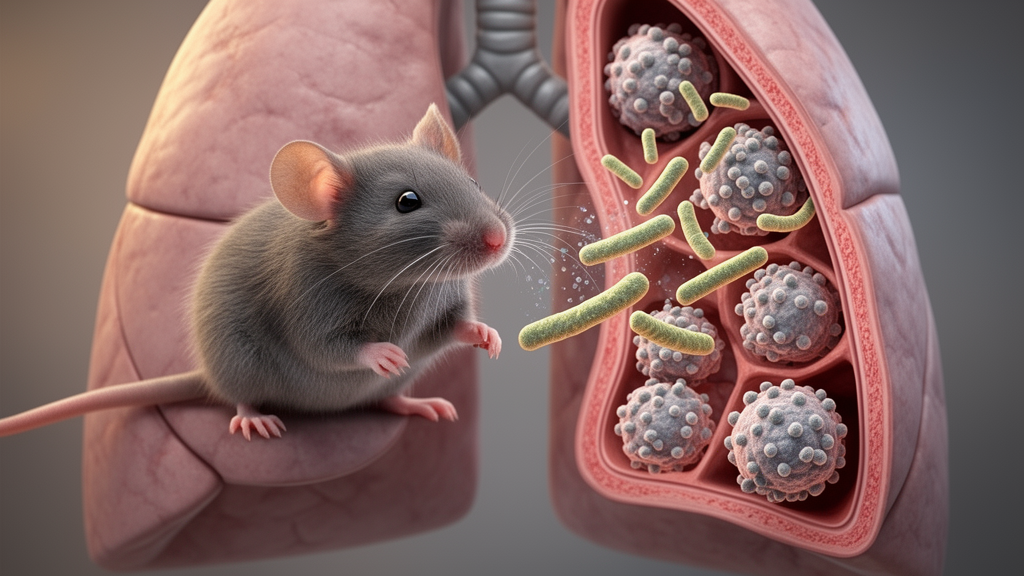
Mycobacterium tuberculosis (Mtb) replicated in mice even after extremely low-dose infection and lung pre-infection with Legionella pneumophila (Lp), a bacterium that induces a strong antibacterial innate immune response. Across the infection models tested, the findings indicate that Mtb remained resistant to control by innate immunity before the onset of adaptive immunity.

Mtb is a robust activator of innate immunity, and innate immune activation of macrophages can affect its replication in vitro. However, the researchers noted that there had been little in vivo evidence that innate immunity controls Mtb before adaptive immunity develops. Earlier studies generally used specific-pathogen-free mouse models and relatively large infectious doses, potentially obscuring the ability of innate defenses to restrict infection.

To test whether smaller infectious doses revealed stronger early control, the investigators performed ultra-low-dose Mtb infections in mice. The initial innate immune response was unable to curb even the minimal infectious doses tested. Thus, the experiments did not find evidence that innate mechanisms established control of Mtb at the lowest challenge levels examined, although the result applies to the mice and experimental conditions used.

The researchers also examined whether prior exposure to a more diverse microbial environment changed susceptibility. They primed the immune systems of C57BL/6 mice by co-housing them with “pet shop” mice before Mtb exposure. The co-housed animals were as susceptible to Mtb infection as specific-pathogen-free mice, indicating that this form of immune priming did not provide measurable protection in the model.

A more targeted test involved infecting the lungs with Lp before Mtb exposure. Innate immunity alone can clear large Lp doses—more than 100,000 colony-forming units (CFU)—from the lung within a few days. Yet Lp pre-infection only modestly reduced Mtb CFU in mice subsequently infected with Mtb alone compared with those receiving Mtb without prior Lp infection. Single-cell RNA sequencing showed that Lp priming induced measurable changes in myeloid cells responding to Mtb, but those changes had little effect on innate control of the bacterium. Together, the results distinguish immune activation from effective bacterial clearance: a response capable of eliminating large amounts of Lp, and detectable changes in myeloid cells, did not substantially restrict Mtb replication. The study was limited to mouse infection models and did not determine how innate immunity contributes to tuberculosis in people or to the later course of infection involving adaptive immunity.

Subject of Research: Experimental assessment of innate immune control of Mycobacterium tuberculosis in mouse infection models

Article Title: Diverse infection models demonstrate robust resistance of Mycobacterium tuberculosis to innate immunity

Article References: Fairgrieve, M. R., Brydon, E. C., Chavez, R. A., Kotov, D. I., & Vance, R. E. (2026). Diverse infection models demonstrate robust resistance of Mycobacterium tuberculosis to innate immunity. PLOS Pathogens, 22(10), e1014713. https://doi.org/10.1371/journal.ppat.1014713

Image Credits: AI Generated

DOI: 10.1371/journal.ppat.1014713

Keywords: Mycobacterium tuberculosis, innate immunity, mouse models, ultra-low-dose infection, Legionella pneumophila, macrophages, myeloid cells, single-cell RNA sequencing, bacterial clearance, tuberculosis, Diverse, infection

News Source: Morgan Morrow. (October 22, 2026). Tuberculosis bacterium resists innate immune clearance in mouse models. Scienmag.


Tags: bacterial clearancediverseinfectionInnate immunityLegionella pneumophilamacrophagesmouse modelsMycobacterium tuberculosisMyeloid Cellssingle-cell RNA sequencingTuberculosisultra-low-dose infection
Share12Tweet7Share2ShareShareShare1

Related Posts

Structured prompts improve Chinese LLM radiology impressions in retrospective validation

Structured prompts improve Chinese LLM radiology impressions in retrospective validation

October 22, 2026
Five Aptamers Show Activity Against Triple-Negative Breast Cancer Cells

Five Aptamers Show Activity Against Triple-Negative Breast Cancer Cells

October 22, 2026

Renin–Angiotensin System Activation Drives Early Cardiorenal Dysfunction in Normotensive Prediabetes

October 22, 2026

SADRP: A structurally aware multi-modal framework for drug response prediction

October 22, 2026

POPULAR NEWS

  • Structured prompts improve Chinese LLM radiology impressions in retrospective validation

    Structured prompts improve Chinese LLM radiology impressions in retrospective validation

    29 shares
    Share 12 Tweet 7
  • Tuberculosis bacterium resists innate immune clearance in mouse models

    29 shares
    Share 12 Tweet 7
  • Simulation links hyperbolic highway curves to sharper acceleration, lower sag loads

    29 shares
    Share 12 Tweet 7
  • Five Aptamers Show Activity Against Triple-Negative Breast Cancer Cells

    29 shares
    Share 12 Tweet 7

About

We bring you the latest biotechnology news from best research centers and universities around the world. Check our website.

Follow us

Recent News

Structured prompts improve Chinese LLM radiology impressions in retrospective validation

Tuberculosis bacterium resists innate immune clearance in mouse models

Simulation links hyperbolic highway curves to sharper acceleration, lower sag loads

Subscribe to Blog via Email

Enter your email address to subscribe to this blog and receive notifications of new posts by email.

Join 85 other subscribers
  • Contact Us

Bioengineer.org © Copyright 2023 All Rights Reserved.

Welcome Back!

Login to your account below

Forgotten Password?

Retrieve your password

Please enter your username or email address to reset your password.

Log In
No Result
View All Result
  • Homepages
    • Home Page 1
    • Home Page 2
  • News
  • National
  • Business
  • Health
  • Lifestyle
  • Science

Bioengineer.org © Copyright 2023 All Rights Reserved.