• HOME
  • NEWS
  • EXPLORE
    • CAREER
      • Companies
      • Jobs
    • EVENTS
    • iGEM
      • News
      • Team
    • PHOTOS
    • VIDEO
    • WIKI
  • BLOG
  • COMMUNITY
    • FACEBOOK
    • INSTAGRAM
    • TWITTER
Wednesday, October 21, 2026
BIOENGINEER.ORG
No Result
View All Result
  • Login
  • HOME
  • NEWS
  • EXPLORE
    • CAREER
      • Companies
      • Jobs
        • Lecturer
        • PhD Studentship
        • Postdoc
        • Research Assistant
    • EVENTS
    • iGEM
      • News
      • Team
    • PHOTOS
    • VIDEO
    • WIKI
  • BLOG
  • COMMUNITY
    • FACEBOOK
    • INSTAGRAM
    • TWITTER
No Result
View All Result
Bioengineer.org
No Result
View All Result
Home NEWS Science News Health

Low-Valine Diet Reduces Cardiac Hypertrophy in Hypertensive Male Rodents

by
October 21, 2026
in Health
Reading Time: 2 mins read
0
Low-Valine Diet Reduces Cardiac Hypertrophy in Hypertensive Male Rodents

Low-Valine Diet Reduces Cardiac Hypertrophy in Hypertensive Male Rodents

Share on FacebookShare on TwitterShare on LinkedinShare on RedditShare on Telegram

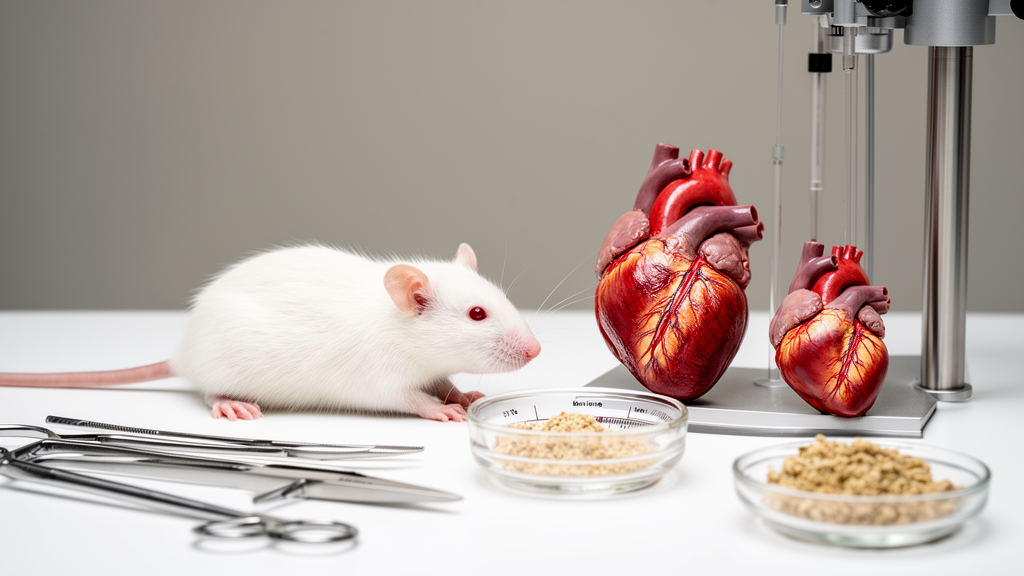
A low-valine diet reduced pathological cardiac hypertrophy and improved cardiac function in hypertensive male rodents in a study combining dietary-survey evidence, a meta-analysis and laboratory experiments. The researchers identified a mechanism involving valine, the mitochondrial ATP synthase subunit ATP5F1B and the mitochondrial ion peptidase LONP1. The animal findings do not establish that reducing dietary valine would prevent or treat cardiovascular disease in people.

The investigators first examined the relationship between valine intake and cardiovascular risk. Their meta-analysis, combined with findings from the National Health and Nutrition Examination Survey, indicated a positive association between elevated cardiovascular risk and cumulative dietary valine intake. Because this component was observational, it cannot determine whether higher valine intake causes cardiovascular disease or whether lowering intake reduces risk.

Laboratory experiments then tested the effect of dietary valine restriction in hypertensive male rodents. Animals receiving a low-valine diet showed alleviation of pathological cardiac hypertrophy and improved cardiac function compared with the experimental conditions used in the study. The scope was limited to male rodents under hypertension, so the results should not be generalized to other animals, sexes or people with different cardiovascular conditions.

Molecular measurements provided a possible explanation for the cardiac effects. Under hypertensive conditions, accumulated valine enhanced its binding to ATP5F1B. Mass spectrometry analysis showed that valine accumulation promoted a stronger interaction between ATP5F1B and LONP1, a mitochondrial ion peptidase involved in protein degradation. The low-valine diet reduced LONP1-mediated degradation of ATP5F1B and increased ATP5F1B abundance at the protein level.

The investigators linked the preservation of ATP5F1B with reduced mitochondrial damage, improved mitochondrial function and sustained mitochondrial homeostasis. Together with the smaller pathological cardiac hypertrophy and better cardiac performance, these observations support a pathway in which reduced valine exposure limited ATP5F1B degradation in the tested hypertensive male rodents. The study therefore combines an association in dietary and survey data with a mechanistic explanation and functional outcomes in an animal model, but the reported evidence does not demonstrate a human clinical benefit from a low-valine diet.

Subject of Research: Dietary valine, mitochondrial ATP5F1B degradation and cardiac hypertrophy in hypertensive male rodents

Article Title: Low-valine diet ameliorates pathological cardiac hypertrophy by inhibiting LONP1-mediated degradation of ATP5F1B in male rodents

Article References: Kuang, H., Zhang, Z., Wang, X., Li, F., Zhao, Z., Liao, X., Hu, X., Luo, P., Du, H., & Yin, Y. (2026). Low-valine diet ameliorates pathological cardiac hypertrophy by inhibiting LONP1-mediated degradation of ATP5F1B in male rodents. Nature Communications. https://doi.org/10.1038/s41467-026-78676-6

Image Credits: AI Generated

DOI: 10.1038/s41467-026-78676-6

Keywords: low-valine diet, cardiac hypertrophy, hypertension, ATP5F1B, LONP1, mitochondrial function, branched-chain amino acids, rodent study, cardiovascular risk, meta-analysis, Low-valine, diet

News Source: Daisy Hatcher. (October 21, 2026). Low-Valine Diet Reduces Cardiac Hypertrophy in Hypertensive Male Rodents. Scienmag.

Tags: ATP5F1Bbranched-chain amino acidsCardiac Hypertrophycardiovascular riskdiethypertensionLONP1Low-valinelow-valine dietMeta-analysismitochondrial functionrodent study
Share12Tweet7Share2ShareShareShare1

Related Posts

PIWI–piRNA regulation varies across species and reproductive contexts

PIWI–piRNA regulation varies across species and reproductive contexts

October 21, 2026
Simulation links Shigella trial design to underestimated vaccine efficacy

Simulation links Shigella trial design to underestimated vaccine efficacy

October 21, 2026

AI-guided physical education trial to test student activity and well-being

October 21, 2026

Observational Maryland study links chronic care management to lower acute care use

October 21, 2026

POPULAR NEWS

  • PIWI–piRNA regulation varies across species and reproductive contexts

    PIWI–piRNA regulation varies across species and reproductive contexts

    29 shares
    Share 12 Tweet 7
  • Simulation links Shigella trial design to underestimated vaccine efficacy

    29 shares
    Share 12 Tweet 7
  • TIMD4-targeted nanoparticles reduce colitis inflammation in mice

    29 shares
    Share 12 Tweet 7
  • Low-Valine Diet Reduces Cardiac Hypertrophy in Hypertensive Male Rodents

    29 shares
    Share 12 Tweet 7

About

We bring you the latest biotechnology news from best research centers and universities around the world. Check our website.

Follow us

Recent News

PIWI–piRNA regulation varies across species and reproductive contexts

Simulation links Shigella trial design to underestimated vaccine efficacy

TIMD4-targeted nanoparticles reduce colitis inflammation in mice

Subscribe to Blog via Email

Enter your email address to subscribe to this blog and receive notifications of new posts by email.

Join 85 other subscribers
  • Contact Us

Bioengineer.org © Copyright 2023 All Rights Reserved.

Welcome Back!

Login to your account below

Forgotten Password?

Retrieve your password

Please enter your username or email address to reset your password.

Log In
No Result
View All Result
  • Homepages
    • Home Page 1
    • Home Page 2
  • News
  • National
  • Business
  • Health
  • Lifestyle
  • Science

Bioengineer.org © Copyright 2023 All Rights Reserved.