

• HOME
  • NEWS
  • EXPLORE
    • CAREER
      • Companies
      • Jobs
    • EVENTS
    • iGEM
      • News
      • Team
    • PHOTOS
    • VIDEO
    • WIKI
  • BLOG
  • COMMUNITY
    • FACEBOOK
    • INSTAGRAM
    • TWITTER
Wednesday, April 1, 2026
BIOENGINEER.ORG
No Result
View All Result
  • Login
  • HOME
  • NEWS
  • EXPLORE
    • CAREER
      • Companies
      • Jobs
        • Lecturer
        • PhD Studentship
        • Postdoc
        • Research Assistant
    • EVENTS
    • iGEM
      • News
      • Team
    • PHOTOS
    • VIDEO
    • WIKI
  • BLOG
  • COMMUNITY
    • FACEBOOK
    • INSTAGRAM
    • TWITTER
  • HOME
  • NEWS
  • EXPLORE
    • CAREER
      • Companies
      • Jobs
        • Lecturer
        • PhD Studentship
        • Postdoc
        • Research Assistant
    • EVENTS
    • iGEM
      • News
      • Team
    • PHOTOS
    • VIDEO
    • WIKI
  • BLOG
  • COMMUNITY
    • FACEBOOK
    • INSTAGRAM
    • TWITTER
No Result
View All Result
Bioengineer.org
No Result
View All Result
Home NEWS Science News Biology

Why your ancestors would have aced the long jump

Bioengineer by Bioengineer
September 11, 2017
in Biology
Reading Time: 2 mins read
0
Share on FacebookShare on TwitterShare on LinkedinShare on RedditShare on Telegram
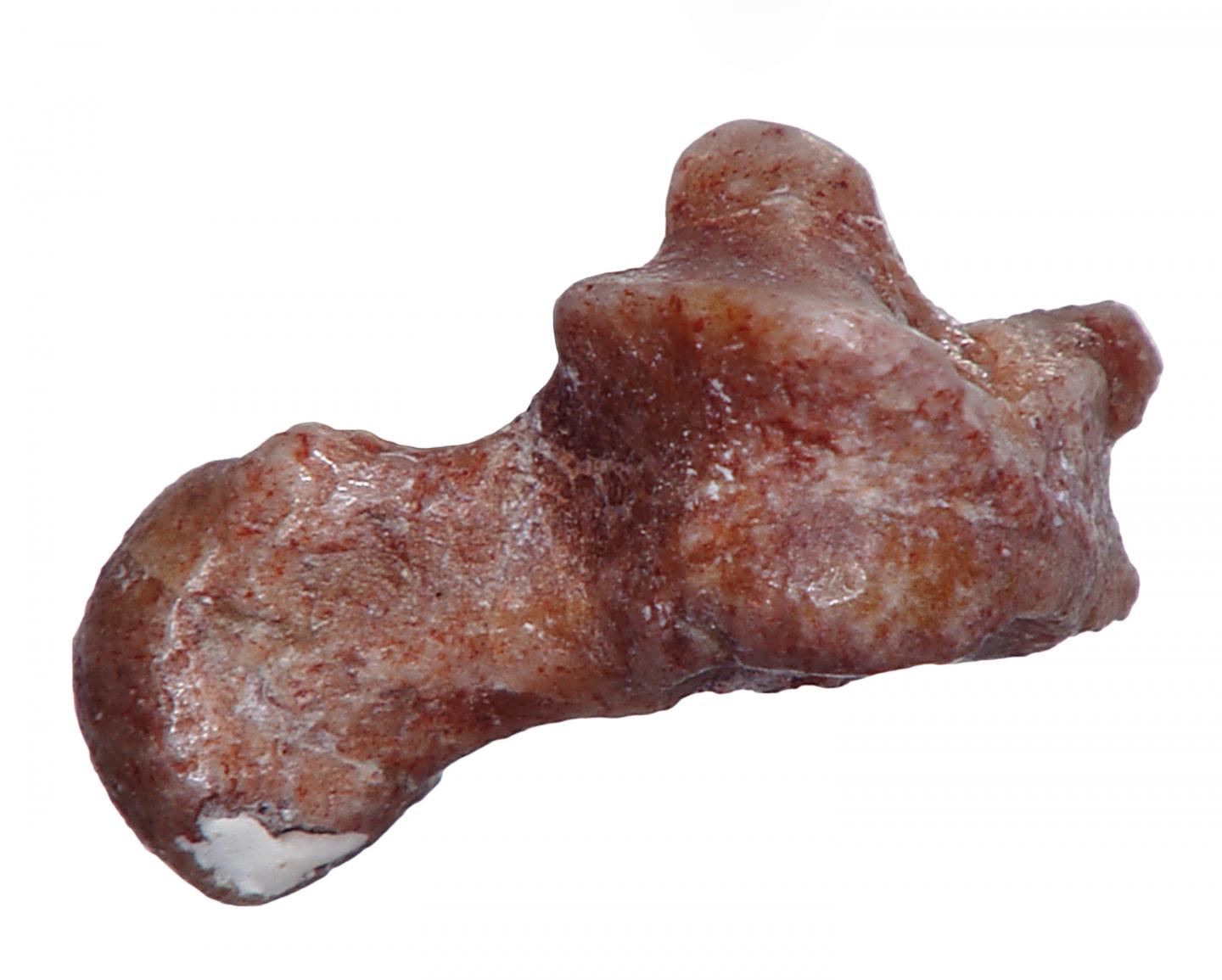
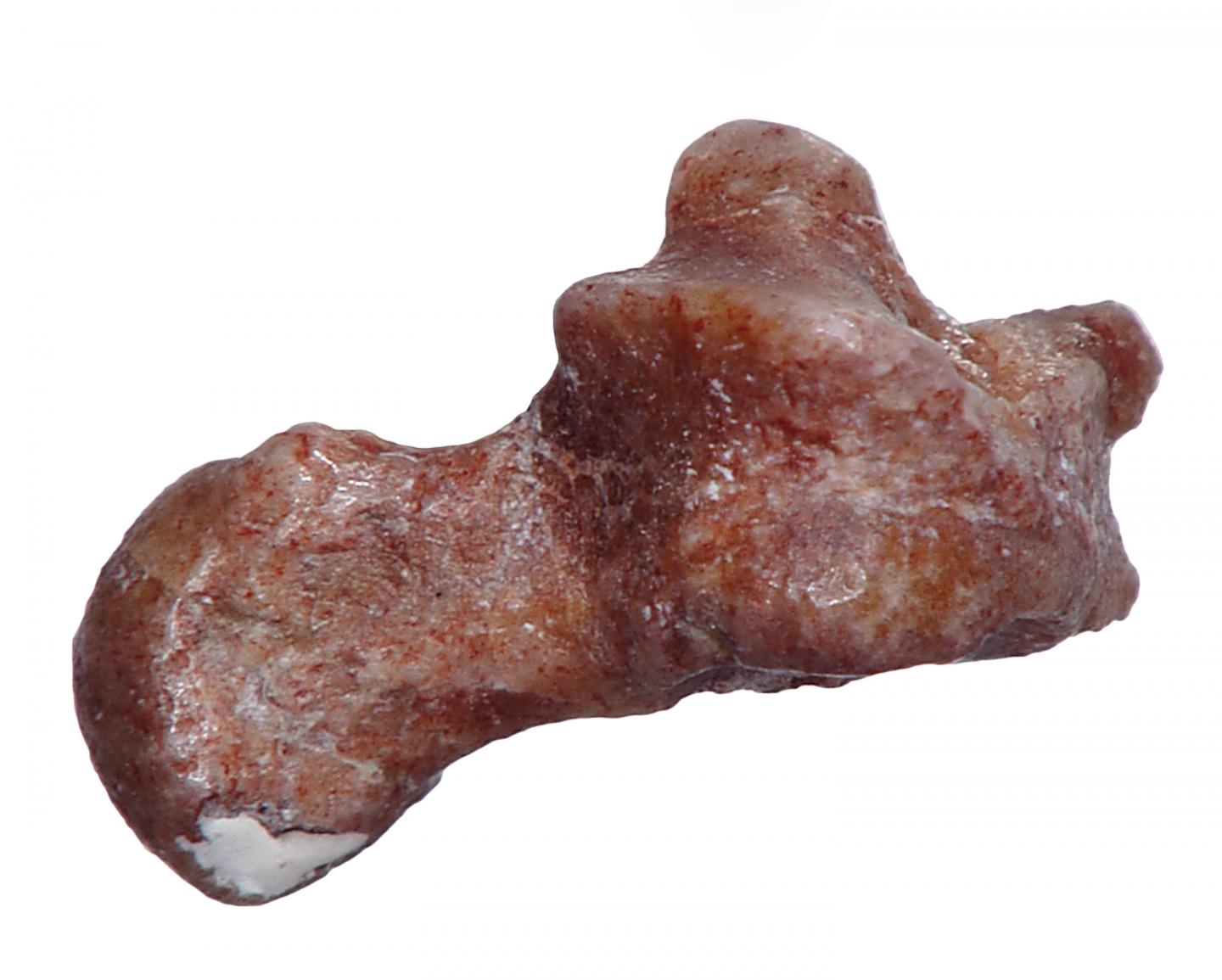
IMAGE

Credit: Photo by Douglas Boyer, Duke University

DURHAM, N.C. — A 52-million-year-old ankle fossil suggests our prehuman ancestors were high-flying acrobats.

These first primates spent most of their time in the trees rather than on the ground, but just how nimble they were as they moved around in the treetops has been a topic of dispute.

For years, scientists thought the ancestors of today's humans, monkeys, lemurs and apes were relatively slow and deliberate animals, using their grasping hands and feet to creep along small twigs and branches to stalk insects or find flowers and fruits.

But a fossil study published in the October 2017 issue of the Journal of Human Evolution suggests the first primates were masters at leaping through the trees.

Paleontologists working in a quarry in southeastern France uncovered the quarter-inch-long bone, the lower part of the ankle joint.

The fossil matched up best with a chipmunk-sized creature called Donrussellia provincialis.

Previously only known from jaws and teeth, Donrussellia is thought be one of the earliest members of the primate family tree, on the branch leading to lemurs, lorises and bush babies.

Duke University assistant professor Doug Boyer and colleagues studied scans of Donrussellia's ankle and compared it to other animals, using computer algorithms to analyze the 3-D digital shape of each tiny bone.

They were surprised to find that Donrussellia's ankle was not like those of other primates, but was more similar to those of treeshrews and other nonprimate species.

The team's analyses also suggest the animal didn't just clamber or scurry along small branches. Instead, it may have been able to bound between trunks and branches, using its grasping feet to stick the landing.

The researchers say that — contrary to what many scientists thought — the first primates may have evolved their acrobatic leaping skills first, while anatomical changes that allowed them to cling to slender branch tips and creep from tree to tree came later.

"Being able to jump from one tree to another might have been important, especially if there were ground predators around waiting to snag them," Boyer said.

###

Other authors include Séverine Toussaint of the Université Paris Diderot-Paris 7 and Marc Godinot of the École Pratique des Hautes Études in Paris.

This research was supported by Duke University and the National Science Foundation (BCS 1317525, BCS 1440742, BCS 1552848).

CITATION: "Postcrania of the Most Primitive Euprimate and Implications for Primate Origins," Doug Boyer, Séverine Toussaint and Marc Godinot. Journal of Human Evolution, October 2017. https://doi.org/10.1016/j.jhevol.2017.07.005

Media Contact

Robin Ann Smith
[email protected]
919-681-8057
@DukeU

http://www.duke.edu

Original Source

https://today.duke.edu/2017/09/why-your-ancestors-would-have-aced-long-jump http://dx.doi.org/10.1016/j.jhevol.2017.07.005


Share12Tweet7Share2ShareShareShare1

Related Posts

New Study Reveals Respiratory Evolution as Key Driver of Body Size Variation in Early Terrestrial Vertebrates

New Study Reveals Respiratory Evolution as Key Driver of Body Size Variation in Early Terrestrial Vertebrates

April 1, 2026
Survey Reveals Many Dog Owners Overlook Subtle Pain Signs Like Nighttime Restlessness and Clinginess

Survey Reveals Many Dog Owners Overlook Subtle Pain Signs Like Nighttime Restlessness and Clinginess

April 1, 2026

Ancient 500-Million-Year-Old Clawed Predator Redefines the Evolution of Spiders and Horseshoe Crabs

April 1, 2026

Chikungunya Virus Lingers in Joint Macrophages, Causes Chronic Disease

April 1, 2026
Please login to join discussion

POPULAR NEWS

  • blank

    Revolutionary AI Model Enhances Precision in Detecting Food Contamination

    96 shares
    Share 38 Tweet 24
  • Imagine a Social Media Feed That Challenges Your Views Instead of Reinforcing Them

    1006 shares
    Share 398 Tweet 249
  • Promising Outcomes from First Clinical Trials of Gene Regulation in Epilepsy

    51 shares
    Share 20 Tweet 13
  • Popular Anti-Aging Compound Linked to Damage in Corpus Callosum, Study Finds

    43 shares
    Share 17 Tweet 11

About

We bring you the latest biotechnology news from best research centers and universities around the world. Check our website.

Follow us

Recent News

Protein Language Model Accuracy Test Sheds Light on AI’s ‘Black Box’

Lehigh University College of Health Launches HEAL Service Center: A Cutting-Edge Shared High-Resolution Mass Spectrometry Facility

Scientists Unveil Innovative Method to Identify Breakthroughs in Science

Subscribe to Blog via Email

Enter your email address to subscribe to this blog and receive notifications of new posts by email.

Join 78 other subscribers
  • Contact Us

Bioengineer.org © Copyright 2023 All Rights Reserved.

Welcome Back!

Login to your account below

Forgotten Password?

Retrieve your password

Please enter your username or email address to reset your password.

Log In
No Result
View All Result
  • Homepages
    • Home Page 1
    • Home Page 2
  • News
  • National
  • Business
  • Health
  • Lifestyle
  • Science

Bioengineer.org © Copyright 2023 All Rights Reserved.
