A multicomponent nanoparticle assembled from epicatechin, ferric ions, ovalbumin and chitosan quaternary ammonium salt retained more of its radical-scavenging activity during 30 days of aqueous storage than free epicatechin or simpler nanoparticle formulations. In the laboratory study, the ternary epicatechin–Fe³⁺–ovalbumin–chitosan quaternary ammonium salt system, abbreviated EFOC, achieved the highest measured encapsulation efficiency and the strongest storage stability, although its initial antioxidant activity was lower than that of free epicatechin and the unmodified epicatechin–Fe³⁺ assembly. This distinction matters because the reported benefit was principally improved durability over time, not greater peak antioxidant performance.
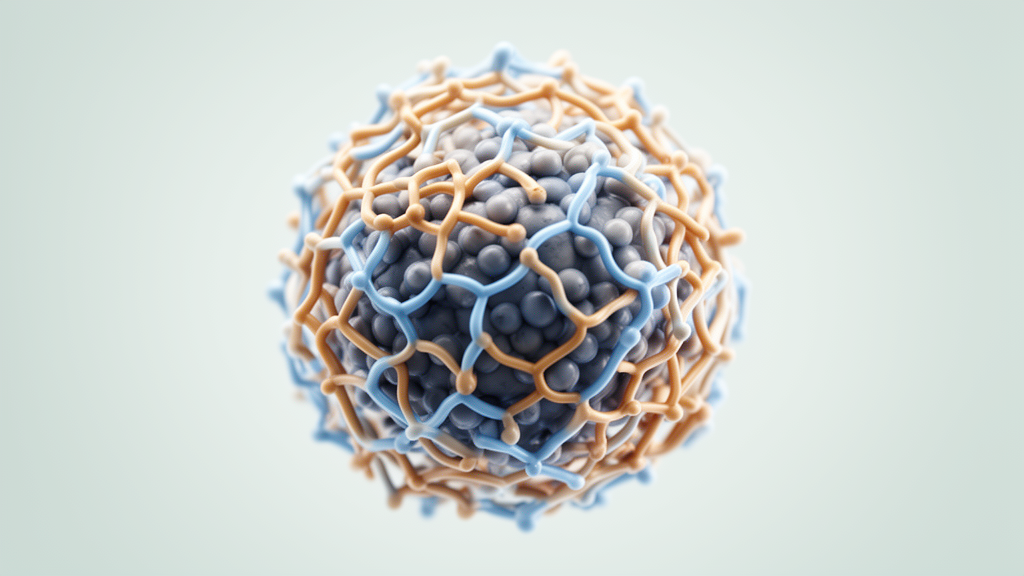
The researchers built the nanoparticles through a one-pot process in which ferric chloride, epicatechin and sodium citrate formed the metal–polyphenol core, while ovalbumin supplied a protein component and chitosan quaternary ammonium salt supplied a positively charged polysaccharide component. Comparisons included the core alone, called EF; the core combined with ovalbumin, EFO; the core combined with the polysaccharide, EFC; and the three-component EFOC formulation. Transmission electron microscopy showed that all were built from primary structures about 20–30 nanometres across, but their larger assembled architectures differed substantially. EF formed compact nanoclusters, EFO developed continuous three-dimensional networks, EFC became chain-like, and EFOC had a radial network morphology with a narrower hydrodynamic size distribution.
The EFOC particles averaged 468.1 nanometres in hydrodynamic diameter, compared with 229.1 nanometres for EF, 520.3 nanometres for EFO and 400.9 nanometres for EFC. Their surface charge was positive, at 21.26 millivolts, while EF was negatively charged at −29.28 millivolts. Incorporating ovalbumin and the polysaccharide together therefore did more than add two coating materials: it altered particle dimensions, narrowed the size distribution and changed surface charge. The investigators attributed this behavior to interactions among hydrogen bonding, hydrophobic association, electrostatic attraction and the partial neutralization of charged groups, but the experiments did not independently resolve the contribution of each mechanism.
Spectroscopic and structural measurements supported the interpretation that epicatechin was incorporated into a composite matrix rather than remaining simply exposed. Fourier-transform infrared spectroscopy detected protein and quaternary-ammonium features in the modified assemblies, while shifts in aromatic and hydroxyl bands were consistent with stronger intermolecular interactions. Analysis of the ovalbumin amide I region indicated that adding the polysaccharide reduced alpha-helix content and increased beta-sheet, beta-turn and random-coil fractions, consistent with partial rearrangement of the protein structure. X-ray diffraction also showed that ovalbumin and the polysaccharide disrupted the short-range order visible in EF; EFOC produced the most highly amorphous pattern, which the authors linked to less regular stacking and a reduced tendency toward aggregation.
After 30 days, EFOC’s average particle size changed by 5.72%, compared with changes of 17.78% for EF and 16.76% for EFO. Its zeta potential also varied less than those of the other formulations, and no visible sedimentation was observed. Epicatechin encapsulation efficiency rose from 52.12% in EF to 76.10% in EFO, 73.87% in EFC and 82.59% in EFOC. The gain in encapsulation did not translate into a higher epicatechin mass fraction: loading capacity was highest in EF at 71.76% and lowest in EFOC at 55.85%, partly because the larger carrier matrix increased the mass of non-epicatechin components. The result therefore describes more efficient retention within the assembly rather than a higher proportion of active ingredient in the recovered particles.
The strongest evidence for functional stability came from two chemical radical-scavenging assays conducted at equivalent epicatechin concentrations. On day 0, free epicatechin and EF had similar DPPH radical-scavenging activity, while EFO, EFC and EFOC were lower at 79.38%, 80.59% and 77.83%, respectively. By day 30, EFOC retained 68.88% DPPH scavenging activity and 69.80% ABTS activity, equivalent to 88.51% and 94.30% of its respective initial values. Free epicatechin’s DPPH activity retention fell to 33.98%, while EF, EFO and EFC each lost more than 23% of their initial DPPH activity. EFOC consequently performed best over time, but it did not start with the highest measured scavenging rate.
Biocompatibility and cellular experiments were conducted in vitro. EFOC caused no significant hemolysis across concentrations from 12.5 to 800 micrograms per milliliter, and all four formulations did not significantly reduce RAW264.7 mouse macrophage viability at concentrations no greater than 200 micrograms per milliliter. At that concentration, nanoparticles that had been stored for 20 days reduced fluorescence from a reactive-oxygen-species probe in lipopolysaccharide-stimulated cells; EFOC produced the greatest reduction, from 53.89% in the stimulated group to 2.08%. EFOC was also associated with recovery of superoxide dismutase, catalase and glutathione levels, a 53.06% reduction in myeloperoxidase activity, lower concentrations of tumor necrosis factor-alpha, interleukin-6 and interleukin-1 beta, and a 69.41% increase in interleukin-10. These findings show activity in an induced mouse-cell model, not clinical benefit in people.
After simulated gastric and small-intestinal digestion, the preparations underwent 24 hours of in vitro colonic fermentation using a pooled fecal inoculum from four healthy adult volunteers. Sequencing of bacterial 16S rRNA genes showed that EFOC was associated with a distinct community structure and increased abundance of several organisms, including Phascolarctobacterium and Bifidobacterium, while taxa including Bilophila, Escherichia-Shigella and Klebsiella were identified as biomarkers of control or binary formulations. EFOC also increased the proportion of persistently detected taxa from 89.85% in the control treatment to 94.46%. These are compositional associations in a short laboratory fermentation using a single pooled inoculum, so they cannot establish how the particles would reshape a living person’s gut microbiome.
Fermentation was accompanied by higher short-chain fatty acid production, with total concentrations reaching 35.63 millimoles in the EFOC treatment, compared with 30.97 millimoles in the control and 32.07 to 33.39 millimoles in the EF and EFO groups. EFOC contained 29.24 millimoles of acetate, 3.03 millimoles of propionate and 2.61 millimoles of butyrate. Correlations linked acetate with Bifidobacterium and Blautia and propionate with Phascolarctobacterium, while predicted metabolic pathways were enriched for acetate and propionate synthesis. Taken together, the study shows that the co-assembled system can combine improved nanoparticle stability and retention with antioxidant, anti-inflammatory and microbiome-associated effects under laboratory conditions. It does not yet establish absorption, safety or efficacy in animals and humans, and those questions would require further translational testing.
Subject of Research: Laboratory development of a stabilized epicatechin–iron nanoparticle using ovalbumin and chitosan quaternary ammonium salt
Article Title: Regulation of Antioxidant Stability and Bioactivity of Epicatechin-Fe 3+ Nanoparticles by Protein-Polysaccharide Co-Assembly Strategy
Article References: Wang, C., Wang, Z., Jiang, X., Wu, J., Cheng, Y., Zhu, T., & Liu, Y. (2026). Regulation of Antioxidant Stability and Bioactivity of Epicatechin-Fe3+ Nanoparticles by Protein-Polysaccharide Co-Assembly Strategy. Current Research in Food Science, Article 101604. https://doi.org/10.1016/j.crfs.2026.101604
Image Credits: AI Generated
DOI: 10.1016/j.crfs.2026.101604
Keywords: epicatechin nanoparticles, metal–polyphenol coordination, ovalbumin, chitosan quaternary ammonium salt, antioxidant stability, protein–polysaccharide assembly, macrophage inflammation, gut microbiome, Regulation, Antioxidant, Stability, Bioactivity
News Source: Alan Morgan. (October 20, 2026). Protein–polysaccharide co-assembly stabilizes epicatechin nanoparticles in laboratory study. Scienmag.