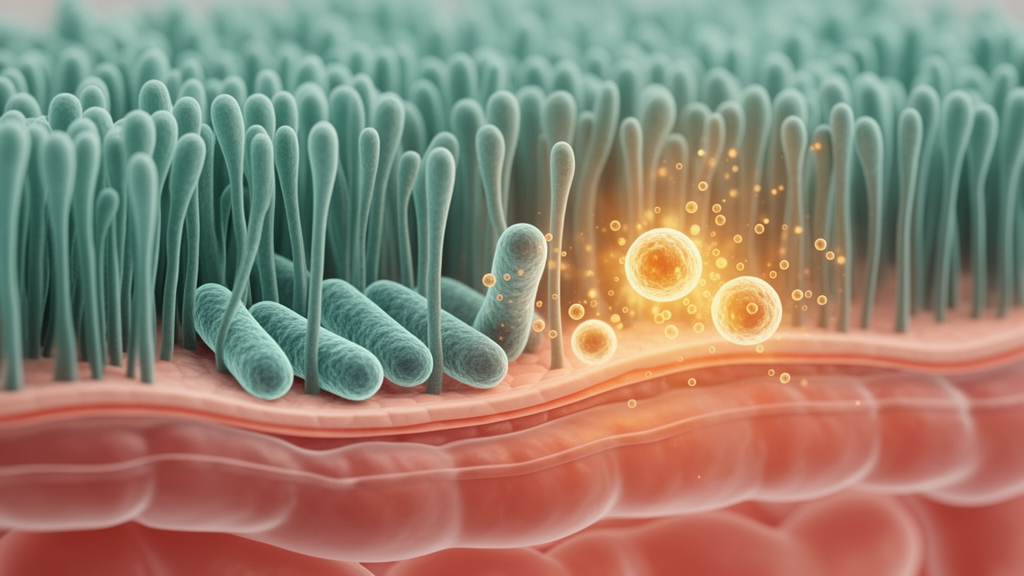
Adult-onset Still’s disease is one of medicine’s most perplexing autoinflammatory conditions, striking adults with spiking fevers, salmon-colored rashes, joint pain, and dangerously high levels of systemic inflammation. Its cause has remained stubbornly obscure for decades, with researchers pointing only vaguely to a combination of genetic predisposition and environmental triggers. Now, a study published in Frontiers in Genetics has added a striking new piece to the puzzle: the trillions of bacteria residing in the human gut. By combining a genetic epidemiological technique called Mendelian randomization with laboratory experiments in mice, a team of researchers from Wenzhou Medical University and Zhejiang University has identified specific gut microbial taxa that appear genetically linked to an individual’s susceptibility to the disease, along with the immune-cell intermediaries that may transmit those effects.
The research team, led by Chenlu Li, Fan Yang, and Binfeng Wang, deployed a two-sample Mendelian randomization framework, a method that exploits naturally occurring genetic variation as a kind of randomized trial conducted by nature. Because genetic variants are inherited randomly and fixed at conception, using them as instrumental variables helps researchers sidestep two chronic problems in observational studies: confounding by other lifestyle or environmental factors, and reverse causation, in which a disease alters the microbiome rather than the other way around. The exposure data came from the Dutch Microbiome Project, a genome-wide association study covering 7,738 European participants that catalogued 207 bacterial taxa and 205 microbiota-associated metabolic pathways. The outcome data came from the FinnGen biobank, which included 113 cases of adult-onset Still’s disease and 341,455 controls.
After screening 412 microbiota-related exposures and applying rigorous Benjamini-Hochberg false discovery rate correction, the analysis converged on 13 significant associations: 10 microbial taxa and 3 microbial metabolic pathways. Five taxa showed positive genetically predicted associations with increased disease risk, including the family Streptococcaceae, the genus Streptococcus, and the species Parabacteroides goldsteinii, Parabacteroides distasonis, and Alistipes shahii. The odds ratios were substantial, ranging from 2.34 for P. goldsteinii to 3.94 for P. distasonis, meaning genetically predicted higher abundance of these bacteria corresponded to a two- to four-fold increase in the odds of developing the disease. On the protective side, the phylum Verrucomicrobia and its relatives, along with the genus Akkermansia, showed inverse associations, with an odds ratio of 0.33 suggesting that higher genetically predicted abundance of these organisms may roughly halve disease susceptibility.
The metabolic pathway findings were equally intriguing. Creatinine degradation and L-tryptophan biosynthesis were associated with increased risk, while mannan degradation appeared protective. These pathways hint at functional mechanisms rather than mere correlations of bacterial abundance: tryptophan metabolism is known to shape immune signaling in the gut, and altered microbial processing of such compounds could plausibly tilt the immune system toward the hyperinflammatory state characteristic of Still’s disease. Sensitivity analyses using multiple complementary statistical methods, including MR-Egger regression, weighted median estimation, and the MR-PRESSO outlier test, found no evidence of horizontal pleiotropy, the phenomenon in which genetic variants influence the outcome through pathways unrelated to the exposure, which would otherwise undermine the analysis.
To probe how gut bacteria might actually drive disease, the researchers turned to the immune system itself. They analyzed 731 immune-cell traits measured in 3,757 Europeans and found that 20 traits remained significantly associated with Still’s disease after correction. A two-step mediation framework then asked whether the microbiota’s effect on the disease travels through these immune traits. The answer was yes, at least in part. Several T-cell-related characteristics, including CD127-expressing CD4-positive T cells and CD25-high CD4-positive T cells, partially mediated the associations, with mediation proportions ranging from 3.44 percent to 26.79 percent. For example, P. goldsteinii appeared to channel roughly 26.79 percent of its effect through CD127 on CD4-positive T cells, while A. shahii acted through regulatory T cells and CD3 on central memory CD8-positive T cells, mediating 9.96 percent and 16.48 percent of its association respectively.
These immune intermediaries are biologically meaningful. CD127, the interleukin-7 receptor alpha chain, is a homeostatic cytokine receptor essential for the survival of mature T-cell populations, and its expression on regulatory T cells shifts with activation state. Central memory CD8-positive T cells, meanwhile, are long-lived circulating sentinels capable of rapid proliferation and cytokine production upon re-encountering antigen. The finding that gut microbial taxa may influence Still’s disease susceptibility through modulation of regulatory and memory T-cell compartments fits with a broader literature showing that segmented filamentous bacteria can provoke inflammatory Th17 responses in mice, while Clostridia species induce protective regulatory T cells that suppress autoimmunity.
Crucially, the team did not stop at statistical inference. They cultivated P. goldsteinii and A. shahii under strict anaerobic conditions and administered them orally, at a dose of 5 billion colony-forming units per day for 14 days, to mice whose gut microbiomes had been depleted with an antibiotic cocktail. Some of the mice were healthy C57BL/6 animals; others had collagen-induced arthritis, a classical murine model of inflammatory arthritis that shares several features with Still’s disease, including systemic cytokine surges and severe joint inflammation. The results were unambiguous: mice receiving either bacterium showed significantly elevated circulating levels of interleukin-1 beta, interleukin-6, and tumor necrosis factor alpha, the three signature pro-inflammatory cytokines implicated in Still’s disease pathology. The arthritic mice given the bacteria showed the highest cytokine concentrations of all, lending biological plausibility to the genetic findings.
The protective candidate, Akkermansia, carries its own compelling backstory. This oxygen-tolerant anaerobe makes up roughly 1 to 4 percent of the healthy gut microbiome and specializes in degrading intestinal mucus, a activity linked to maintaining gut barrier integrity. In systemic lupus erythematosus patients, Akkermansia abundance correlates negatively with serum complement levels, and the bacterium has been implicated in preserving mucosal immune homeostasis. Its inverse association with Still’s disease risk in this study suggests it may play a similar protective role, potentially by reinforcing the intestinal barrier and damping systemic inflammatory signaling. By contrast, Parabacteroides species have shown context-dependent behavior across diseases, protective in colitis models yet pro-inflammatory in ankylosing spondylitis, where bacterial peptides expand interferon-gamma-producing cells.
The authors are careful to flag the study’s limitations, and they are not trivial. The FinnGen dataset contained only 113 Still’s disease cases, an unavoidable consequence of the disease’s rarity, which limits statistical power and could yield unstable estimates for modest effects. All populations studied were of European ancestry, restricting generalizability, and the collagen-induced arthritis model, while sharing inflammatory features with Still’s disease, is not a disease-specific model, so the mouse experiments support the pro-inflammatory potential of the bacteria rather than directly validating Still’s disease mechanisms. The mediation proportions, while statistically significant, are modest, indicating that immune cells are partial rather than complete intermediaries in the microbiota-disease relationship.
Even with those caveats, the study represents an unusually complete chain of evidence for a disease whose etiology has resisted explanation: genetic instruments pointing to specific bacterial taxa, immune-cell traits partially explaining the connection, and living bacteria provoking the exact cytokine storm signature seen in patients. If the findings hold up in larger, multi-ancestry cohorts and disease-specific models, they point toward genuinely novel therapeutic horizons, from microbiome-based interventions that suppress harmful taxa or bolster Akkermansia, to immune-cell targets such as the interleukin-7 receptor pathway. For a condition currently managed with blunt immunosuppressive tools, the prospect of precision interventions rooted in the gut’s microbial ecology is a provocative and welcome development.
Subject of Research: Genetically predicted associations between gut microbiota, immune-cell traits, and adult-onset Still's disease susceptibility
Article Title: Deciphering the microbiota-immune axis in adult-onset Still’s disease: evidence from Mendelian randomization and experimental evaluation
Article References: Li, C., Yang, F., & Wang, B. (2026). Deciphering the microbiota-immune axis in adult-onset Still’s disease: evidence from Mendelian randomization and experimental evaluation. Frontiers in Genetics, 17, Article 1841584. https://doi.org/10.3389/fgene.2026.1841584
Image Credits: AI Generated
DOI: 10.3389/fgene.2026.1841584
Keywords: adult-onset Still's disease, gut microbiota, Mendelian randomization, autoinflammation, immune cells, T cells, Parabacteroides goldsteinii, Alistipes shahii, Akkermansia, cytokines, GWAS, collagen-induced arthritis
News Source: Morgan Morrow. (October 19, 2026). Gut Bacteria Linked to Rare Autoinflammatory Disease Through Genetic and Mouse Evidence. Scienmag.