• HOME
  • NEWS
  • EXPLORE
    • CAREER
      • Companies
      • Jobs
    • EVENTS
    • iGEM
      • News
      • Team
    • PHOTOS
    • VIDEO
    • WIKI
  • BLOG
  • COMMUNITY
    • FACEBOOK
    • INSTAGRAM
    • TWITTER
Saturday, February 7, 2026
BIOENGINEER.ORG
No Result
View All Result
  • Login
  • HOME
  • NEWS
  • EXPLORE
    • CAREER
      • Companies
      • Jobs
        • Lecturer
        • PhD Studentship
        • Postdoc
        • Research Assistant
    • EVENTS
    • iGEM
      • News
      • Team
    • PHOTOS
    • VIDEO
    • WIKI
  • BLOG
  • COMMUNITY
    • FACEBOOK
    • INSTAGRAM
    • TWITTER
  • HOME
  • NEWS
  • EXPLORE
    • CAREER
      • Companies
      • Jobs
        • Lecturer
        • PhD Studentship
        • Postdoc
        • Research Assistant
    • EVENTS
    • iGEM
      • News
      • Team
    • PHOTOS
    • VIDEO
    • WIKI
  • BLOG
  • COMMUNITY
    • FACEBOOK
    • INSTAGRAM
    • TWITTER
No Result
View All Result
Bioengineer.org
No Result
View All Result
Home NEWS Science News Biology

Special Nature Conservation issue: Monitoring protected insects in the European Union

Bioengineer by Bioengineer
August 28, 2017
in Biology
Reading Time: 2 mins read
0
Share on FacebookShare on TwitterShare on LinkedinShare on RedditShare on Telegram
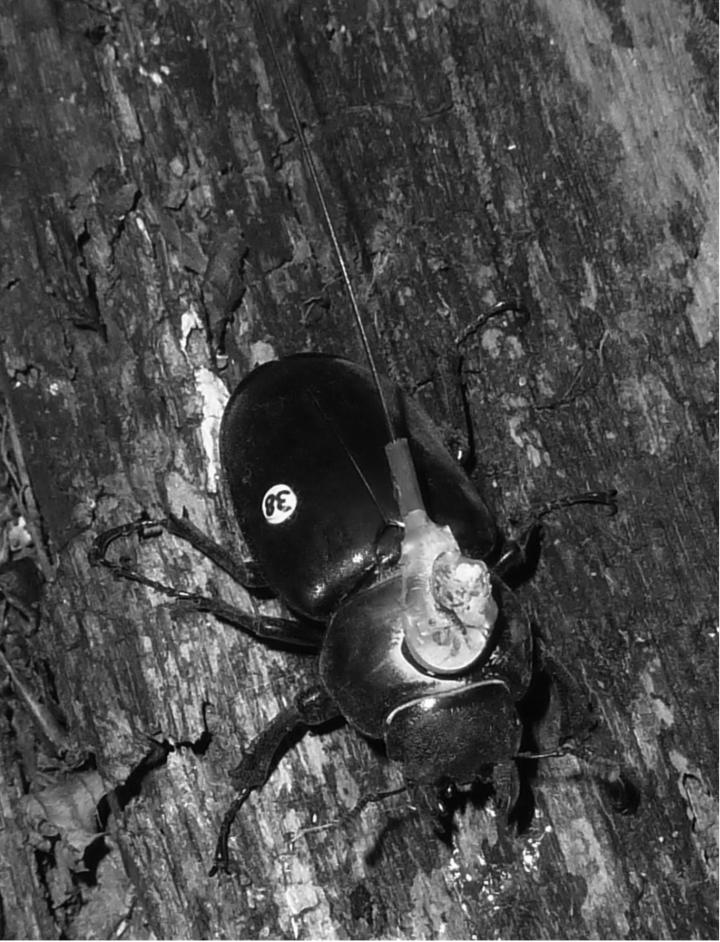
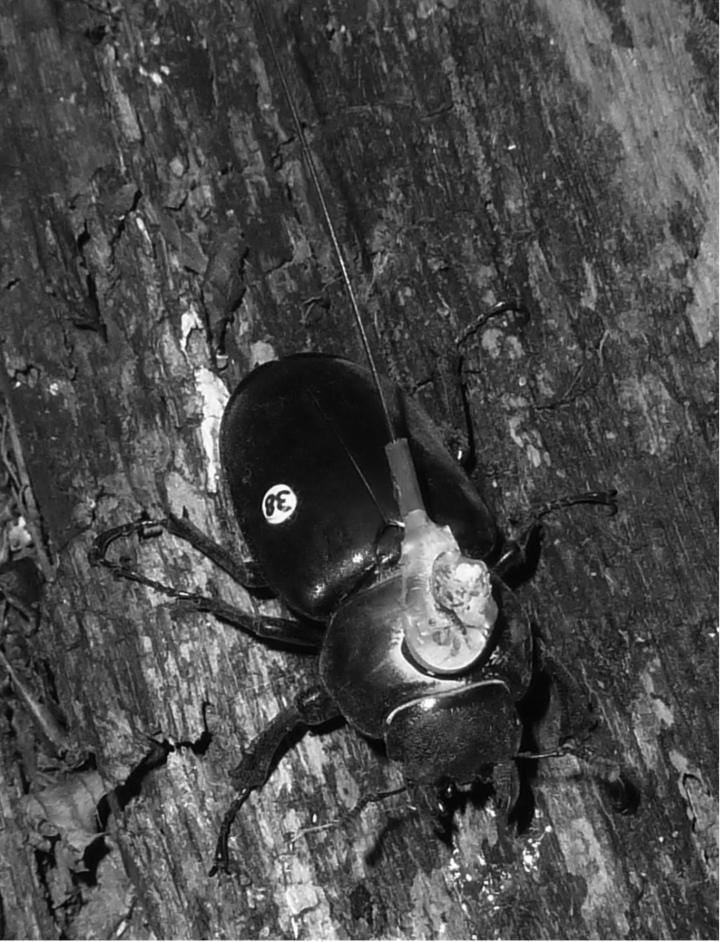
IMAGE

Credit: Massimiliano Tini

With biodiversity loss well underway, conservation measures are urgent on a global scale and the European Union is no exception. However, for efficient strategies and actions to be put in place, plenty of information, acquired primarily through monitoring, is needed to identify priorities for the conservation of threatened species, also for the elusive saproxylic insects, an ecological group of species that depends on dead wood.

Monitoring and conservation of elusive invertebrates is a particularly complex task, as shown in the papers comprising the special issue "Monitoring of saproxylic beetles and other insects protected in the European Union," supported by the EU's LIFE Programme> and published in the open access journal Nature Conservation. This special issue was produced in the framework of the Life Project "Monitoring of insects with public participation" (LIFE11 NAT/IT/000252 MIPP) and is a direct result of a European Workshop held in Mantova in May, 2017.

Colonel Franco Mason, project manager of the MIPP project, notes that the European Workshop was aimed primarily at monitoring of saproxylic beetles. The project MIPP resulted in two special issues: "Monitoring of saproxylic beetles and other insects protected in the European Union" and "Guidelines for the Monitoring of saproxylic beetles and other insects protected in the European Union". The first one is now available in the open access journal Nature Conservation.

"No knowledge exists of the success rate of monitoring elusive invertebrates," writes Dr. Arno Thomaes, Research Institute for Nature and Forest, Belgium, and his team in their paper assessing the feasibility of monitoring the European stag beetle. Having conducted their analysis, though, the scientists conclude that, "monitoring of stag beetles is feasible and the effort is not greater than that which has been found for other invertebrates."

Alessandro Campanaro, a researcher at the "Bosco Fontana" National Center of Carabinieri, highlights the fundamental role of Citizen Science as an essential tool for acquiring data on species, while simultaneously increasing the public awareness about Natura 2000 and the role of saproxylic species in forests.

###

Additional information:

About the Life project MIPP

The main objective of the project MIPP is to develop and test methods for the monitoring of five beetle species listed in the Annexes II and IV of the Habitats Directive (Osmoderma eremita, Lucanus cervus, Cerambyx cerdo, Rosalia alpina, Morimus funereus).

Media Contact

Alessandro Campanaro
[email protected]
@Pensoft

http://www.pensoft.net

Share12Tweet8Share2ShareShareShare2

Related Posts

Florida Cane Toad: Complex Spread and Selective Evolution

Florida Cane Toad: Complex Spread and Selective Evolution

February 7, 2026
New Study Uncovers Mechanism Behind Burn Pit Particulate Matter–Induced Lung Inflammation

New Study Uncovers Mechanism Behind Burn Pit Particulate Matter–Induced Lung Inflammation

February 6, 2026

DeepBlastoid: Advancing Automated and Efficient Evaluation of Human Blastoids with Deep Learning

February 6, 2026

Navigating the Gut: The Role of Formic Acid in the Microbiome

February 6, 2026
Please login to join discussion

POPULAR NEWS

  • Robotic Ureteral Reconstruction: A Novel Approach

    Robotic Ureteral Reconstruction: A Novel Approach

    82 shares
    Share 33 Tweet 21
  • Digital Privacy: Health Data Control in Incarceration

    63 shares
    Share 25 Tweet 16
  • Study Reveals Lipid Accumulation in ME/CFS Cells

    57 shares
    Share 23 Tweet 14
  • Breakthrough in RNA Research Accelerates Medical Innovations Timeline

    53 shares
    Share 21 Tweet 13

About

We bring you the latest biotechnology news from best research centers and universities around the world. Check our website.

Follow us

Recent News

Evaluating Pediatric Emergency Care Quality in Ethiopia

TPMT Expression Predictions Linked to Azathioprine Side Effects

Improving Dementia Care with Enhanced Activity Kits

Subscribe to Blog via Email

Success! An email was just sent to confirm your subscription. Please find the email now and click 'Confirm' to start subscribing.

Join 73 other subscribers
  • Contact Us

Bioengineer.org © Copyright 2023 All Rights Reserved.

Welcome Back!

Login to your account below

Forgotten Password?

Retrieve your password

Please enter your username or email address to reset your password.

Log In
No Result
View All Result
  • Homepages
    • Home Page 1
    • Home Page 2
  • News
  • National
  • Business
  • Health
  • Lifestyle
  • Science

Bioengineer.org © Copyright 2023 All Rights Reserved.