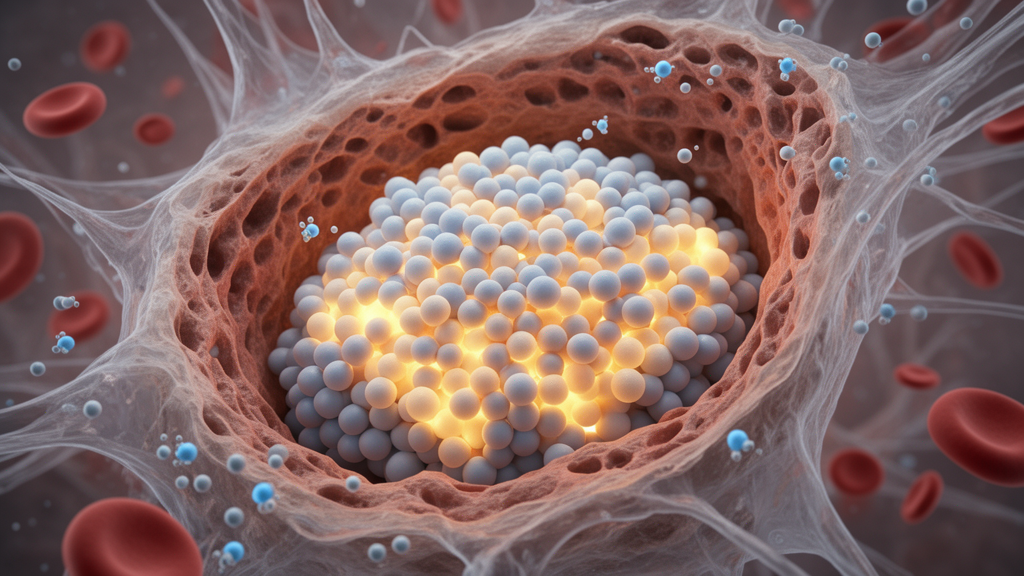
Pediatric acute myeloid leukemia is one of the most punishing diagnoses in childhood oncology, and its central paradox has long frustrated clinicians. Most children with the disease achieve a complete remission after induction chemotherapy, their bone marrow appearing clear under the microscope, and yet nearly forty percent of them ultimately relapse and die from their illness. The leukemia, in other words, is not truly gone when it seems to be gone. A small reservoir of cells survives the chemotherapy barrage, hides among the recovering tissue, and waits. A new study published in Nature Communications by a team led by researchers at Texas Children’s Cancer Center and Baylor College of Medicine has now developed a way to expose that reservoir at diagnosis, and in doing so to identify, with unprecedented precision, which children need the most aggressive treatment available.
The stakes of getting this call right could hardly be higher. The standard escalation for high-risk pediatric AML is stem cell transplantation in first remission, a procedure that replaces a child’s blood-forming system with that of a donor. Transplantation carries substantial toxicity, including the risk of graft-versus-host disease, in which donor immune cells attack the recipient’s own tissues, and it imposes a heavy burden on children who may not actually need it. At the same time, cures after relapse are rare, so under-treating a child who is destined to relapse can be a fatal error. The clinical dilemma is therefore a razor’s edge: overtreat and harm children unnecessarily, or undertreat and lose those who needed the transplant. Accurate risk prediction is the instrument that determines which side of the edge each child falls on.
The research team, co-led by Mohammad Javad NajafPanah, Alexandra M. Stevens, and Tsz-Kwong Man, with senior authorship from Michele S. Redell and Pavel Sumazin, attacked the problem with single-cell transcriptomics, a technology that reads out the gene activity of individual cells rather than averaging signals across a bulk tumor sample. Bulk measurements have a well-known blind spot: a population of cells that makes up even a few percent of a sample can carry decisive biological information, yet its signature is diluted beyond recognition in the aggregate. By profiling cells one at a time, the researchers could compare the transcriptomic landscapes of paired samples taken at diagnosis and at relapse, and infer which cell populations present at diagnosis had the molecular characteristics of cells that survived chemotherapy and reseeded the disease.
This pairing of diagnosis and relapse samples is the methodological heart of the study. When a leukemia relapses, the cells driving it are, by definition, the chemoresistant survivors of the original clone. By identifying transcriptional programs shared between specific cell populations at diagnosis and the relapse population that later emerged, the team could define a chemoresistant signature detectable in the very first sample drawn from a patient. The approach converts relapse, which clinicians usually experience as a retrospective catastrophe, into a prospective signal: the biology of treatment failure is written into the diagnostic sample, and single-cell analysis provides the lens needed to read it.
But the researchers did not stop at the single-cell signature. Their risk model integrates three independent layers of information: the presence of chemoresistant cell populations inferred from single-cell transcriptomic profiles, cytogenetic biomarkers measured at diagnosis, and measurable residual disease, or MRD, assessed after induction chemotherapy. Cytogenetics, the chromosomal abnormalities visible in leukemic cells, has been a cornerstone of AML risk classification for decades. MRD, detected by flow cytometry or molecular assays, measures the burden of leukemic cells remaining after the first round of treatment and is among the strongest known predictors of relapse. Each of these tools, used alone, leaves a fraction of patients misclassified. The insight of the new work is that the three layers are complementary, capturing different facets of the disease, and that combining them yields a risk prediction substantially better than any component alone.
The clinical payoff is striking. Applying the combined approach, the team identified a patient subgroup comprising roughly twenty percent of children with pediatric AML who, under current risk criteria, do not undergo stem cell transplantation in first remission. Within this subgroup, five-year event-free survival fell below forty percent, and these patients accounted for nearly half of all deaths in the non-transplanted population. In plain terms, the model found a hidden cohort of children who look low-risk by conventional measures but who carry a prognosis comparable to the highest-risk groups, and who are precisely the patients for whom the toxicity of transplantation might be justified. For a disease in which relapse is so often fatal, flagging one in five patients who would otherwise be missed represents a meaningful shift in the risk landscape.
Equally important is what the molecular characterization of the chemoresistant populations revealed about therapeutic vulnerabilities. By defining the transcriptional programs that allow cells to survive chemotherapy, the study points toward targeted treatment strategies that could be deployed against those programs directly. The authors frame this as a framework for precision oncology in pediatric AML: diagnosis that incorporates single-cell inference of chemoresistance, risk stratification that integrates that inference with established biomarkers, and intervention guided by the specific molecular dependencies of the resistant cells. While the study does not yet translate into a bedside therapy, it provides a mechanistically grounded map of where such therapies should aim.
The study draws on data generated by the TARGET initiative, managed by the National Cancer Institute and available through the Genomic Data Commons, reflecting the growing importance of large, shared pediatric cancer datasets in enabling this kind of computational analysis. The work was supported by a broad coalition of funders, including the Cancer Prevention and Research Institute of Texas, the National Institutes of Health, the St. Baldrick’s Foundation, and Wipe Out Kids’ Cancer, among others. The collaboration spanned institutions on both sides of the Atlantic, with contributions from Yale School of Medicine, the University of Lausanne, and the University of Zurich, a reminder that modern precision oncology is as much a data-science enterprise as a clinical one.
For the field, the significance of the study lies less in any single number than in a change of perspective. Risk stratification in pediatric AML has historically relied on what the disease looks like, its chromosomal abnormalities and its response to the first round of chemotherapy. The new work adds a question that could only be answered at single-cell resolution: what is the disease capable of surviving? By reading the chemoresistant potential of a leukemia directly from its diagnostic transcriptome, clinicians may one day know, at the moment of diagnosis, which children’s disease will endure, and can plan transplantation, targeted agents, or intensified therapy accordingly. For the roughly one in five children the model rescues from misclassification, and for the families who currently learn of relapse only when it is too late to change course, that knowledge may prove to be the difference between a treatment plan and a gamble.
Considerable work remains before single-cell risk profiling becomes standard of care. The technology is expensive, the computational pipelines demand specialized expertise, and prospective clinical validation will be needed to confirm that acting on the new risk categories improves outcomes. Yet the trajectory of the field is clear. The study demonstrates that the information required to predict relapse is present from the outset, encoded in the transcriptional state of a minority population of cells, and that combining that information with cytogenetics and MRD produces a stratification powerful enough to change transplant decisions. In a disease where nearly half of deaths among non-transplanted children concentrate in a group that current criteria label as lower risk, the ability to see those cells coming is not an incremental advance. It is the kind of reframing that precision oncology has promised for years, delivered for one of the hardest cancers in pediatric medicine.
Subject of Research: Chemoresistant cell populations and risk stratification in pediatric acute myeloid leukemia
Article Title: Characterization of chemoresistant cell populations improves risk stratification and therapy prediction in pediatric acute myeloid leukemia
Article References: NajafPanah, M. J., Stevens, A. M., Krueger, M. J., Rochette, M., Sandhu, S., Kim, L., Chiu, H.-S., Epps, J., Somvanshi, S., Zorman, B., Rodriguez Martinez, M., Rapsomaniki, M., Unger, S., Becher, B., Yi, J. S., Man, T.-K., Redell, M. S., & Sumazin, P. (2026). Characterization of chemoresistant cell populations improves risk stratification and therapy prediction in pediatric acute myeloid leukemia. Nature Communications. https://doi.org/10.1038/s41467-026-78283-5
Image Credits: AI Generated
DOI: 10.1038/s41467-026-78283-5
Keywords: pediatric acute myeloid leukemia, single-cell transcriptomics, chemoresistance, risk stratification, measurable residual disease, stem cell transplantation, cytogenetics, relapse prediction, precision oncology, Nature Communications, childhood cancer, Texas Children's Cancer Center
News Source: Nathaniel Bowman. (October 18, 2026). Hidden Chemoresistant Cells Reveal Which Children With Leukemia Are Most at Risk. Scienmag.